
Her marriage came to an abrupt end last October. Shayara Bano, a 35-year-old woman who’d been married for 13 years, received a talaqnama — divorce deed — by post at her parents’ home in Kashipur, Uttarakhand. Her husband had divorced her by the dreaded method of talaq-e-bidat, pronouncing talaq thrice at one go, without an intervening period between each pronouncement.
“My husband gave no reason for divorcing me and he is not answering my calls,” she says in a telephonic interview from Kashipur. Bano, who had for long been abused by her husband, an Allahabad-based property developer, and his family, misses her two small children, whom she was forced to leave back at her husband’s home after she fled to her father’s house early last year.
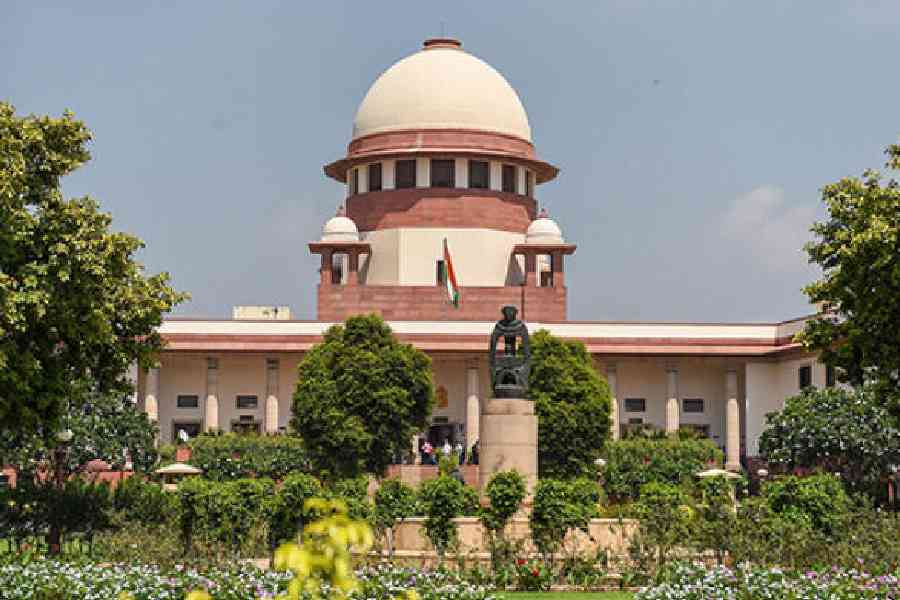
She has now decided to battle the controversial practice of triple talaq. Besides filing for maintenance under Section 125 of the CrPC, she filed a writ in the Supreme Court of India, chiefly challenging the arbitrary process of the triple talaq, along with other practices derogatory to Muslim women such as polygamy and nikahhalala (a divorced woman having to marry another man if she has to reunite with her husband).
Bano’s case was clubbed along with a significant suo motu petition filed by the Supreme Court in October 2015, after independently observing the gender discrimination faced by Muslim women. On Monday, the Chief Justice of India (CJI), T.S. Thakur, gave six weeks for all the impleaders in the petition, including Bano and the All India Muslim Personal Law Board, to submit their responses and objections.
“The Muslim Law Board was not keen to acknowledge Shayara Bano’s individual petition but the CJI insisted that she also had a right to file her objections. It is significant because an individual Muslim woman is getting the right to express her point of view,” exults Balaji Srinivasan, lawyer on record for Shayara Bano in the Supreme Court.
The triple talaq practice, clearly, is under fire. Last week, the Madurai bench of the Madras High Court gave interim relief to a Tamil Nadu resident, M. Nazeema, by staying the order of an additional district court approving the triple talaq given to her by her husband in 2010. Nazeema had urged the Madras High Court to declare the triple talaq as null and void.
Increasingly, Muslim women are rebelling against what they call “arbitrary” and “discriminatory” practices under the Muslim personal law. The Bharatiya Muslim Mahila Andolan (BMMA) sent a letter to the Prime Minister late last year, protesting against attempts by orthodox males to stonewall reform in the Muslim personal law. In a study of 4,710 women in India, BMMA found 92.1 per cent wanted a total ban on oral/unilateral divorce and 91.7 per cent opposed to polygamy.
One of their demands in the letter was to declare the oral unilateral divorce illegal and to make talak-e-ahsan, which requires a mandatory arbitration period of 90 days, as the norm. “The SC’s suo motu petition has been filed on the basis of our letter,” BMMA co-founder Zakia Soman asserts.
More than 30 years after the landmark Shah Bano case, when a court granted maintenance to a divorced Muslim woman, there is an urgent rap on the country’s judicial doors.
“The SC must lay down guidelines similar to the Vishaka procedural safeguards for divorcing Muslim women,” says Bader Sayeed, a Madras High Court lawyer who filed a writ in 2013, challenging the power of the Kazis, particularly in Tamil Nadu, to certify talaqs.
In recent times, Muslim women have been divorced by email, skype and text messages. Bano’s petition quotes many scholars as saying that talaq-e-bidat is not recognised by the Koran and that a man cannot divorce his wife without a reconciliation process.
This point is further affirmed by a former Kerala High Court judge, P.K. Shamsudeen. “The triple talaq is not legally valid because Islam does not allow it. It is morally and theologically not approved. Even if it is done, it will amount to just one talaq,” he maintains. The retired judge adds that the Quran has made provision for a mediation process spread over three menstruation cycles to help the husband and wife to reconcile if required.
“The present Bano case has to be fought on the grounds that triple talaq is not valid,” Shamsudeen points out.
In her petition, Bano wants the court to unilaterally declare the practices of talaq-e-bidat, nikahhalala and polygamy under the Muslim personal law as illegal and unconstitutional since they violate Articles 14 (equality before the law), 15 (no discrimination on grounds of race, sex, religion, etc.) and 21 (protection of life and personal liberty) of the Constitution. She wants Section 2 of the Muslim Personal Law (Sharia) Application Act, 1937, be declared unconstitutional since it validates triple talaq.
The SC has the constitutional duty and obligation to intervene to defend the personal rights of Muslim women, stresses Irfan Engineer, director, Centre for Study of Society and Secularism, Mumbai. However, he believes the problem lies in the “human interpretations” of the Shariah which have distorted the law. And now Shariah has become a “Holy cow” which the Muslims do not want touched, Engineer says.
The guardians of the Muslim personal law are unfazed by the raucous cry for reform. In an impleadment application, the All India Muslim Personal Law Board, a society established to protect Muslim personal laws, and the Jamiat Ulama-i-Hind, states that the Muslim Personal Law is a cultural issue inextricably interwoven with Islam and is protected in the right guaranteed under Articles 25 and 26 read with Article 29 of the Constitution of India.
According to them, the issues regarding polygamy and triple talaq were tackled in an earlier judgement, Ahmedabad Women Action Group v. Union of India in 1997, and the SC had ruled that it was a “legislative matter”. It has also been decided that issues such as marriage and divorce come under the personal law, and cannot be interfered with.
However, Bano’s petition argues that in State of Bombay v. Narasu Appa Mali, 1952, in which the constitutional validity of the Bombay Prevention of Hindu Bigamous Marriages Act, 1946, was challenged on the grounds of violation of Articles 14, 15 and 25 of the Constitution, a two-judge division bench had held that a sharp distinction must be drawn between religious faith and religious practices. Since the State only protects religious faith, religious practices that run counter to public order, morality or health or a policy of social welfare must give way to people’s good, the judges observed.
The situation in neighbouring Pakistan is quoted extensively by Muslim women. According to Soman of BMMA, Pakistan has safeguards such as a talaq in writing, prescribing a mandatory period for reconciliation, introducing an arbitration council and empowering women to remarry their husband after divorce without an intervening marriage with another man. Polygamy has been contained by requiring the consent of an existing wife for a man to marry again.
In India, the Supreme Court seems to have set the wheels of justice for Muslim women in motion.