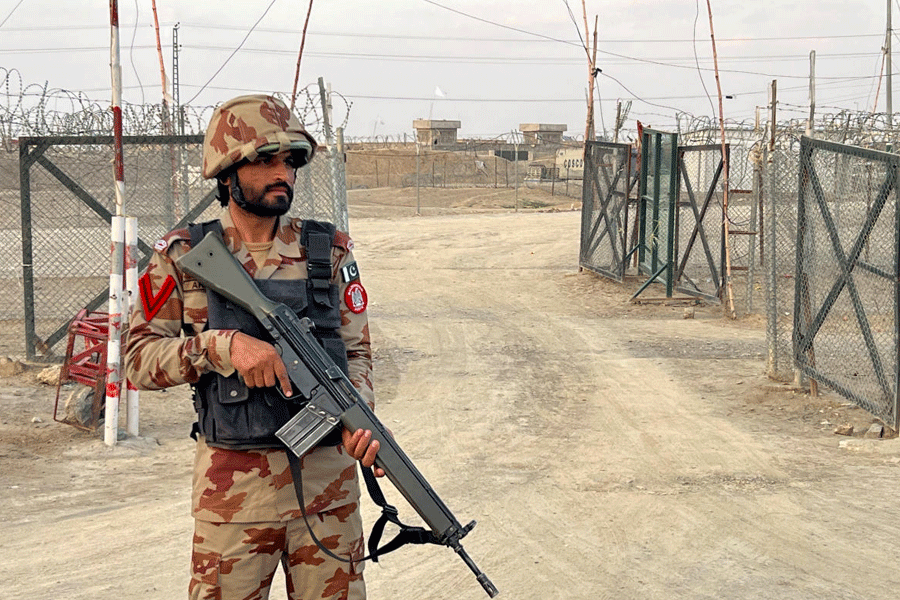
At a time when Iran is locked in a war with Israel and the United States of America, another conflict closer to India is also threatening to explode into a security nightmare for the region. Four days after Pakistan bombed Kabul and several other Afghan cities, accusing the country’s ruling Taliban of sheltering anti-Pakistan groups, fighting across the Durand Line has intensified. Pakistan has faced repeated terrorist attacks in recent months, and many of them have been claimed by the Tehrik-i-Taliban Pakistan, which, though distinct from the Afghan Taliban, is ideologically aligned with Kabul’s current rulers. The Afghan Taliban has rejected Islamabad’s allegations that it has effectively given the TTP a launchpad from where to attack Pakistan. But after months of skirmishes and occasional bombings along the border, Pakistan’s defence minister declared an open war on Afghanistan last Friday. Since then, Afghanistan has hit Pakistani border posts, and on Sunday, the Taliban claimed to have thwarted a Pakistani attack on the Bagram air base, which the US and its allies had used during the years when NATO was in Afghanistan. Neither side appears willing to back down. With the world’s attention on the Middle East, this has the potential of creating a dangerous dynamic where the conflict could spiral out of control.
Militarily, Pakistan and Afghanistan are not equals. The Taliban has no real air force, for instance. But that uneven equation in many ways makes the fighting even more dangerous. It is easy for the mightier nation to tell itself it can do whatever it wants without real consequence. But policymakers in Pakistan and the region know that is not true: just as Pakistan has bled India for decades with asymmetric warfare using terror groups, the Afghan Taliban could actually remove any guardrails limiting how much havoc outfits like the TTP can unleash in Pakistan. For India, the developments are worrying. New Delhi is attempting to build a relationship with the Taliban
and has, in fact, criticised Pakistan over its bombing of Afghanistan. But as the prime minister Narendra Modi repeatedly emphasises, India has also been a consistent critic of terrorism — no matter who the perpetrator or the victim is. Growing terrorist attacks in Pakistan by Afghan-based groups could push India into a corner. Continuing to back the Taliban could strengthen Pakistan’s narrative that New Delhi is duplicitous about combating terrorism. Pakistan may indeed be reaping what it sowed, but India cannot afford to be seen to be rejoicing.