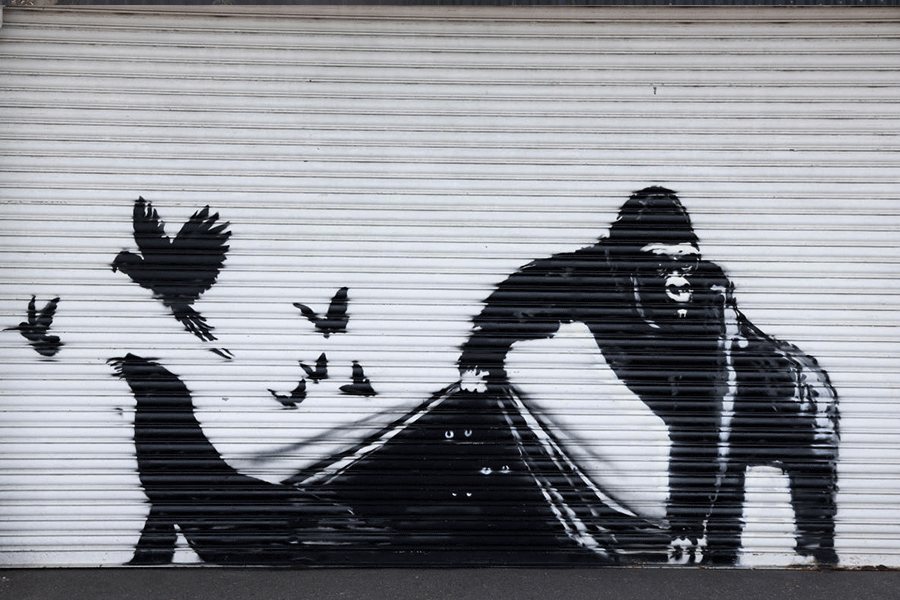
Curiosity is known to kill the cat; yet inquisitiveness continues to animate the pursuit of artists who choose to remain unseen. The latest effort by a media organisation to identify the street artist, Banksy — he might be a Bristol native by the name of Robin Gunningham — underscores the tension that lies between artistic independence and the need to bracket art with its creators. For years, anonymity has functioned both as Banksy’s shield and his method. This is because street art frequently occupies the realm of legal liminality where recognition can invite sanction or suppression. Concealment thus enables artists to create in contested public spaces — Banksy, for instance, has painted in war-torn Ukraine — without immediate institutional interference. It also helps maintain distance between the work and the individual, allowing meaning to emerge without biographical framing of the art. Banksy’s preferred themes of conflict, authority and consumption have retained clarity precisely because his identity has not overshadowed his creations. Remaining unknown can thus be a conscious decision on the part of an artist.
It must be asked here whether the speculation around Banksy’s identity is emblematic of a broader cultural preference for artistic accountability or a media-fuelled speculation meant to sustain public attention over time. Prolonged curiosity has commercial value. On the one hand, the constant pursuit of unmasking Banksy without conclusive results — even the latest investigation has not been able to produce irrefutable evidence — keeps churning out news that attracts attention. On the other hand, the revelation of the identity of a furtive figure can be framed as a major journalistic achievement.
The desire to resist such identification is not synonymous with Banksy though. The author, Elena Ferrante, has consistently resisted exposure, arguing that her work stands independently of her identity, even as journalists attempted to trace her through financial records. Another novelist, Thomas Pynchon, has avoided public appearances for decades, cultivating a body of work that is discussed without the interference of the persona. The visual artist, Vivian Maier, too, produced an extensive archive that remained unknown during her lifetime. Each of these instances reflects a deliberate refusal to align creative output with personal visibility. Parallelly, the persistent attempts to uncover these identities reveal a recurring inability to accept that authorship may not be compromised by the lack of personal exposure.
Permitting artists to remain unknown preserves a vital space for intellectual and creative autonomy. It affirms that the significance of art lies in its capacity to engage, challenge and provoke irrespective of the artist’s identity. Respect for anonymity —
privacy — protects a form of expression that operates beyond conventional expectations of visibility. In the case of Banksy, his work has already shaped debate and drawn scrutiny without confirmation of identity. A culture that values artistic freedom must accept that some creators will choose obscurity and that such a choice deserves recognition rather than intrusion.