
In Ms X vs Union of India & Others, the Supreme Court of India by its order dated July 25, 2016, categorically permitted abortion excusing the statutory time limit of 20 weeks. In fact, this order has cleared an ongoing legal tussle in the Bombay High Court in which the request for termination of a 26-month pregnancy, on grounds of congenital disability of the foetus, was dismissed. This caused a furore; there were demands to increase the time limit for abortion. This shows deep existing intolerance towards life with disabilities. In fact, this persisting intolerance was self-created by the abortion laws.
The law on medical termination of pregnancy
The Indian abortion law — Medical Termination of Pregnancy Act, 1971, or MTP Act — legalised abortion within 20 weeks of the pregnancy, on the grounds of saving the life of the mother or to prevent the birth of an “abnormal” (in terms of physical and mental health) child. It provides for abortion on the grounds that the pregnancy is likely to result in the birth of a child with physical or mental abnormalities. This order tends to endorse prejudices about disability. It causes an unimpeded view that, life with disability is “undesired” and has to be avoided. This social prejudice has been displayed in a subsequent law, which banned the use of prenatal tests for the purpose of sex selection.
The PNDT Act and disability selection
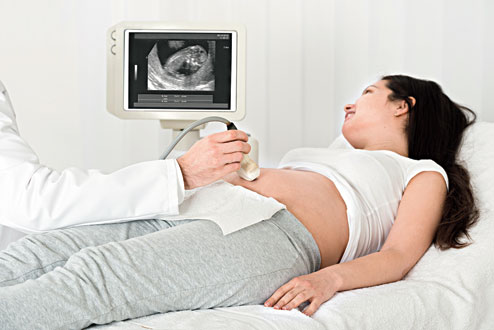
While prenatal diagnostic tests were introduced in India during late 1980s, the women’s rights activists were quick to point out the hidden danger in such science to facilitate sex selection. It was a reasonable apprehension in a patriarchal society such as India. It points towards persisting discrimination against both women and persons with disabilities. Since women’s rights were developed evincing “equality and non-discrimination”, the lawmakers committed to ban the use of such tests. However, the medical profession has convinced others about the need to use such tests to “eradicate abnormalities”.
Consequently, an amendment was carried out in the Prenatal Diagnostic Techniques (Regulation and Prevention of Misuse) Act, or PNDT Act, of 1994 to carry on with disability selection. Whilst the PNDT Act explicitly prohibits sex selection, it permits disability selection. It is “selecting out”, because the purpose of routine prenatal tests is to terminate foetuses diagnosed with any disability. The law, thus, has collaborated with the medical profession in its mission to clean society from any “abnormalities”. The combined efforts of these laws is that no person with disabilities shall find a place in our world.
The global scenario on disability selection
In English law, the Abortion Act, 1967, provides intact provisions for selecting out a foetus with disabilities. Section 1(1)(d) of the law treats the physical or mental disability of the prospective child as a substantial risk. The substantial difference of the English law from Indian abortion law can be found in its “no time limit” stand for disability selective abortion. The original time limit of 24 weeks was revised, removing the upper time limit by introducing Section 37 of the Human Fertilisation and Embryology Act, 1990. This shows the extent of the application of the law to prevent the birth of a person with disabilities and its undesirability towards life with disability. Although, Abortion Act does not apply in Northern Ireland, the majority of abortions are performed in Ireland on this ground. This is in furtherance of a 1938 judicial decision which legalised abortions on grounds of “probable consequences of physical and mental wreck of women”.
Similarly, federal US laws adopted a diverse stand on selective abortions. American laws specifically prohibit selective abortion on the grounds of sex and colour, but permit it for disability. Most US states follow the “foetal viability” test to decide the deadline for abortions.
Although legal sanction on disability selective abortion provides the impression of empowering women and recognising her pro-choice rights, it is not really so. Because such choice is not an informed choice but a forced one by law and science. A few pro-life advocates may counter the abortion claims on right to life of the foetus, but not for a foetus with disability. Thus the ongoing debate and its reason is very clear. It is not about the right to life of the foetus or right to abortion, it is about internalised legal prejudice. But the crucial question is about the lives of persons with disabilities.
The UNCRPD call on human dignity
The human rights model of disability perceives disability as an inherent human condition. The UN Convention on Rights of Persons with Disabilities (UNCRPD) has endorsed inherent dignity to persons with disabilities. Article 5 of the UNCRPD explicitly addresses the right to equality and non-discrimination. Among other points, it states: (1) Parties recognise that all persons are equal before and under the law and are entitled without any discrimination to the equal protection and equal benefit of the law; (2) Parties shall prohibit all discrimination on the basis of disability and guarantee to persons with disabilities, equal and effective legal protection against discrimination on all grounds. Strengthening the right to equality, Article 10 of the UNCRPD recognises the right to life of persons with disabilities on an equal basis with others. This affirmation challenges the medical model of disability which views life with disability as “abnormal”. A combined reading of these rights also raises the question: does the legal order on disability selective abortion contradict the universal law?
The states that become parties to the UNCRPD agree to promote, protect, and ensure the full and equal enjoyment of all human rights and fundamental freedoms to all persons with disabilities, and to promote respect for their inherent dignity. India has both signed and ratified the convention. Therefore, India is under an obligation to review her abortion laws — the MTP Act and the PNDT Act — to take stock whether existing legal provisions on disability-selective abortion contradict her international promise.
India may be the first among the few to initiate the efforts to harmonise their laws with the UNCRPD. However, disability-linked abortions and their legality is still out of the legislative purview, as the drafting committee found that it was premature to invite such concerns in a society in which disability is perceived as not worthwhile. However, this delay is at the cost of the rights of persons with disabilities, thus it is high time we revisit the legal order on disability-selective abortions.
The author teaches law in Bangalore