Today, Bata shoes are so deeply embedded in local life across the Global South that people often assume the company is native to the region. In Vietnam, it feels Vietnamese. In Nigeria, Nigerian. And in India, Bata is practically a household institution.
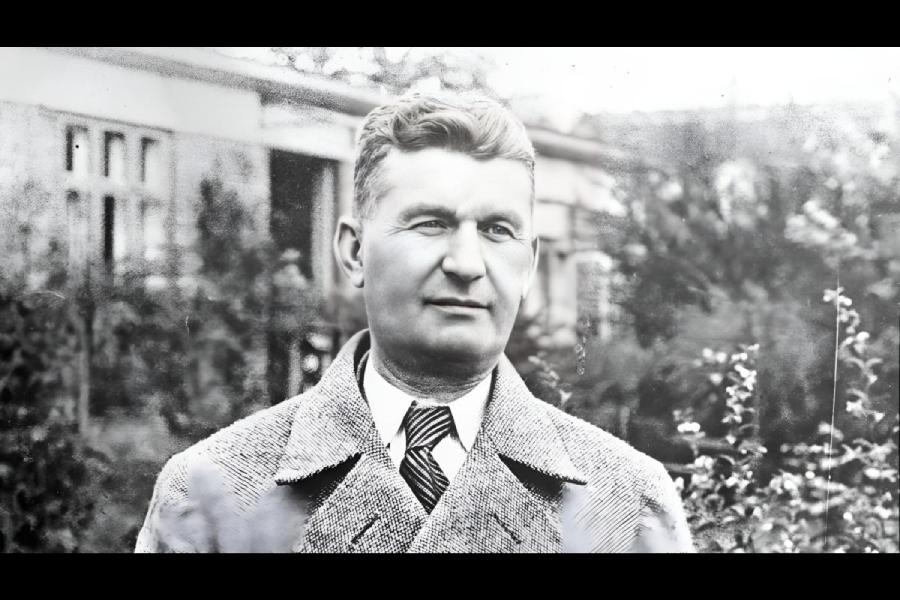
Yet when Tomáš Bata (picture), the Czech industrialist who came to India in the 1920s, first turned his attention to the country in 1925, he was convinced he was bringing modern civilisation. He did not see Indians as equals: he saw them as people who needed industrial discipline, and shoes were part of the lesson.
Like many European industrialists of the era, Bata absorbed the assumption that Western methods represented a universal standard of progress. Societies that did not conform were not different; they had been left behind. Factories would fix that. Shoes, in his imagination, were not trivial consumer goods. Proper, factory-made footwear symbolised hygiene, order, and productivity. Teaching people to wear them was, in his mind, a step toward.
In the 1920s, India, still under British colonial rule, appeared to Bata as both a business opportunity and a social mission. Instead of merely exporting European shoes to colonial elites, he wanted to manufacture locally and sell cheaply to the masses. The paternalism was unmistakable. Bata believed industrial discipline could improve Indians whom he saw as lacking order and efficiency.
In 1931, Bata established a major operation near Calcutta, in what became Batanagar, one of India’s earliest planned industrial townships. Modelled partly on Zlín, it featured worker housing, schools, hospitals, sports facilities, and a highly controlled factory regime. This was industrial paternalism in complete form. Welfare existed, but it was conditional. Housing and benefits were tied to employment and output. The management closely monitored workers’ time, behaviour, and performance.
Bata died in a plane crash in 1932. He never saw how deeply this process of localisation would shape his company’s future.
When India gained Independence, many foreign firms associated with colonial rule faced hostility or decline. Bata’s position was different. By then, it was not just an importer serving colonial elites. It was a domestic manufacturer employing thousands of Indian workers, producing locally, and selling affordable goods to ordinary people. Gradually, Bata’s Czech origins became a historical footnote. India did not just host Bata; it sustained it. As markets in Europe fluctuated and global competition intensified, India’s scale and growth became central to the company’s survival. Bata needed India more than India needed a European paternalist.
Tomáš Bata came to India believing he was bringing order to a society. His worldview was shaped by racial hierarchy and industrial missionary zeal. But the long-term success of his company depended on the labour, skills, preferences, and agency of the very people he presumed to instruct. Indian workers made the factories run. Indian consumers determined what sold. Indian managers shaped strategy. Indian markets provided scale.
None of this erases the inequalities of the past. Early Bata operations were embedded in colonial economic structures. Labour discipline was strict, and power was unevenly distributed. But history rarely follows the script its protagonists imagine. Systems built on hierarchy can produce outcomes that exceed and sometimes undermine the assumptions of their architects. Bata’s story in India is one such case.