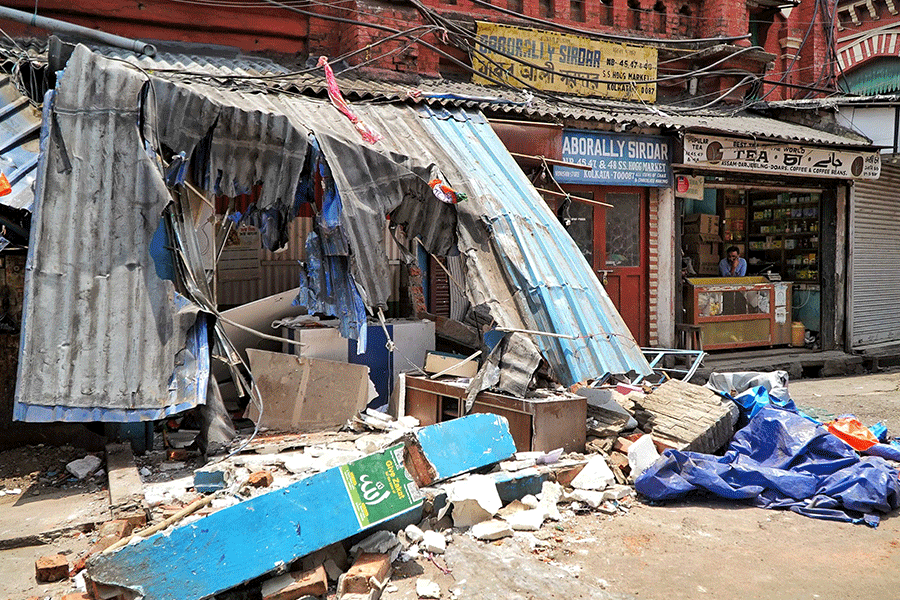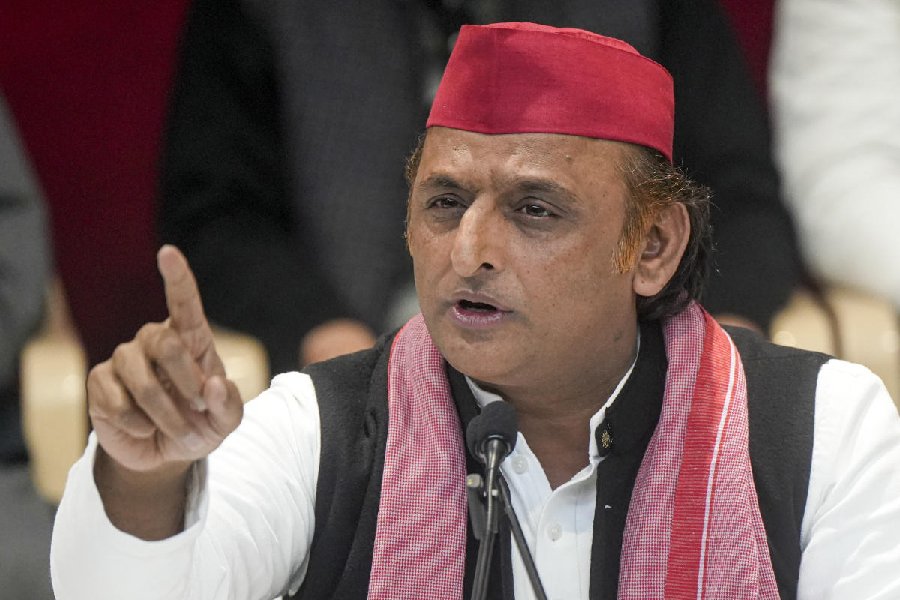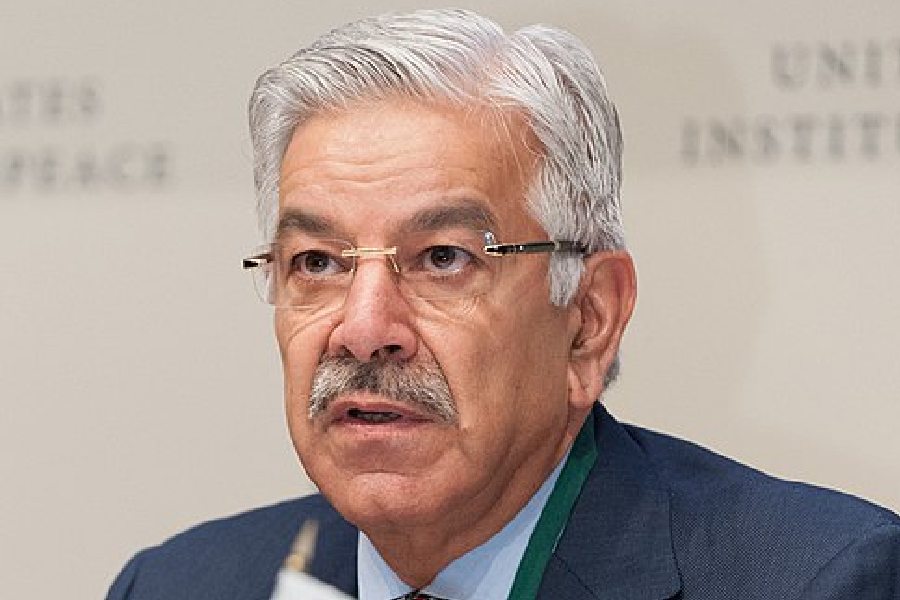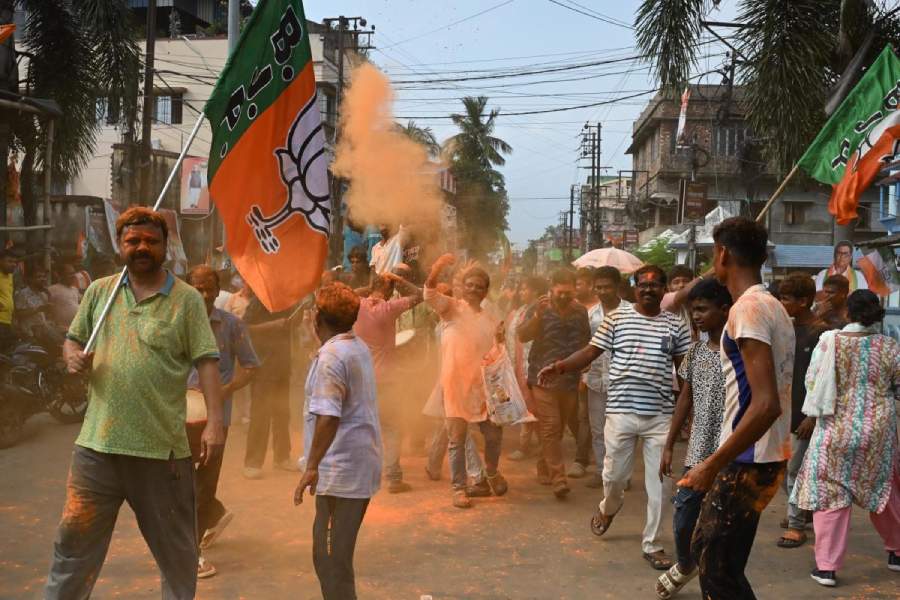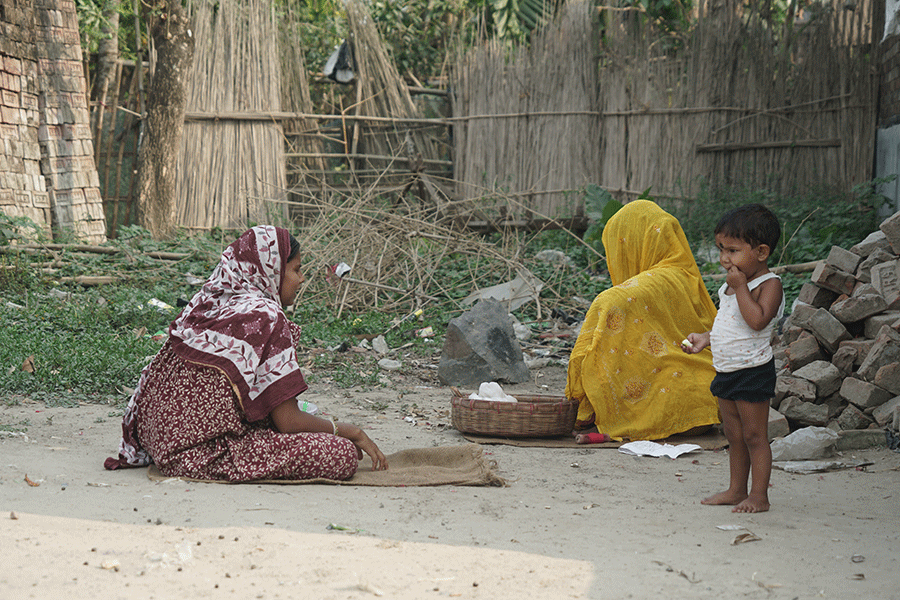
You don’t need to necessarily cross a river under the cover of darkness or cut through a wire fence to become a “Bangladeshi infiltrator” in the borderlands of north Bengal. The recipe is far simpler, a three-step sequence that requires no movement at all.
First, live in a village close to the 2,216-kilometre border that separates India from Bangladesh. Second, ensure that the village has a Muslim majority. Third, be a Muslim.
In the tea stalls and marketplaces that dot the borderlands of north Bengal, there is a phrase that acts like a physical blow. It causes conversations to freeze and, more often than not, turn hostile.
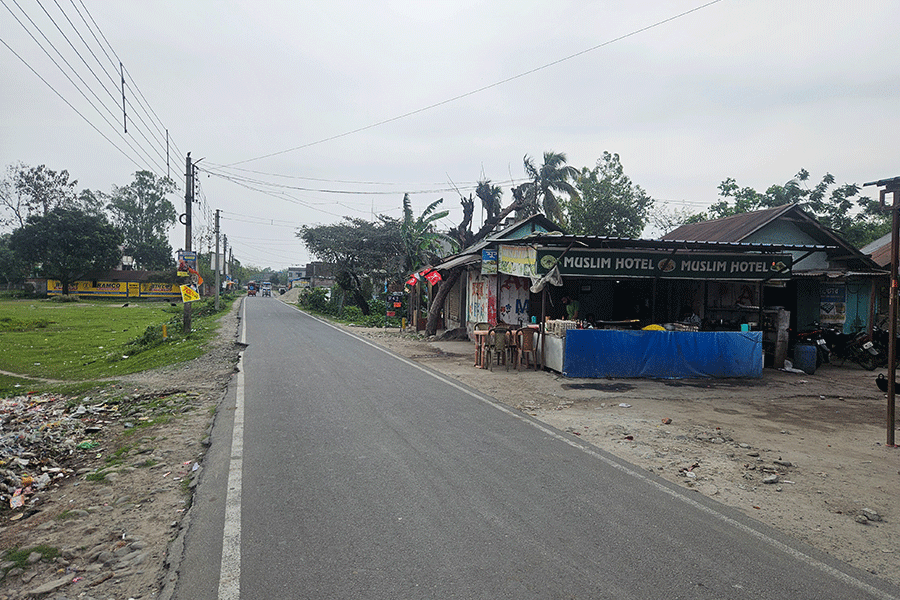
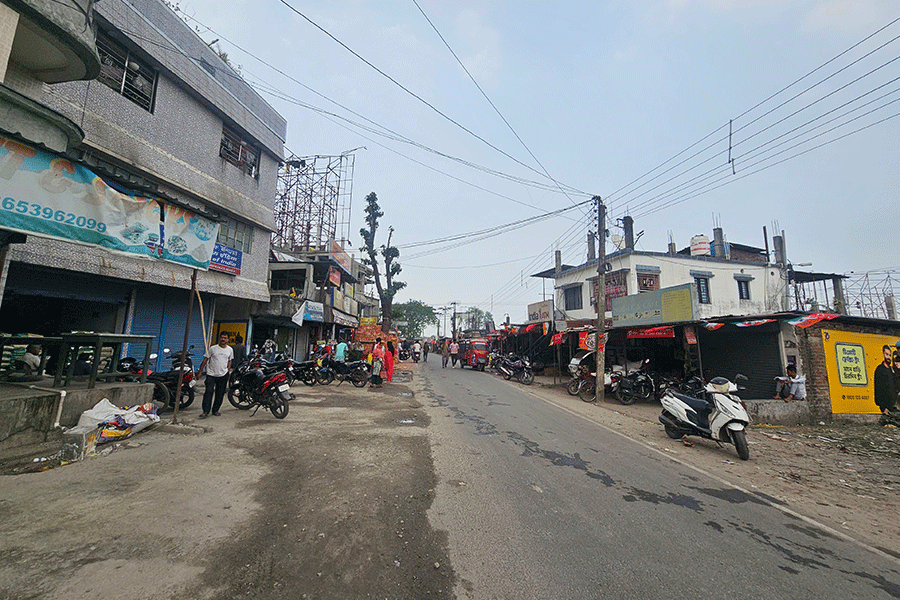
In Jotiakali, a small settlement in Siliguri’s Fulbari area, the mention of “illegal immigrants” triggers a visceral, defensive reflex.
To the politicians campaigning for the upcoming Bengal Assembly elections, the term “Bangladeshi infiltrator” is a convenient bit of campaign shorthand. But in villages like Jotiakali, near Siliguri and Maldah’s Baishnabnagar, the word has become a form of linguistic shrapnel. It is a label that transforms a neighbour into a suspect and a lifelong resident into a ghost.
Ask anyone about the presence of "illegal Bangladeshis" in their village and you are met with a brisk "No, there aren’t any here."
Neighbour or infiltrator?
In Jotiakali, a small settlement in Siliguri’s Fulbari area around 570 km north of Kolkata, the mention of “illegal immigrants” triggers a visceral, defensive reflex.
“We have known each other for generations,” said Anarul Mohammad, 50, who sells lottery tickets from a cramped wooden kiosk in the area. “Everyone knows who belongs. If a stranger tried to live here, we would know in an hour. But the narrative now is that we are all hiding someone.”
The fear is not unfounded. Across the state, residents have been consuming a steady diet of rumours and digital hearsay.
For the BJP, the "infiltrator" is a potent symbol of a state government that they claim has compromised national security for "appeasement".
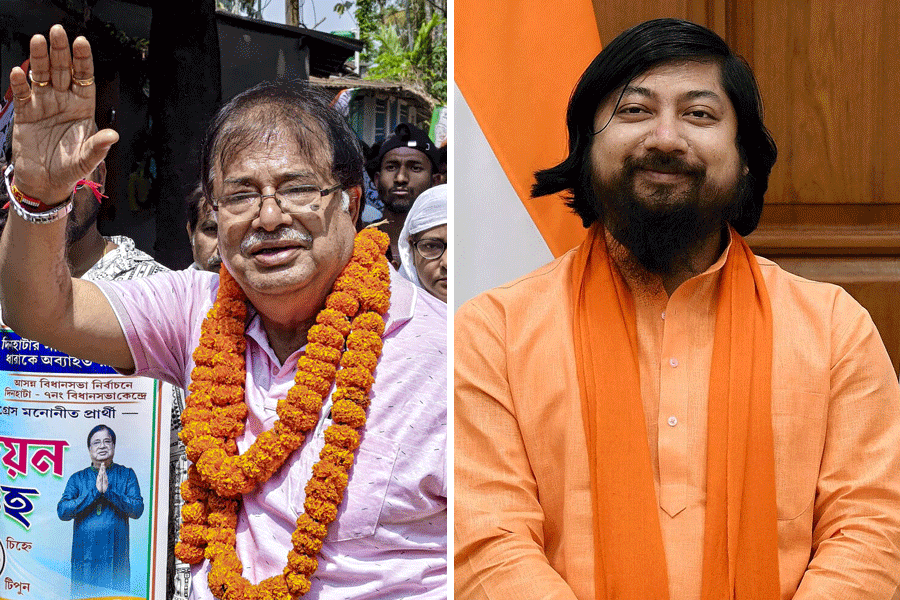
“The state government has helped several infiltrators get Indian documents,” said Shankar Ghosh, the BJP MLA from Siliguri. “From Jotiakali to Newtown [a Kolkata suburb], they are everywhere. Infiltration is the biggest issue facing Bengal.”
“Infiltration in these areas is an absolute lie,” said Gautam Deb, mayor of Siliguri and veteran TMC leader.
“These people are recorded landowners. If the BJP says people are crossing the border, they should ask their own home ministry and the BSF. What are they doing?”
In Baishnabnagar, Gautam Mondal, 30, initially agreed, voicing his support for the special intensive revision (SIR) of electoral rolls as a way to "cleanse" the list of fake voters and “Bangladeshis”.
Asked about Badiur Rahman, a man Mondal has known all his life, whose name was deleted from the voters’ list, Mondal’s confidence wavered.
“No, not him,” Mondal said. “In this village, the deletions are just... mistakes. Spelling errors.”
It is this gap between the abstract "infiltrator" of the political rally and the neighbour at the local mosque that the ruling Trinamool seeks to exploit.
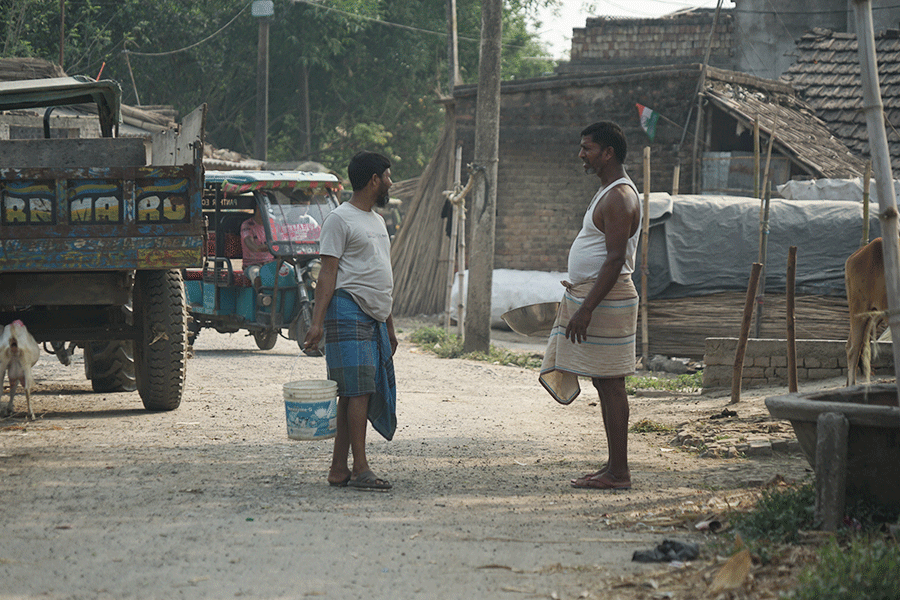
In villages like Jotiakali and Baishnabnagar, the word has become a form of linguistic shrapnel.
In 2016, Baishnabnagar was one of the three Assembly seats the BJP managed to win in Bengal. By 2021, the pendulum swung to the TMC, driven largely by a "polarisation of fear" regarding the National Register of Citizens (NRC) and people fearing being put into detention camps.
As the 2026 elections approach, the "fear of the list" has returned, but with a sharper edge.
“We never differentiated between Hindu and Muslim here,” said Samira Yasmin, 32, who runs a small grocery shop in Jotiakali. “But now, the BJP and the SIR are drawing a line through our hearts. Muslims are looked at with suspicion the moment a document is missing.”