
Bhubaneswar, May 23: The health and family welfare department has decided to survey all district headquarters hospitals and construct waste treatment plants on their premises.
To begin with, the Odisha Water Supply and Sewerage Board will conduct the survey on behalf of the health department and submit a report on how to go ahead with the project with identification of sites and estimating the cost of setting up the plants.
"We have released funds to the sewerage board to undertake the survey in the district headquarters hospitals to set up the plants.
"The board will submit its report within three months after which we will look at the logistics of setting up the plants - either by ourselves or through any agency," said director health services Kailash Chandra Dash.
At present, the state has 37 district headquarters hospitals, three medical college and hospitals, a cancer research centre and a dedicated children's hospital.
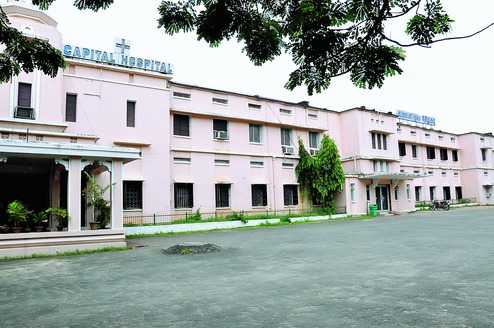
While the medical college and hospitals, Acharya Harihar Cancer Research Centre, the children's hospital and Capital Hospital can to treat effluents, 35 others do not have such facilities in place.
The district headquarters hospitals now release sewage or effluents into open drains without treatment that makes the people in the area vulnerable to diseases.
The new biomedical waste management rules mandate setting up of a treatment plant and the National Accreditation Board for Hospitals seconds it.
"It is important for hospitals to manage their waste safely. The biomedical waste is highly hazardous and could spread a number of deadly diseases. The waste water also needs to be treated first before being discharged into the drains," said environmentalist Alok Mohanty.
The unsafe practice of discharging untreated waste into the municipal open drains also increases the chances of drug resistance.
"In hospitals, the volume of antibiotics used is high as compared to residential buildings. The antibiotic consumed by patients is not completely inactive in their discharges that are flushed into the municipal sewer," said another environmentalist Sailabala Padhi.
She added this discharge travels to the main sewer, which could be some kilometres away, leading to the possibility of soil and drinking water contamination in case the sewer pipe leaks.
"The presence of this faecal flora in the soil can lead to drug-resistant bugs in the community. This is a dangerous scenario and should be checked. It is a right decision of the government to set up the plants," said Padhi.