In 1936, Odia was the first language around which a state was formed. However, even after 79 years, it is not the language of the state administration and judiciary. It is not even a medium of instruction in schools and colleges.
The scenario is pathetic. At the primary level, there are teachers for English, Sanskrit, Hindi, Telugu and even Bengali, but no specific teacher for Odia. At the graduate and post-graduate level, there is not a single post for professor teaching the language in the state-run colleges.
The tribal population is 24 per cent of the state population, but many tribal communities are now endangered. According to the data released by Census of India, Odisha is a multi-lingual state. If the regional varieties and minority mother tongues are taken into consideration, the entire education system should have been treated as multi-lingual.
 "Mainstreaming'' is a technical term contributed by the Indian academics to the education vocabulary. It is a rejection of the common school idea. It aims to make a transition from smaller languages to bigger ones and in the process killing them.
In short, it accepts dominant monolingualism as the underlying principle. Whether it is Odia for the tribals or English for all, mainstreaming is the rejection of multi-lingualism. It is at this stage that Odia, the first Indo-Aryan group language in the country, has received the classical status. It means that Odia is recognised as an ancient language with unbroken history and highly developed literary and cultural tradition. The challenge is to sustain this classicality and build a rich contemporaneity.
The first step in this direction is the preservation of ancient historical records, including rock paintings, inscriptions, copper plate grants and palm leaf manuscripts. Even the fast disappearing earliest printing materials need to be digitised and preserved. Today the art of reading mass literature is getting lost.
The state government had a manuscript-editing department in the museum, but it is now lying closed. It is very important to train people in epigraphy, numismatics and other related subjects. The second thing is to make use of technology. It is very important to adopt unicode to preserve lexicon on the basis of available corpora to prepare grammars and language-learning materials. The Institute of Odia Studies and Research, which has been pioneering the endeavour to bring together non-government and government efforts and present a unified demand for classical status for the Odia language has succeeded in persuading the government for establishing a Central Institute of Classical Odia.
As complementary to this effort, the institute is struggling to persuade the government for an Odia university. The varsity is expected to break new grounds. Study of language is bound to be interdisciplinary and is an expression of the plural nature of anthropology. This work cannot be entirely entrusted to creative writers, poets, novelists and short story writers.
It is hoped that the state government will take language specialists into confidence and see that sustained activities are undertaken for the development of Odia language and culture.
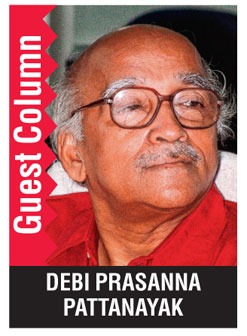
(The writer is a linguist and founder-director of the Mysore-based Central Institute of Indian Languages)