
Berhampur, Oct. 4: Ganjam chief district medical officer Manoj Behera today said they had no control over the government's Mahaprayan hearse, a day after a daily wager carried his dead son home from the community health centre.
The government had launched the Mahaprayan scheme shortly after the news of Daana Majhi of Kalahandi carrying his dead wife home from the hospital hit headlines across the country. The scheme provides free transportation for the dead to the family home from the hospital.
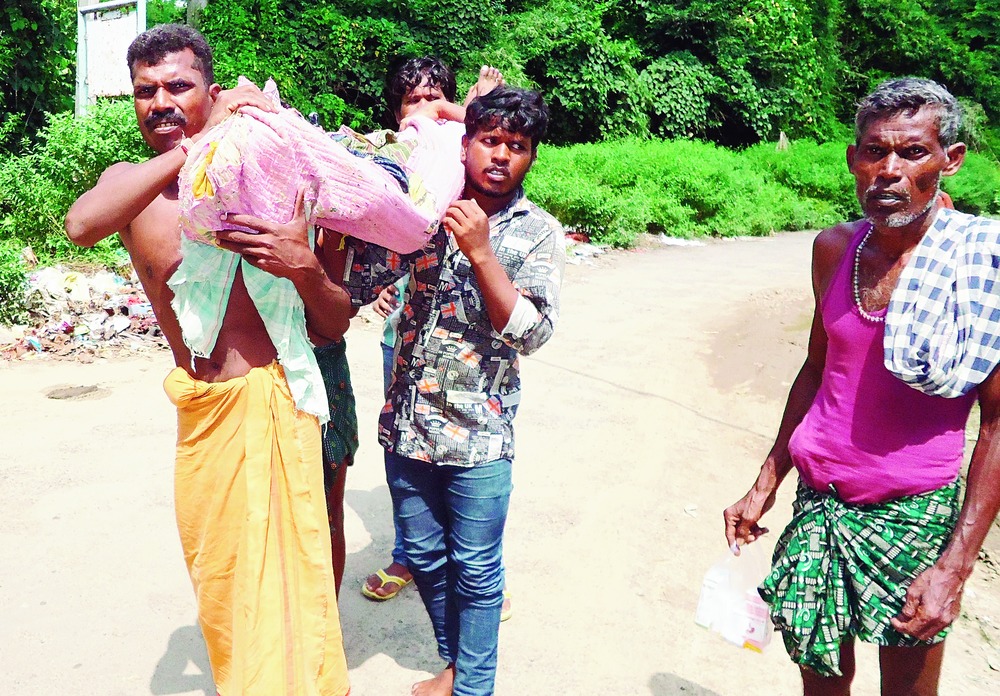
Yesterday, Bhaiga Das, 52, a daily wager, and his relatives were forced to carry his dead son for some 500 meters from the community health centre at Kabisurya Nagar in Ganjam district, 40km from here, to their house in Sekharpur Harijan Sahi, after being denied a hearse.
Sunya Das, 21, the only son of Bhaiga Das who was also a daily wager like him, had been suffering from tuberculosis for the past few months. To get him treated, his father had brought Sunya on a bicycle to the health centre.
"Sunya's condition suddenly deteriorated and he had difficulty in breathing. When I admitted him to the health centre, the doctor, Bidyadhar Behera, gave me a prescription and asked me to buy some medicines. I had no money and I couldn't find anyone to borrow money from. When I returned to my son's bedside after an hour, he was no more," said Bhaiga.
Bhaiga had no money to hire a vehicle to take his dead son home. When he saw an ambulance parked at the health centre, he approached the pharmacist, Madhu Sudan Patra, seeking his permission to carry his son's body home in the ambulance. The pharmacist refused.
"Then I, along with my brothers and my nephews, decided to carry the body back to home on our shoulders. We finally did that," said the bereaved father.
Patra said since ambulances were meant for ferrying patients, there was no way the hospital could have allowed it to carry a dead body. He said: "How can we spare the ambulance to transport dead bodies?"
Ganjam chief district medical officer Manoj Behera said that the health administration had no control over the Mahaprayan vehicle recently that the government had recently launched to ferry the dead home. He said the Red Cross managed the hearses and they fell under the general administration department.
The Mahaparayan scheme was launched in February. Under the scheme, 40 hearses were to be deployed at 37 government hospitals.
In reality, these vehicles are often not available when people need them.