
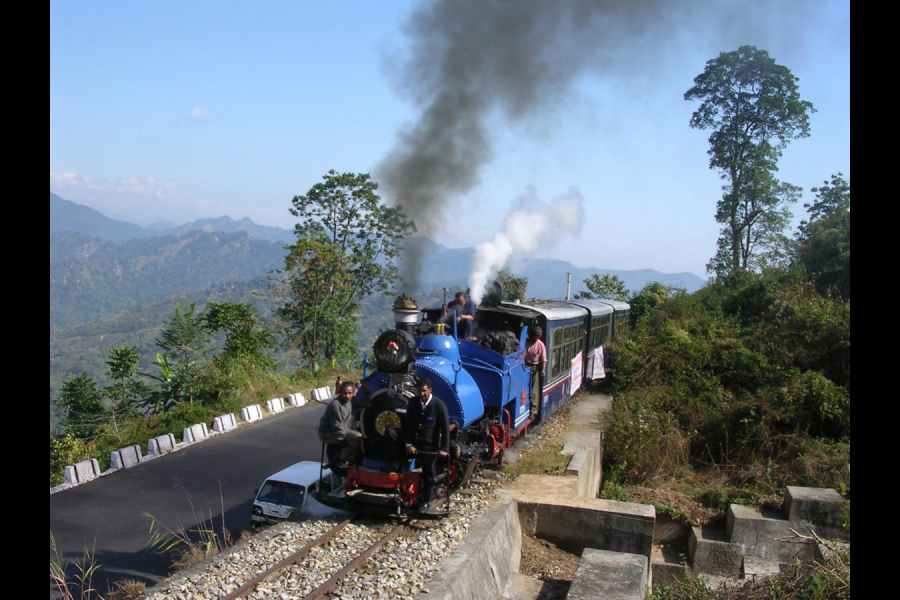
The Darjeeling Himalayan Railway or Toy Train, celebrated for its charm but burdened by chronic losses, is on track to earn a profit this financial year after more than three decades, officials said.
The Unesco-listed World Heritage Site mountain railway earned ₹24.6 crore in the calendar year 2025, higher than the ₹21.2 crore it made the previous year, DHR authorities said. They did not have fiscal-year-wise figures available.
The passenger count rose from 1.74 lakh in 2024 to 2.08 lakh in 2025, sources said.
Replying to a query from The Telegraph, DHR director Rishabh Chaudhary said there were “strong indications” that the DHR would register a profit this fiscal year.
“Last year we failed to break even by just some lakhs,” Chaudhary said.
Sources said the DHR had failed to earn a profit for a quarter century even after being included in Unesco’s World Heritage Site list in 1999.
The Toy Train “used to make profits during the British era (it was a major transport system from the plains to the hills) but the profits started to dwindle from the mid-1980s”, a source said.
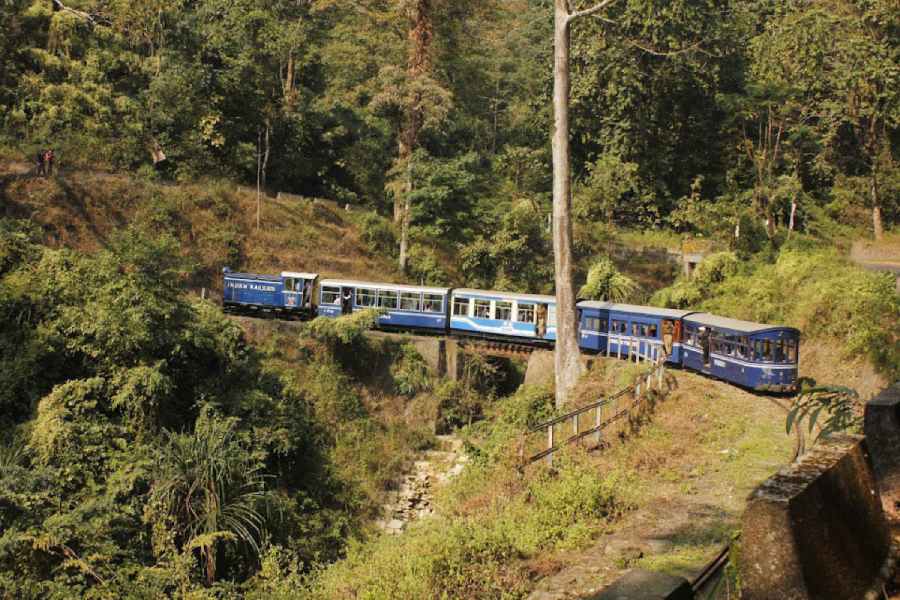
The DHR toy train.
The DHR became fully operational in 1881 and, in its first full year of operations in 1882, carried 8,000-oddpassengers and 380 tonnes of freight.
By 1914, the Toy Train was carrying 250,000 passengers and 60,000 tonnes of freight each year. Its firstcompetition came in 1919, with the introduction of a bus service between Darjeeling and Siliguri.
The bus was about an hour and a half faster than the Toy Train, a railway document states.
By 1984, the Toy Train had stopped carrying mail, beaten by the road competition. Then politics intervened: The DHR was closed for 18 months between 1986 and 1988 because of the Gorkhaland agitation. In 1992, the competition from road transport ended its freight service.
“In the early 1990s, there was talk of closing down the DHR because of the financial losses. But the World Heritage tag gave it a new lease of life,” a source said.
Revenue generation, however, remained a challenge, with the DHR reportedly registering annual losses of about ₹7 crore.
“New initiatives such as the introduction of the ‘joy rides’, chartered trains and safari rides — and the increased passenger footfall because of the publicity drive over the years — are now helping turn the tide,” a source said.
The 13 “joy rides” that the DHR runs from Darjeeling to Ghoom and back during the tourist season are a big revenue earner. The two-hour, 16km round trip costs up to ₹1,500 a passenger and is popular even among those tourists who might find the seven-and-a-half-hour, 88km Siliguri-Darjeeling journey a bit too long.
The safari rides are short trips from Siliguri to places like Sukna.