
Picture by Ashwinee Pati
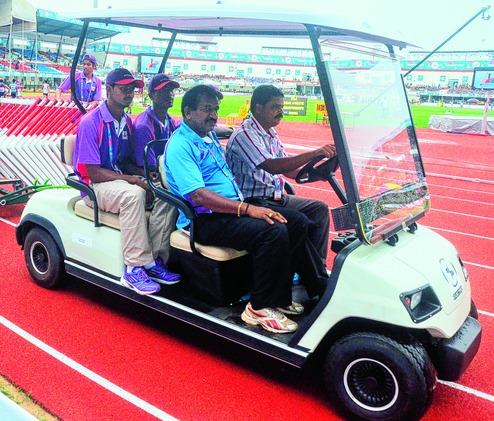
Bhubaneswar, July 20: The development authority and municipal corporation have begun the process to formulate a detailed electronic vehicle policy for the city.
The "Bhubaneswar E-vehicle Policy" is the city agencies' joint effort to promote eco-friendly and non-motorised public transport modes in the state capital.
The International Finance Corporation, a wing of the World Bank, will collaborate with the city agencies to formulate and implement the new policy that aims to improve the eco-system. Bhubaneswar Smart City Limited (BSCL) will also be a stakeholder in the initiative.
Bhubaneswar Development Authority (BDA) vice-chairman Krishan Kumar said a meeting with all stakeholders was held on Wednesday to discuss aspects of the new policy. "We want to promote electronic vehicles and other non-motorised transport modes to provide citizens a city free from pollution," said Kumar.
Sources said experts and consultants Deloitte and C-Step presented initial findings, opportunities and possible options at the high-level meeting. Their inputs can be included in the policy document after detailed study and analysis. The expert consultants have been asked to come up with a detailed e-vehicle policy and roll out a plan of e-vehicles in the city.
"The experts elaborated on the benefits of reduced cost in operating e-vehicles while presenting the initial findings of the market assessment study conducted over the past two months in the city," said an official of the BDA. He added that the findings revealed the average cost per km in diesel-operated vehicles is around Rs 2 per km, while the same for e-vehicles is 20paisa per km.
Various stakeholders, including regional transport officers and officials from Bhubaneswar Puri Transport Corporation Limited were also briefed on the incentives and schemes provided by both the central as well as the state governments for such policies and plans.
"The state government has reduced the one-time registration charge for e-vehicles to three per cent in comparison to the existing six per cent registration charge for diesel-operated auto-rickshaws. The central government, under the National Electric Mission, offers subsidy and incentives through special schemes for e-vehicles," said a smart city consultant who attended the meeting on Wednesday.
Officials said the policy was likely to be implemented on a pilot basis in the proposed Bhubaneswar Town Centre District along Janpath, which is otherwise selected for area-based development under the Smart City Mission.