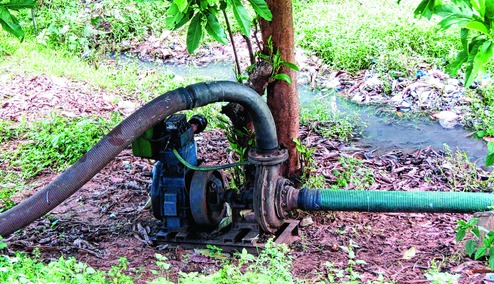

Cuttack, June 8: The civic body today started positioning de-watering pumps across the city to prevent waterlogging during the upcoming monsoon.
The south-west monsoon reached Kerala on May 30, marking the start of the rains.
"We are ready with 275 de-watering pumps as part of our management plan for spots prone to waterlogging in the city. Of them, 12 are located at permanent pumping stations at chronic waterlogging spots," commissioner of Cuttack Municipal Corporation (CMC) Bikash Mohapatra told The Telegraph today.
"We started positioning the portable pumps today. The process will be completed within the next three to four days," Mohapatra said.
The CMC receives complaints of inadequate number of water pumps every year.
"After analysing the complaints, we have identified 91 locations for positioning the higher range of water pumps, which are capable of an output of 24 horse power (HP)," he said.
"We have also constituted teams, each including an engineer, to monitor the situation in all the wards vis-à-vis functioning of the pumps," he a added.
The civic body has added 118 pumps to combat waterlogging since 2013. It also set up 12 permanent pumping stations by spending Rs 2 crore in 2015.
The high power diesel pumps, which range from 5HP to 24HP, have been assigned for low-lying areas prone to inundation caused by overflowing drains. Most of these pumps, being portable, will be positioned in allocated locations.
The permanent pumping stations have been constructed at Deer Park, Chahata, Shivajinagar, Satichaura Idgah, Sishu Bhavan, Police Colony, Raja Bagicha, Bisnabara, Matrubhavan, Andarpur, Tingharia, Shyamsundar Math (Khannagar), Kamalakanta Vidyapith (Jobra).
Official sources said the areas which will be kept under close watch for waterlogging conditions and inundation by overflowing drains include Bidyadharpur, Kanheipur, Nuabazar, Mahanadi Vihar, Press Colony, Jobra, Sikharpur, Roxy Lane, Khannagar, Badambadi, Rajabagicha Labour Colony, Meria Bazar, Rausapatana, Gamandiha, Kesharpur, Police Colony, Stuartpatana, Kafla, Sidheswat Sahi and Tulsipur's Tanla Sahi and Bauri Sahi.
"As part of our rain preparedness, we are close to completing removal of silt load from all surface water channels to maintain full flow capacity," said a CMC engineer.
"The main storm water channels have an outflow capacity of 75,000 to 80,000 cusecs per hour. The silt load causes a nearly 50 per cent reduction in outflow capacity. For this reason, the silt removal operation is undertaken every year before the monsoon," he said.
City resident Pravas Parida said: "Slipshod removal of silt often leads to overflowing of drains and waterlogging conditions following rains."
The exercise covers the entire expanse of the city, constituting two main storm water channels stretching up to 25 km, a network of 35km of branch drains and nearly 100km of tertiary drains. The CMC has decided to continue with mechanical clearing of silt from main drains even during the monsoon to clear stretches where silt load reappears after excavation.