
Tyger Tyger, burning bright,
In the forests of the night;
What immortal hand or eye,
Could frame thy fearful symmetry? - William Blake
Guwahati, June 21: The tiger roar just got louder across Manas National Park in India and Royal Manas National Park in Bhutan.
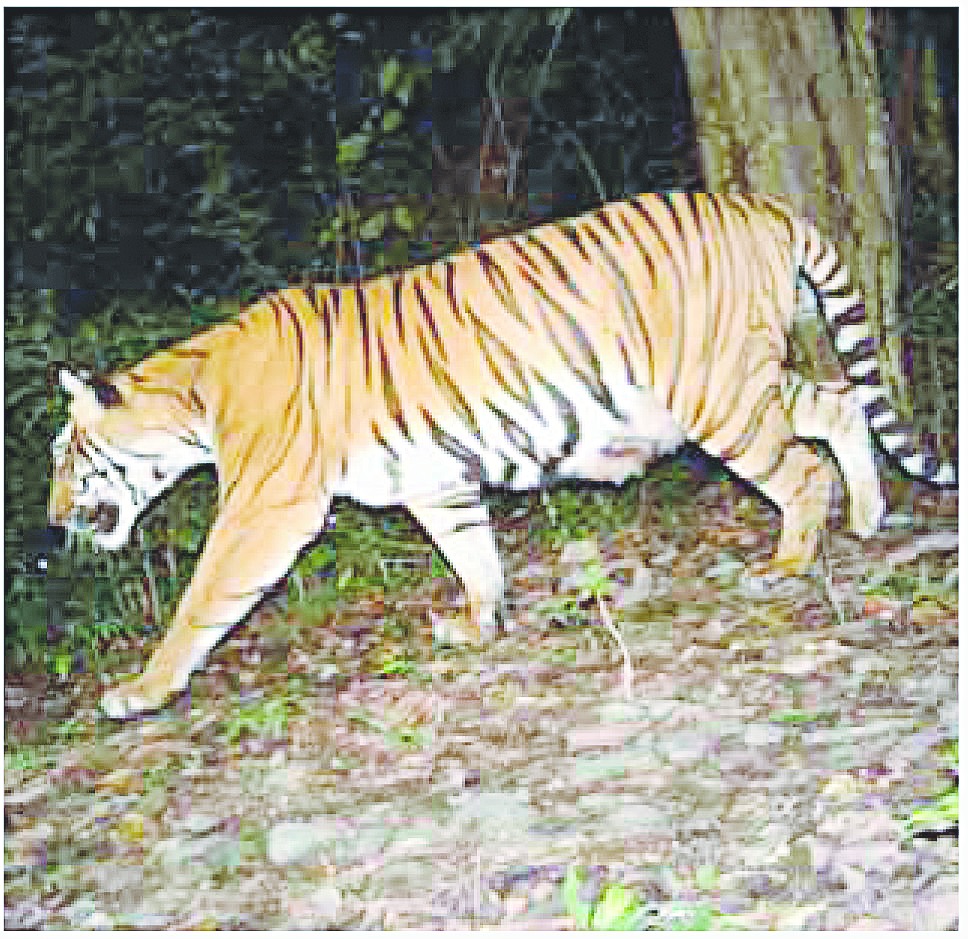
Altogether 21 tigers were camera-trapped during a trans-boundary tiger-monitoring programme conducted across Manas National Park in India and Royal Manas National Park in Bhutan 2015.
Of the 21, camera trapping of tigers 11 were obtained from Royal Manas National Park and 14 from Manas National Park. Four tigers were found to be common to both the landscapes.
The report of this endeavour- Tigers of Transboundary Manas Conservation Area (TraMCA) - was released here today in the presence of officials from both India and Bhutan.
The first such programme in 2011 had identified 14 tigers.
The camera trapping study across Manas National Park in India and Royal Manas National Park in Bhutan was conducted from February 24 to May in Bansbari and Bhuyanpara ranges of Manas National Park and Umling and Manas ranges of Royal Manas National Park, covering an area of 240 square km and 320 square km respectively.
TraMCA encompasses the whole of Manas tiger reserve in India and the group of protected areas in southern Bhutan.
"The presence of healthy core breeding tiger population as evident from the report shows that the TraMCA could well serve as a source population for tigers for Bhutan and parts of the Northeast and should be considered as one of the highest priority tiger landscape region for conservation of tiger populations and their spaces" the report said.
The report quoting Bhutan minister of agriculture and forests Yeshi Dorji said while TraMCA is increasingly acknowledged as a hotspot for biological diversity, the challenges to the ecological integrity of the landscape are profound.
"The increasing demands for wildlife products and forest resources, habitat loss and human wildlife conflicts are some of the prime concerns," the report said
BTC deputy chief Kampa Borgoyary said in the report that the results of the joint effort show an increase in tiger population, which is an indication of the successful combined strategies of the partner countries.