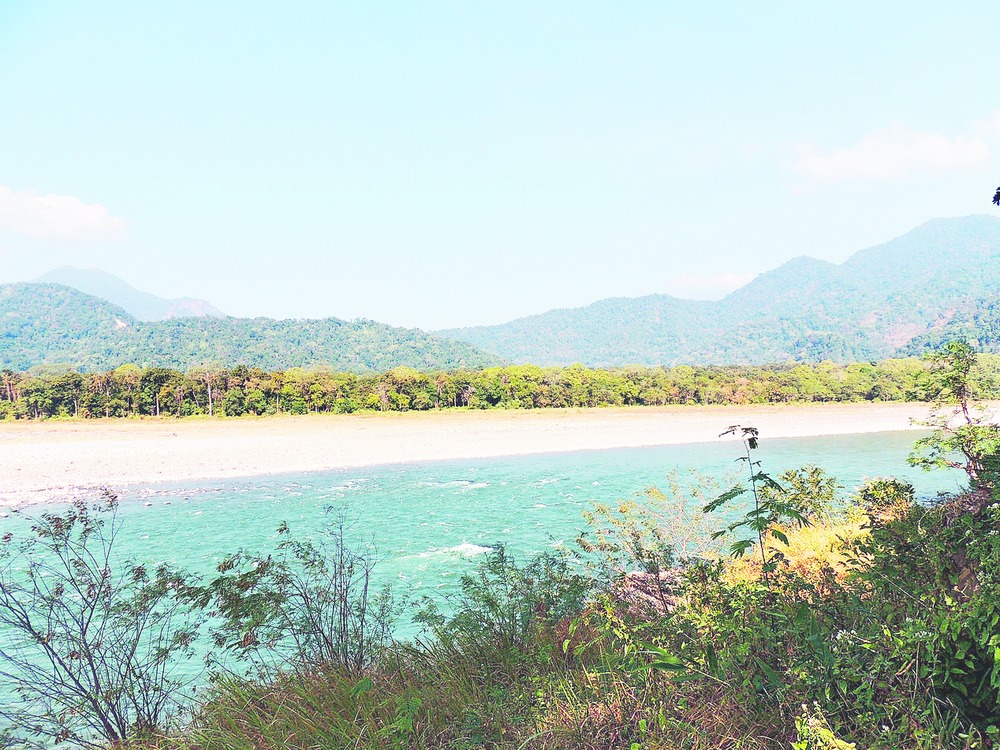

Guwahati, June 23: Indian and Bhutan officials have expressed concern over rampant deforestation in the trans-boundary Manas conservation area, which comprises the Manas tiger reserve in India and other protected areas in southern Bhutan.
A two-day meeting attended by government officials, conservationists and experts representing Bhutan and India, which concluded here yesterday, expressed the need to scale up government efforts to arrest deforestation on an urgent basis.
The delegation from Bhutan, led by Tenzin Wangchuk, park manager, Royal Manas National Park, expressed concern over the current and proposed developments in the landscape and emphasised on further strengthening the collaboration between the stakeholders to achieve its long-term goals.
A report on Tigers of Trans-boundary Manas Conservation Area, which was released during the event, stated that infrastructure is an indispensable part of the development associated with the growing human population but it can also have catastrophic impact on the environment.
"Although the development activities are forbidden in the core zone of the park, the increasing infrastructure development activities such as road construction and laying of power lines could have long-term bearing on the ecological integrity of the national park. A single stretch of road running through the pristine forest can lead to fragmentation of habitat or cut off the migration route for an endangered species, not to mention the environmental scar it leaves on the scenic and pristine landscape of Royal Manas National Park," the report said.
Although the proposed hydropower projects Mangdechhu (720MW), Kholongchhu (600MW) and Chamkharchhu (700MW) are located on the outer edge of Royal Manas, construction of dams may divert water from freshwater habitats causing huge loss to biodiversity.
The report said a highway on the border between India and Bhutan, which is in the proposal stage, is likely to devastate the already shrunken forest areas in the landscape as it will traverse through the pristine forests on the border and further fragmenting the forests and opening more areas to smugglers with road access.
It said illegal logging and wildlife poaching are the major threats to habitat loss and degradation in the transboundary Manas area. The timber smugglers and poachers capitalise on the prevalence of the porous forest boundary and the Indo-Bhutan border and swelling rivers in summer for illegal logging and trafficking of animal parts.
Experts said such development activities would bifurcate the contiguous habitats and adversely affect wildlife, which in turn will adversely affect the ecology, including water availability and agriculture regimes in the trans-boundary conservation area.