The BJP-led Assam government has invited the Coordination Committee of The Tribal Organisations of Assam (CCTOA) — an umbrella body of 26 tribal organisations — for discussions on the Group of Ministers’ (GoM) recommendation to grant Scheduled Tribe (ST) status to six communities.
The decision comes after a series of protests that erupted across the state since Saturday, rejecting the proposal and warning of long-term implications for the existing 14 ST communities.
The invitation was finalised at a cabinet meeting held on Sunday evening, during which the GoM report and the growing backlash following its tabling in the Assam Assembly on Saturday were reviewed.
On Saturday, the agitation had escalated dramatically when tribal students stormed the Bodoland Territorial Council (BTC) Legislative Assembly in Kokrajhar — an unprecedented event reflecting the depth of resentment. The students were protesting the GoM’s recommendation to include the Tai Ahom, Chutia, Moran, Muttack, Koch-Rajbongshi and Tea Tribes-Adivasis in the ST list.
Following Sunday’s cabinet decision to open discussions with CCTOA, the organisation withdrew its state-wide agitation planned for Monday, which included burning copies of the GoM report in all district headquarters. The CCTOA had earlier demanded a high-level meeting with chief minister Himanta Biswa Sarma and the three-member GoM, warning that failure of talks would trigger a “rigorous mass movement”, including blockade of railways and national highways.
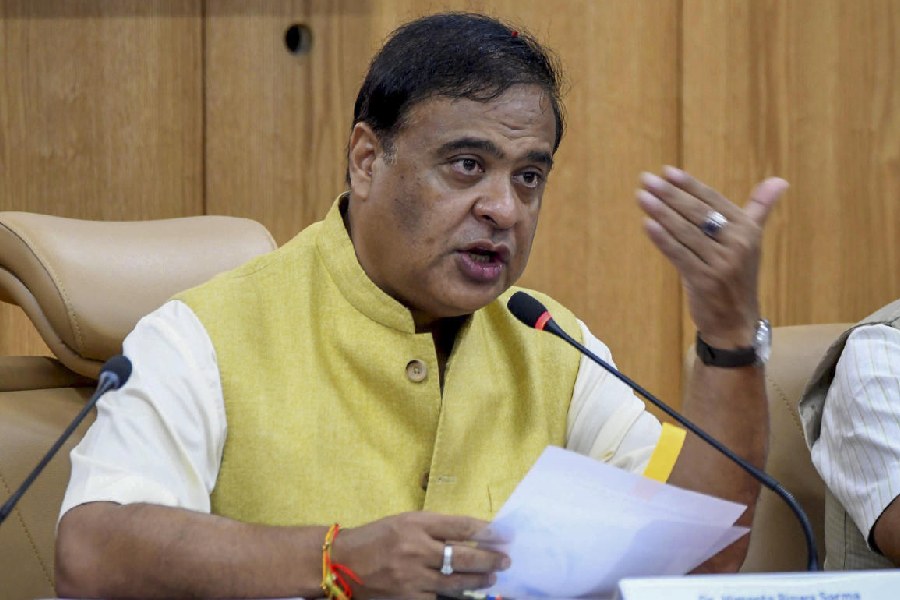
Chief minister Sarma, speaking to reporters in Nagaon, said the upcoming meeting would help “dispel misunderstanding” surrounding the GoM recommendations. CCTOA chief coordinator Aditya Khakhlari confirmed that the meeting will take place in Guwahati on December 4 with the GoM and the chief minister present.
Responding to Sarma’s repeated assurance that the report “will not harm the interests” of existing ST communities and will instead “ensure equitable progress”, Khakhlari told The Telegraph that the CCTOA would convey its “deep resentment” and seek a “comprehensive review” of the report.
Outlining the organisation’s specific objections, Khakhlari said the proposal to accord ST (Plains) status to the Koch-Rajbongshi population of undivided Goalpara district would “adversely affect” the existing STs living in the Bodoland Territorial Council and Rabha Hasong Autonomous Council areas. He said these regions, which have a significant tribal concentration, would see major shifts in reservations, land rights and political representation if the Koch-Rajbongshi community — much larger in number — is added to the list.
The second major concern relates to the creation of a new ST (Valley) category for the Tai Ahom, Chutia, Tea Tribes-Adivasi and a section of the Koch-Rajbongshi population. Khakhlari warned that at the national level, there is “no differentiation at all” between ST categories, which means all communities — existing and newly added — would compete equally for reservations in central government jobs, UPSC examinations, etc.
“In Assam, if the new category is accepted, we will have three ST groups—ST (Plains), ST (Hills) and ST (Valley). But at the national level they all collapse into one list. This will reduce opportunities for the existing STs,” Khakhlari said. “That is why we have been demanding that the rights and interests of the existing STs be frozen and protected both at the state and national level.”