 |
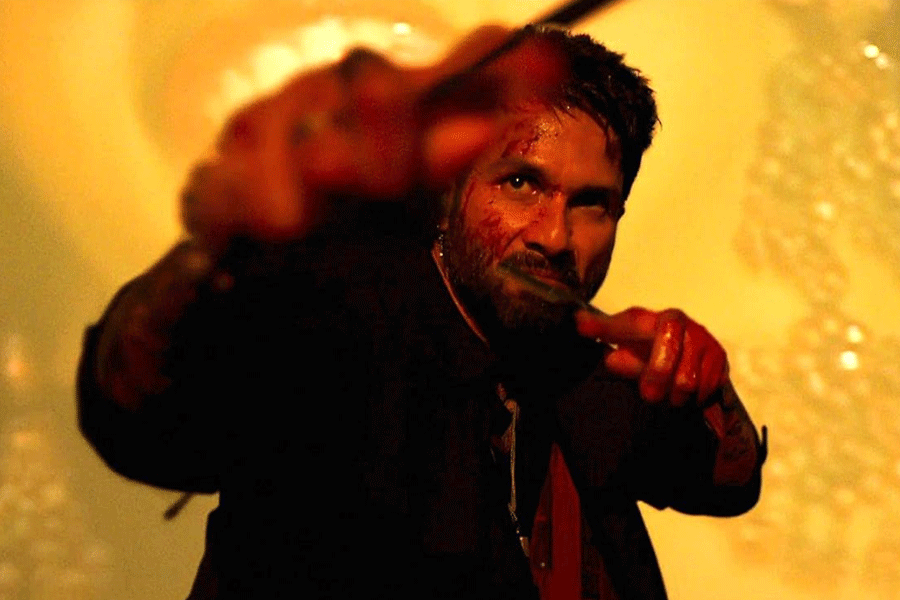
| A scene from the play, Tongighar |
Insurgency and unrest in present day society have rarely been depicted aesthetically in the audio-visual medium. More often than not plays, films or any other form of production aiming at introspection turn out to be either mere propaganda for peace or condemnation of violence.
This is exactly where the efforts of Somoloy and Surjya deserve kudos. These two cultural fora recently presented a series of dramatic visualisation-cum-recitation of poems by Amarjyoti Choudhury and Bhupati Das along with a stage play at Kaliyani Club auditorium in Numaligarh Refinery. Powerful performances by artistes and thought-provoking presentation by the directors have enabled the production to leave an indelible mark on the audience’s mind.
The main theme of the entire series of presentations was social unrest, instability and fear, and thirst for peace. The dramatic visualisation-cum-recitation of poems, titled Deh: Bandhu Parikrama comprised three items, designed and directed by Kamal (Rana) Sarma.
The first poem was the recitation of a self-composed piece titled Botah by Sarma. He presented the item as an epilogue to the entire programme. It was followed by the recitation of Amarjyoti Choudhury’s poems Maati and Paani by Aboni Bora. A name to reckon with in the arena of recitation of Assamese poetry, Bora was flawless. He was supported by young Ankita Sarma, who sang parts of the poems.
The next piece, titled Jui, was based on an English poem written by Bhupati Das. This presentation included recitation in an immaculate style by Satyaki D’com Bhuyan and Queen Hazarika. A dramatic piece was recited brilliantly by young Jahnabi Barua and the experienced Nayan Prasad.
The play Tongighar, which followed the dramatic visualisation-cum-recitation session, began with a song by Kishore Giri. The solo number was presented as a link between the two parts of the show.
The play, written by Amarjyoti Choudhury and directed by National Award-winning filmmaker Sanjiv Hazorika, deals with insurgency and its impact on contemporary urban life.
A clubhouse, the platform for creative cultural pursuits, suddenly becomes the hideout of a hardcore militant.
Once a committed member of that club, the rebel takes some members of the club as hostage to escape an ambush by the security force. Coincidentally, the leader of the security force happens to be a former member of the club. With two former colleagues fighting for their own cause, the rest of the club members feel cornered.
The cast of the play comprised a batch of budding artistes and their effortless performance gave freshness to the presentation.
The three key persons behind organising the unusual programme were Bhupati Das, Pranab Khound and Nihar Sarma. Phatik Barua was the production controller of the show.