A nondescript north Kolkata lane with crumbling colonial facades preserves in its heart a centuries-old craft that has become synonymous with the city’s favourite street food — phuchka.
Ramesh Dutta Street, at a stone’s throw from Girish Park metro station, is home to 200-odd artisan families that have had the craft of wicker and bamboo art passed onto them through generations.
They shave bamboo planks, bind wicker, make glue, and paste paper onto moulds and paintings as an ode to their ancestors, some of whom, they say, even made bamboo baskets for merchants in and around Kalighat during colonial times.
After independence, as more workers migrated from Bihar to Kolkata, the demand grew for jhaka (the basket) and toroni (the base) — or what we today call the phuchka stand.
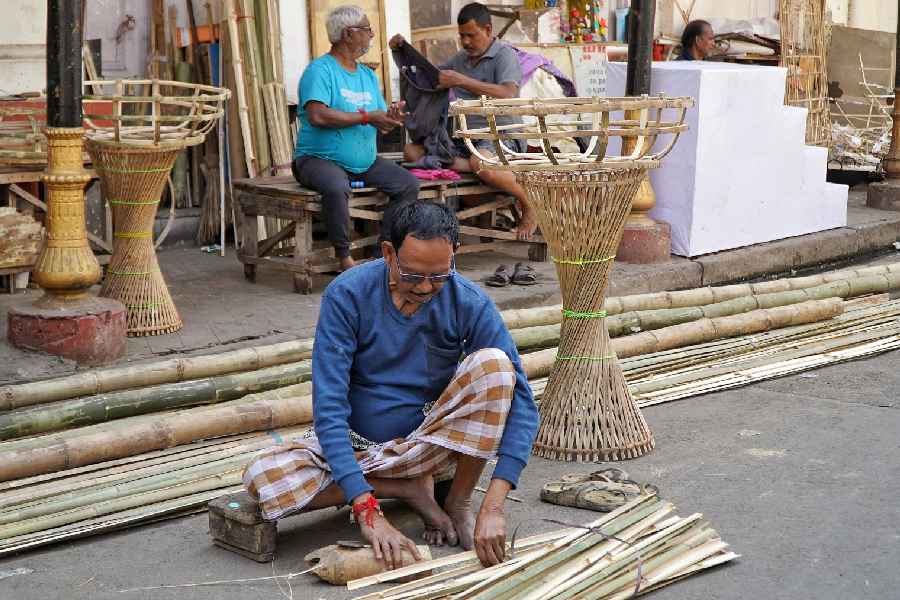
“The craft (of making phuchka stands) is at least 250 years old. We have always used organic materials – bamboo, wicker and paper. We never use plastic. Even our glue is made by us and is completely organic,” said Sudipta Maity, a 36-year-old painter, who oversees operations in the area and whose family has been associated with the craft and the colony for seven generations now.
“We source bamboo from Assam and wicker from Tripura and the Andaman,” he added.
There are, at present, 10 artisans who specialise in making jhaka and toroni. These structures are made entirely from bamboo. Mature bamboo poles are selected, cut to size, and dried for about a day, said Maity.
“If there is water in the bamboo planks, the structure won’t be strong enough. After the planks become dry, we assemble them by hand using nylon ropes and organic adhesives. Our forefathers used jute to make ropes, which were then used to fasten these planks. Now, we purchase ropes from the market, instead of making them ourselves,” said Maity.
It is a painstaking process and only one stand can be completed in a day. Yet demand remains unwavering. By the end of every month, every piece is sold.
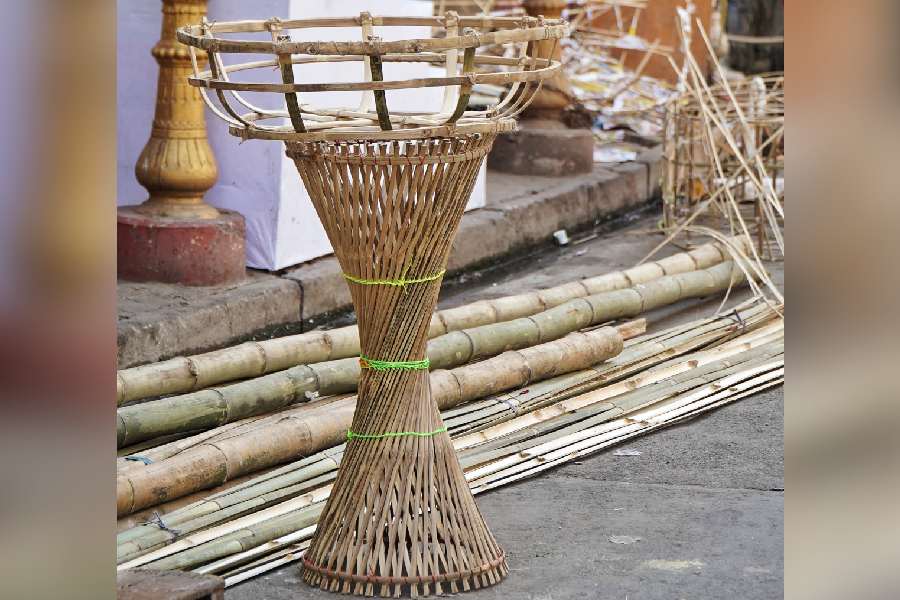
Each stand costs roughly Rs 850 — Rs 400 for the jhaka and Rs 450 for the toroni. Despite steady demand, profit margins are slim. With little government support and funds, the artisans struggle to make ends meet.
“We supply these structures to phuchka sellers all around the city. These stands last around five years. So, the depreciation value is effectively zero. Profit margin is also negligible,” Maity said. “Our seniors still make these, but the younger generation is steering away towards more profitable options. So, the craft of making jhaka and toroni is at the risk of becoming extinct,” said Maity.
Not only the men but also the women of the families actively participate in the process of making the structures. Bamboo baskets are made by the women of almost every family in this colony for temples across the city.
“The artisans here have no formal education but they have hands-on-experience. This has perhaps relegated their craft to the margins. We all talk of indigenous craftsmanship found in the villages. What about the artwork that began in the cities and the artists who are struggling to keep it alive here? We make useful things, yet we are not respected enough. With no fancy establishments or patrons, the road is our studio,” said Maity.
“We have been craftsmen for generations. As kids, we didn’t play with toys. We started playing with bamboo and wicker when we were very young and that’s how we learnt the craft. It’s the same with our kids. Some of our kids have other jobs. Yet, whenever they get time, they come back to this form of art. It’s heritage for them,” he added.
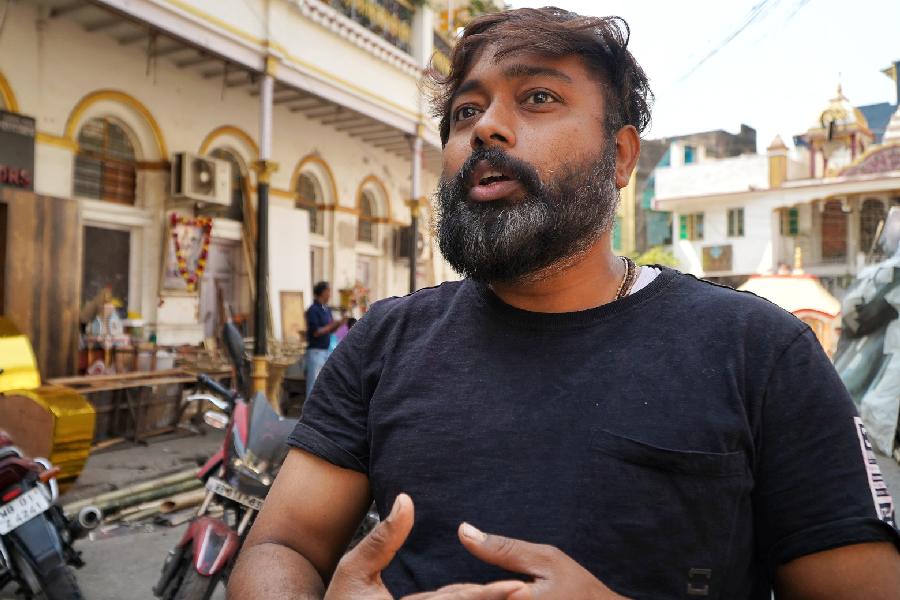
Maity noted that a 100-year-old institute at 17, Nanda Mullick Lane provides training to the children of these families. “It is under the Ramakrishna Mission. Once children are between five and 10 years old, they start training there. They are taught how to bend and bind wicker.”
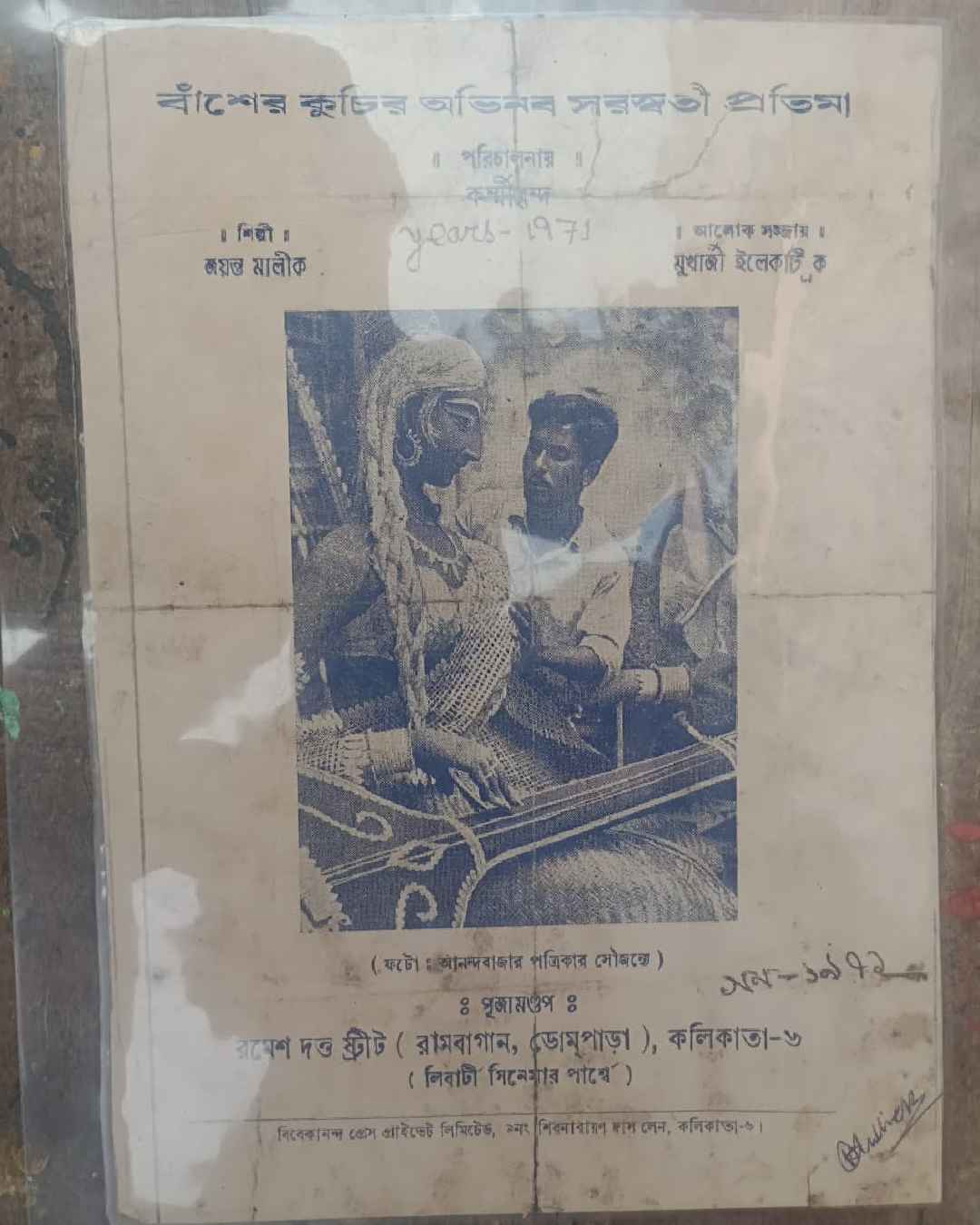
Beyond jhaka and toroni, artisans here also create bamboo idols and decorative pieces for puja pandals and wedding venues. “People think theme pujas are a fairly recent trend. But in 1971, we made an idol of Goddess Saraswati entirely out of bamboo. Another such idol was commissioned by a north Kolkata puja committee in 1980.”
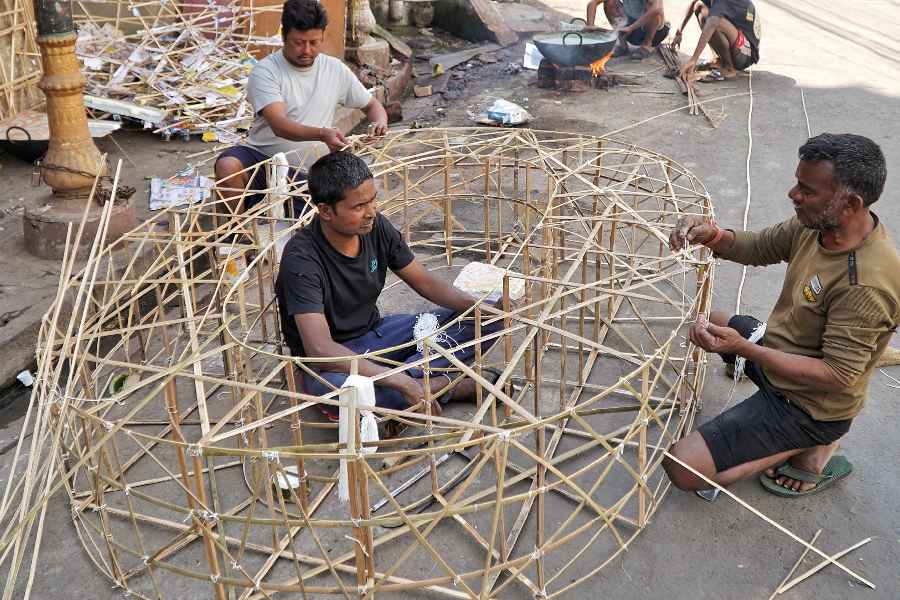
In many ways, Ramesh Dutta Street, or Ram Bagan Colony, is inseparable from Kumartuli. While Kumartuli shapes deities from clay, the artisans here build the kathamo — the bamboo frameworks that give form and support to those idols. The workers here are also commissioned to build pandals across the city.
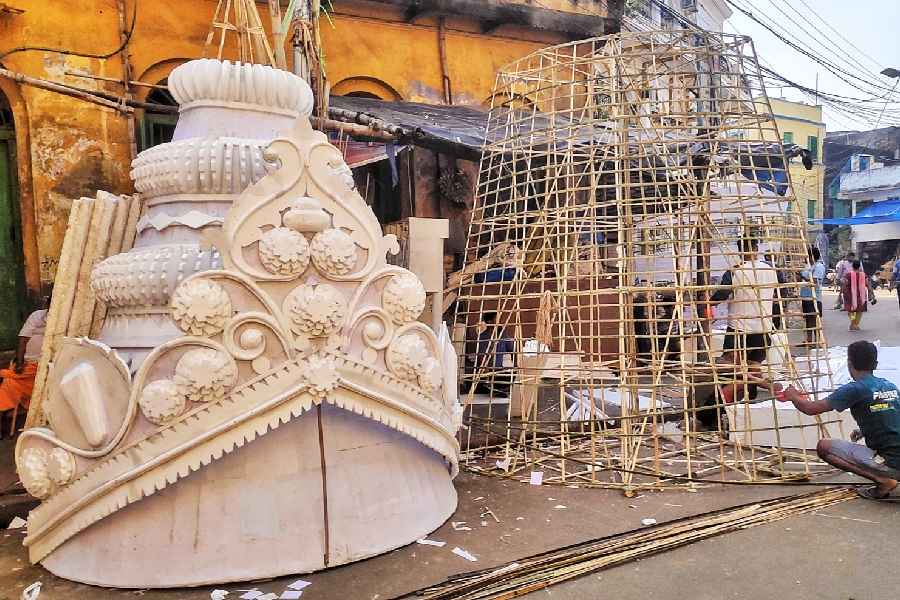
“Ahead of any puja, we receive numerous orders for pandals and decorative installations,” Maity said. “Our forefathers traded with Russia, London and Paris, so far as decorative installations are concerned. Our artisans have worked in Nepal. We also decorate malls. From South City to Quest, all of Kolkata’s major malls have sourced decorative pieces from us.”
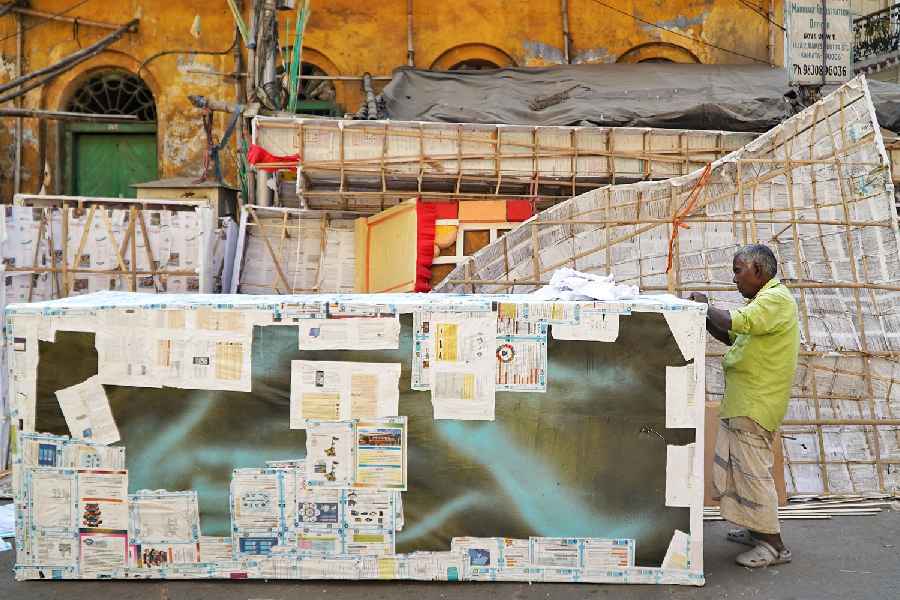
For many workers, the street is more than just their workplace — it is a symbol of inheritance and identity. “I have been doing this work for over 40 years. My father and grandfather were also artisans here,” said Mukul Ghati.
Another worker, who goes by the name Curfew, said, “I’ve been here for 30 years. We design decorative items for everything — weddings, festivals, even funerals. Name it and we’ll make it. Among our clients, our work is more renowned than that of Tripura, which is famous for bamboo craft.”
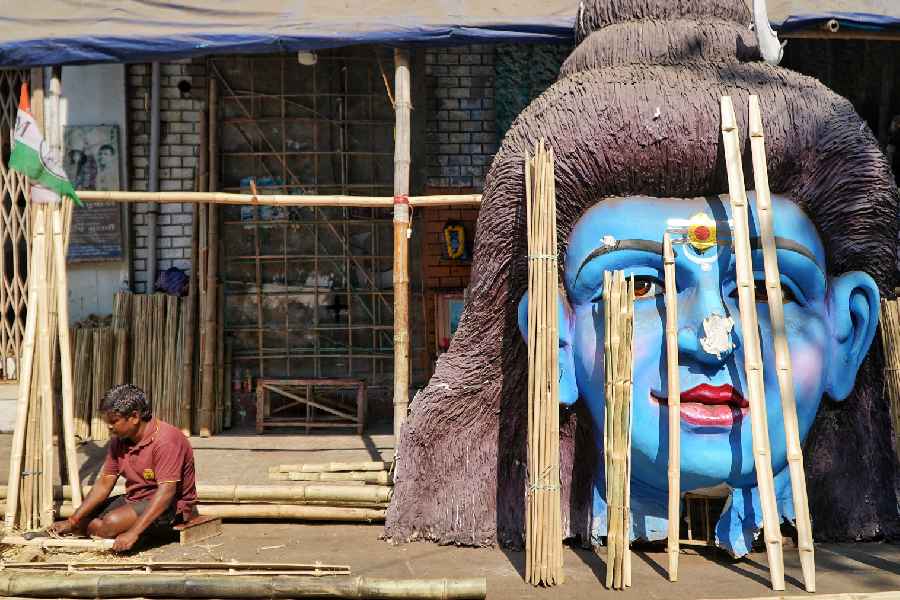
Boma, another artisan, sat nearby, scraping bamboo planks with ease. “These will be used by devotees as stands to carry water buckets to Tarkeshwar,” he said.
On Ramesh Dutta Street, bamboo is more than just a raw material. It is memory, livelihood, happiness and legacy, carefully shaped into timeless decorative items by hands that refuse to let tradition fade away.