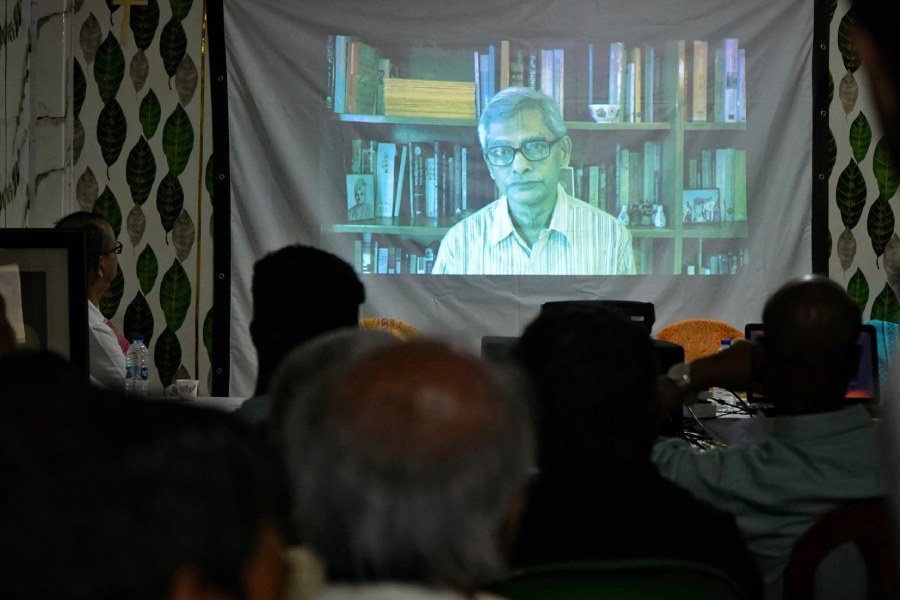
On a cool Monday afternoon, just as spring arrives, a motley crowd packed a low-ceilinged room with a tin roof and concrete pillars in Chingrighata on the northeastern fringe of Bengal’s capital. The people – fish-farmers, scientists, historians as well as tourists – had gathered for a seminar on the death anniversary of Dhrubojyoti Ghosh, who was single-handedly responsible for mapping the East Kolkata Wetlands.
Ghosh, an ecologist and engineer, walked on foot for three years through the wetlands that dot the side of Kolkata, facing the Sundarbans. He had been tasked to determine how the city’s waste could be used to generate revenue.
His design for the state planning board proved so effective that he was awarded the UN Global 500 – which recognises outstanding individual and organisational achievements in environmental protection and conservation – in 1990.
The seminar at the low-ceilinged room on February 16, organised by fishermen’s cooperative society, discussed the imminent dangers the East Kolkata Wetlands face: fish species disappearing, unauthorised construction and a now-authorised sale of land.
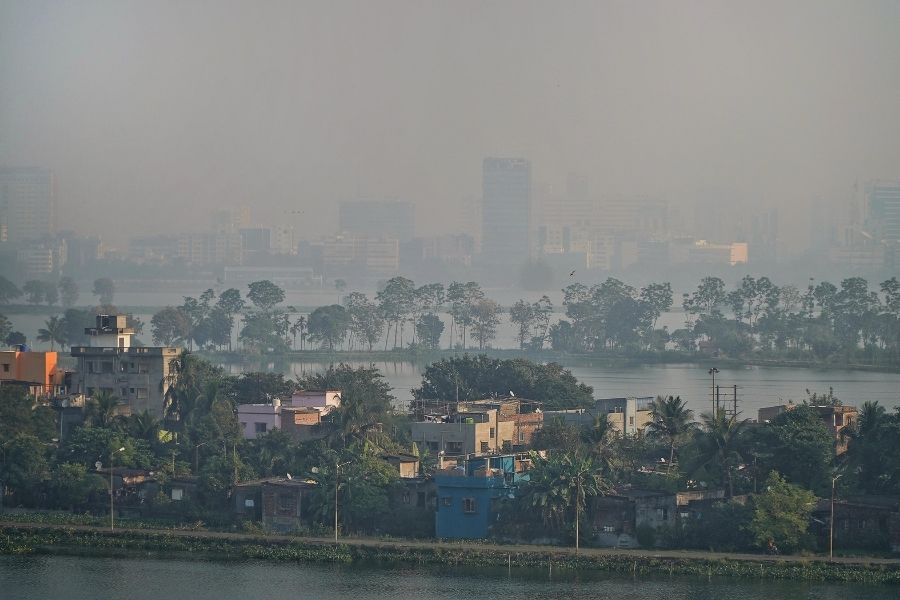
The wetlands cover parts of North and South 24-Parganas districts and portions of the Calcutta municipal area administered by the Kolkata Municipal Corporation (KMC).
Designated among the Ramsar List of Wetlands of International Importance on August 19, 2002 and home to the world’s largest wastewater-fed aquaculture system, the East Kolkata Wetlands are the kidneys of the city.
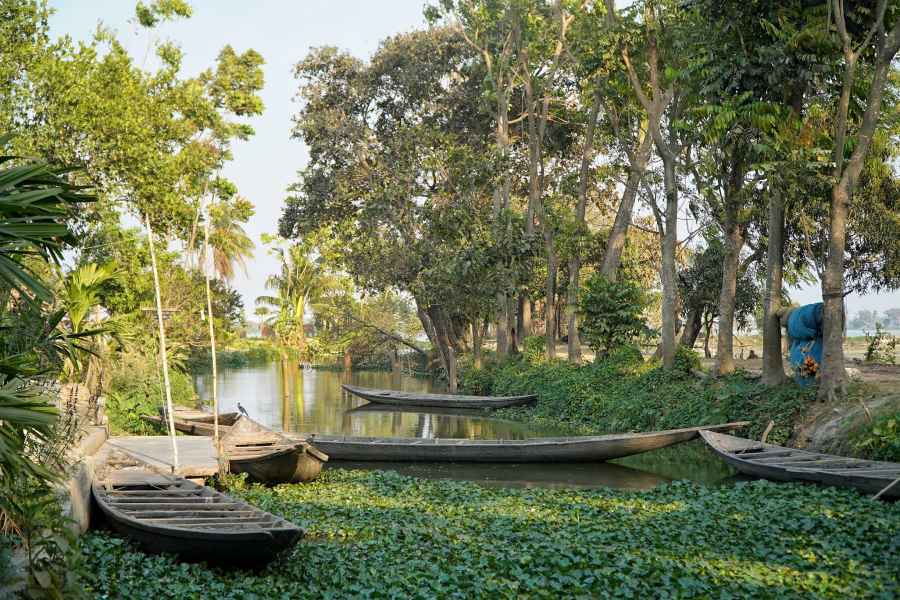
Every day, over 550,000 cubic metres of wastewater goes through the wetlands and is filtered through a solar-powered natural process. Waste stabilisation, bio-chemical breakdown, and oxygenation all take place, feeding fisheries, paddy and vegetable fields. The filtered water is then drained into the Bidyadhari-Kulti river basin completing an ecological cycle that thousands of people depend on for their livelihoods.
That cycle is being dismantled bit by bit, insist those whose lives depend on it.
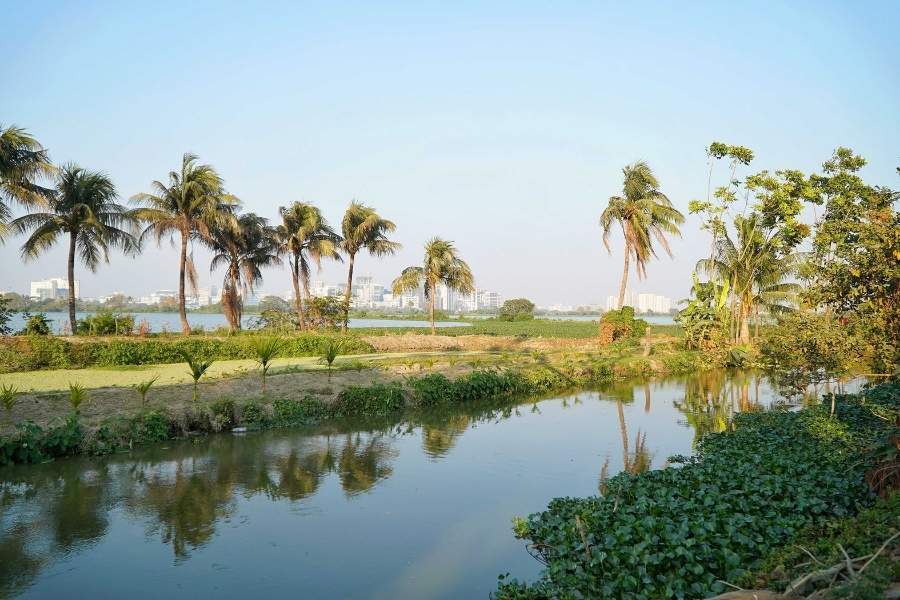
The problem of encroachments is rampant and well-known. Earlier this week, at a hearing in Calcutta High Court, one arm of the state government accused another of failing to take adequate action to remove unauthorised constructions.
The counsel for the East Kolkata Wetlands Management Authority told the bench of Justice Amrita Sinha that the KMC and district authorities were not cooperating, prompting the court to say it was contemplating bringing in paramilitary forces to demolish the illegal structures.
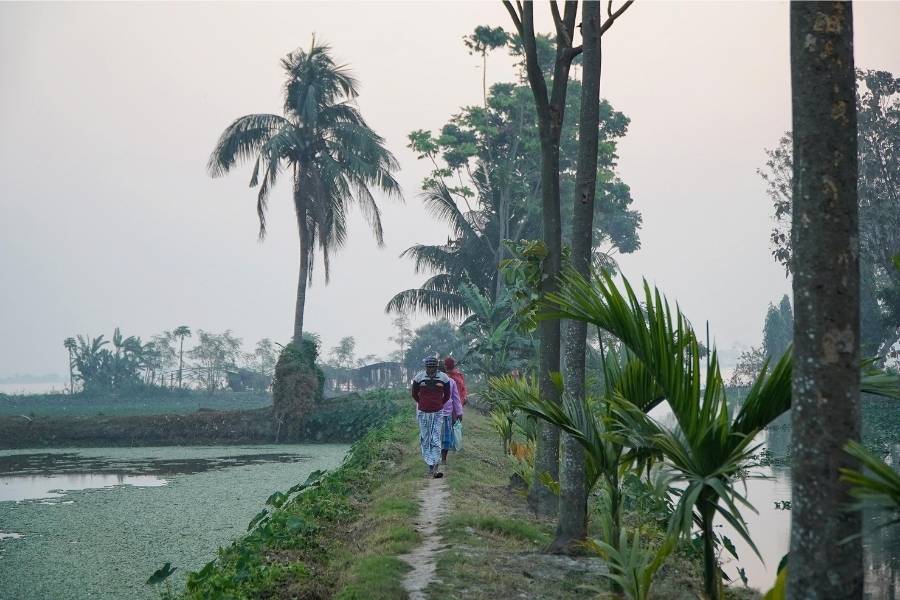
There are other threats to Kolkata’s kidneys as well.
“The quantity of sewage water coming into the wetlands has decreased because the KMC thinks keeping the Bantala gates open into the Bidyadhari-Kulti basin solves the problems of flooding in the city,” Biswajit Sana, a fish farmer from the wetlands, told The Telegraph Online.
That process would mean the wastewater is cleared quicker from the city but it throws up other issues.
“Flowing unfiltered water directly into rivers has had devastating effects on the ecology of the Bidyadhari river. From fish population to pollution of the river water itself, direct drainage into water bodies might kill the rivers,” said Sana.
Dhruba Dasgupta, project director at an NGO called SCOPE (Society for Creative Opportunities and Participatory Ecosystems), presented at the seminar the imminent threat of privatisation of the wetlands.
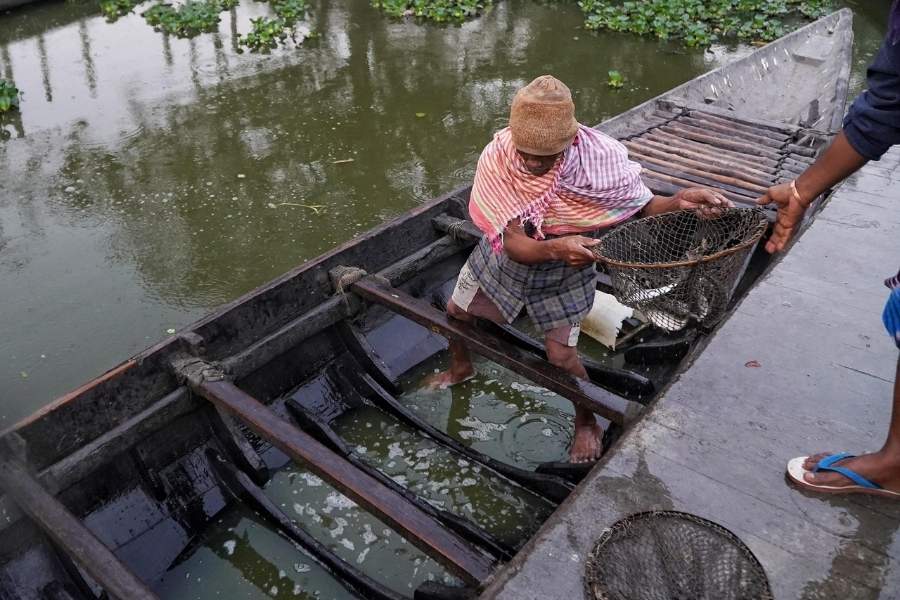
An executive order passed by the Bengal government’s land and land reforms department in September last year decided to auction in an e-tender, the wetlands to the fishermen’s cooperative societies, fish production groups, self-help groups, individuals, entrepreneurs and also state-run undertakings of the fisheries department.
Inclusion of individuals and entrepreneurs “ends the agency of the fish farmers,” said Dasgupta.
“The businessmen have more money,” said a farmer who requested anonymity. “Inclusion of individual buyers and entrepreneurs takes away the freedom that the fishermen community living in the wetlands have held since the 1960s.
“We cannot compete with their bidding. Their enterprise will thrive on the framework that we have built for decades. It is doubtful how much they will care about the ecology, the environment and the Ramsar status. We will be forced to work for these entrepreneurs for meagre wages,” the farmer said.
His fears are not without foundation.
Calcutta High Court had banned land conversion around the East Kolkata Wetlands in 1992, but the January 26 fire this year in two storage houses in Nazirabad, a 10-minute drive from Ruby crossing, has exposed how far the wetlands have been damaged.
At stake is the livelihood of the nearly 130,000 people dependent on the wetlands. The fish farmers claim the decline in the sewage water supply has forced many of them to sell off their ponds to realtors.
Newer buildings are coming up along the region around the wetlands.
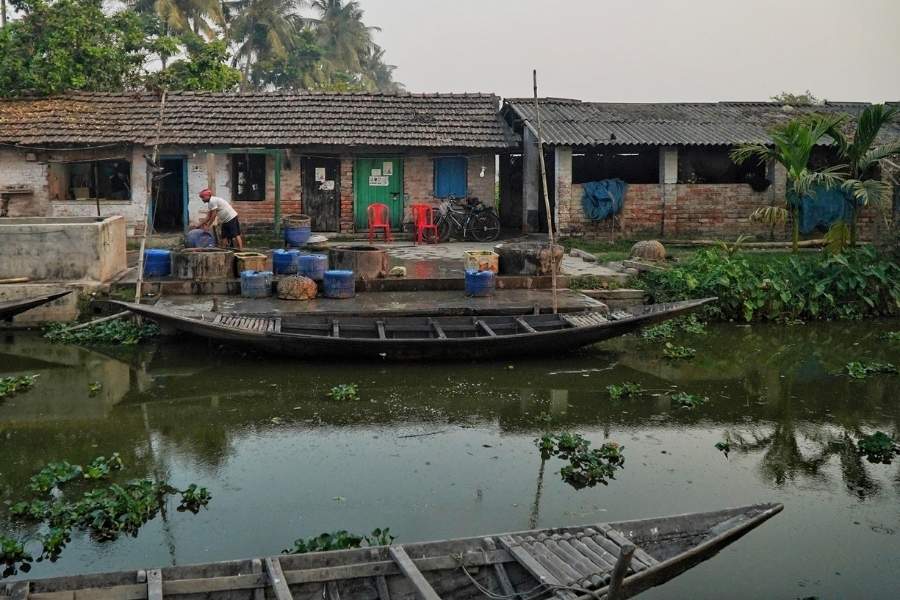
It has been almost a century since four long-link channels were planned to draw sewage from the city to the Bidyadhari-Kulti basin. Ten gates at Bantala open into a river basin to dispose of city sewage.
Surveys carried out by SCOPE have claimed a significant drop in water cover (88 per cent in 2002 to 19 per cent in 2016), depletion of the wetlands, drop in the number of fish ponds, in the Bhagabanpur mouza, the second largest EKW in south 24 parganas (264 to 202, from a report published in 2014).
All is well with wetlands, KMC insists
The KMC denied all the claims.
“There are separate lock-gates for the sewage water that goes into the EKW. There have been instances when there has been a shortage. It was sorted out with the help of the state irrigation department,” Tarak Singh, member, mayor-in-council, KMC sewerage and drainage department, told The Telegraph Online.
Shantanu Ghosh, director general of the sewerage department, said he was not aware of any decline in the quantity of sewage water disposed into the wetlands. “As far as I know, the level is what it was,” Ghosh said.
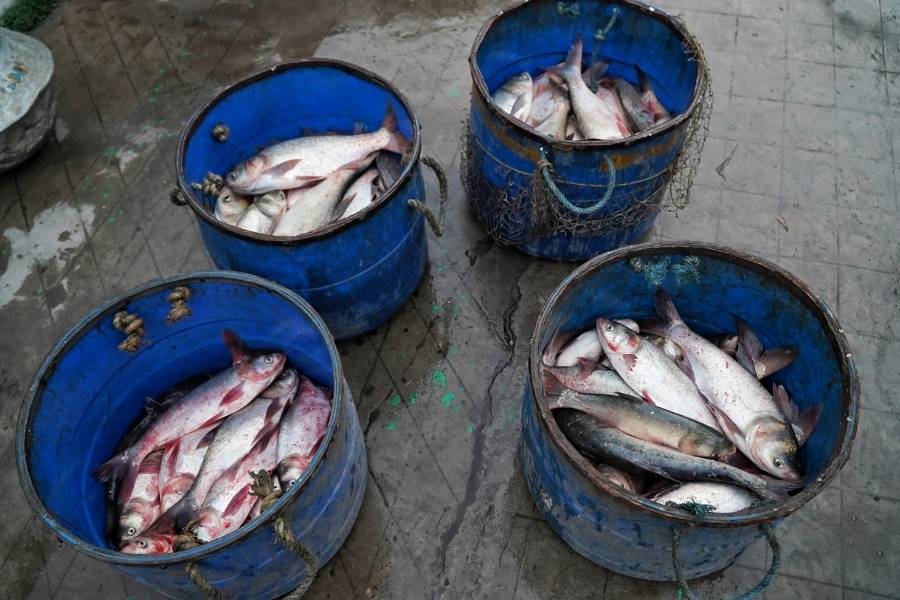
The East Kolkata Wetlands are home to fish like the catla, the rohu, the mrigal carp, the labeo bata, the tilapia and exotic species like the silver carp and the nilotica or Nile tilapia. Some local varieties like Jiyol have disappeared.
At the Sister University presents The Telegraph National Debate 2026 last Saturday, Bengal BJP president Samik Bhattacharya lamented that the state was being forced to import large quantities of fish from countries like Uganda.
A study conducted by the Central Inland Fisheries Research Institute (CIFRI) in 2024-25 revealed that fish production in the EKW, which stood at 10,915.15 metric tonnes annually in 1997, is now in a range between 8,931 and 10,242 metric tonnes.
“Kolkata is naturally blessed to have a fresh water supply via the Hooghly river on one side and the EKW on the other,” said SCOPE’s Dasgupta. “Loss of the wetlands may also force us to pay for water like it is in many cities.”