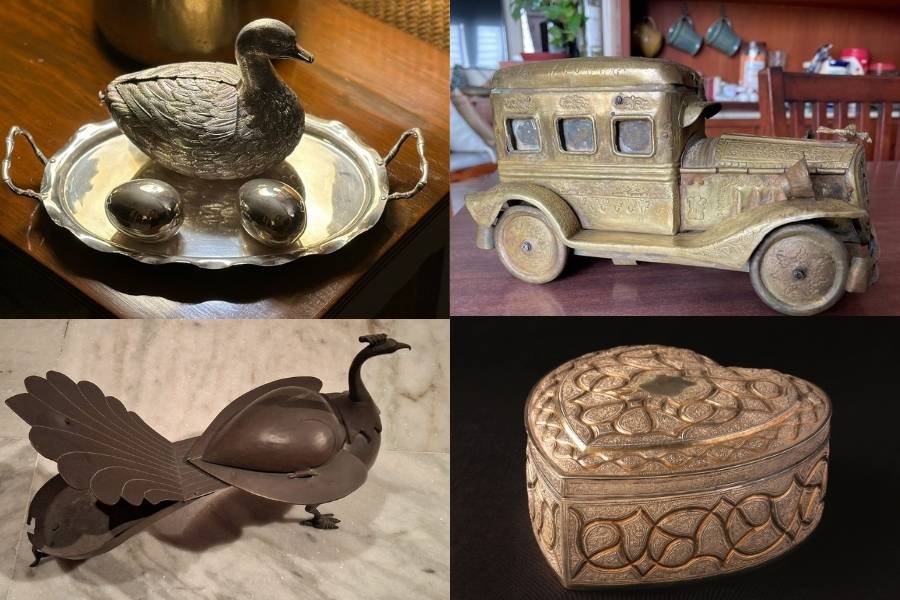
In Kolkata’s bonedi families, fresh betel leaves and fragrant zarda would come out of a silver or brass box called the paan daan or paan er dabor after meals. In most families, the paan shajano ritual was carried out by the lady of the house, who took on the responsibility with diligence and pride. The person who owned the heirloom paan dani was looked up to with reverence.
However, with time, these betel boxes have turned into memorabilia, captive inside glass cabinets or resting on shelves.
But many families still hold onto these heirloom paan daans and paandaanis that narrate stories of aristocratic living rooms, wedding trousseaus (tottows), strict grandmoms, and rituals that once were a part of daily life.
A nawabi inheritance
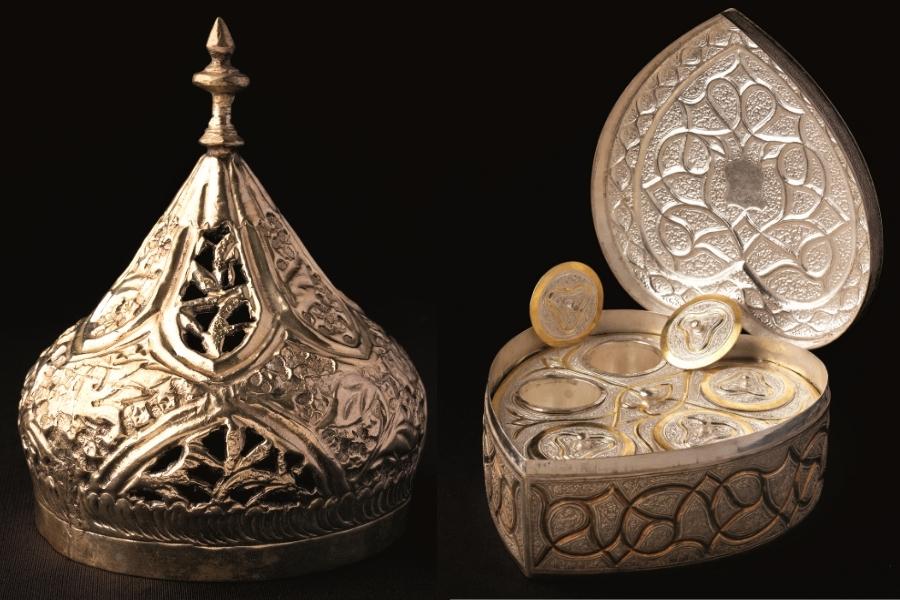
For Shahanshah Mirza, the silver paan daan in his possession traces its roots to the lineage of Nawab Wajid Ali Shah. The piece once belonged to his grandmother, Shehzadi Begum, then to his father, Sahibzada Wasif Mirza.
“It is part of a family heirloom handed down from one generation to another. It must be more than 100 years old,” said Mirza, the great-great-grandson of Wajid Ali Shah.
In his grandmother’s time, the paan daan was not a showpiece. It was always with her as she presided over gatherings, preparing paan for guests with authority. “Offering paan was like offering water. It was basic courtesy,” Mirza recalled.
Today, he admits, no one in his family really eats paan anymore. “But we are very passionate about preserving it.”
They have a paan dabba, too.
Pathuriaghata mornings
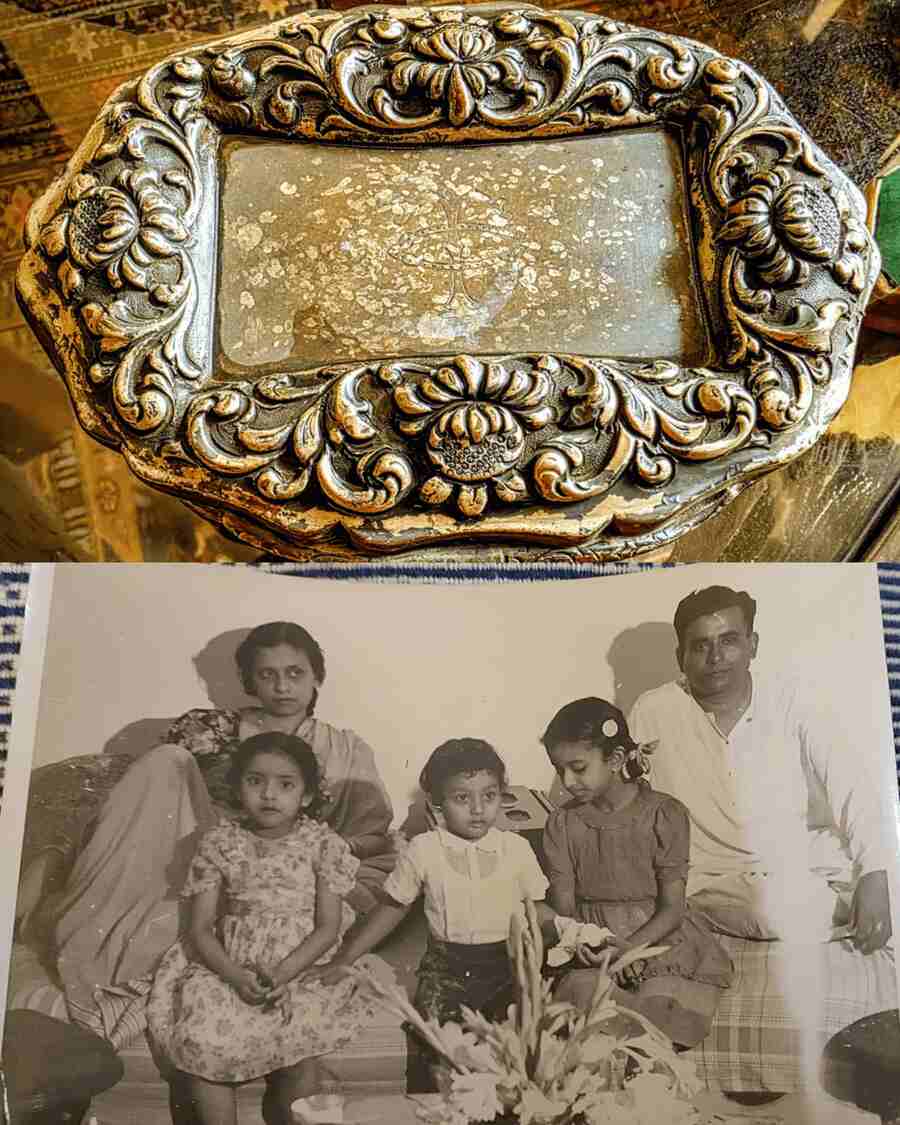
For Nayana Gangooly, paan is inseparable from the memories of her maternal grandmother, Chitralekha Tagore of the Pathuriaghata Tagore family. The pure silver paan daan bore her initials, CT. Inside it sat a jade-topped zarda box.
“It was one of my favourite activities. To sit beside her and prepare paan. I had my special ones without supari,” said Nayana.
Her grandmother was once a singer with 78 RPM records to her name, but her love for paan turned tragic. “She was poisoned by a competitor with something mixed in her paan and she lost her voice,” said Nayana.
Yet Chitralekha retained what Nayana calls “manners like a queen”. For Nayana, afternoons meant folded betel leaves, strict table lessons, and ghost stories.
When Chitralekha passed away at 86, the silver box remained with Nayana, and now she fondly takes care of it.
A peacock from undivided Bengal
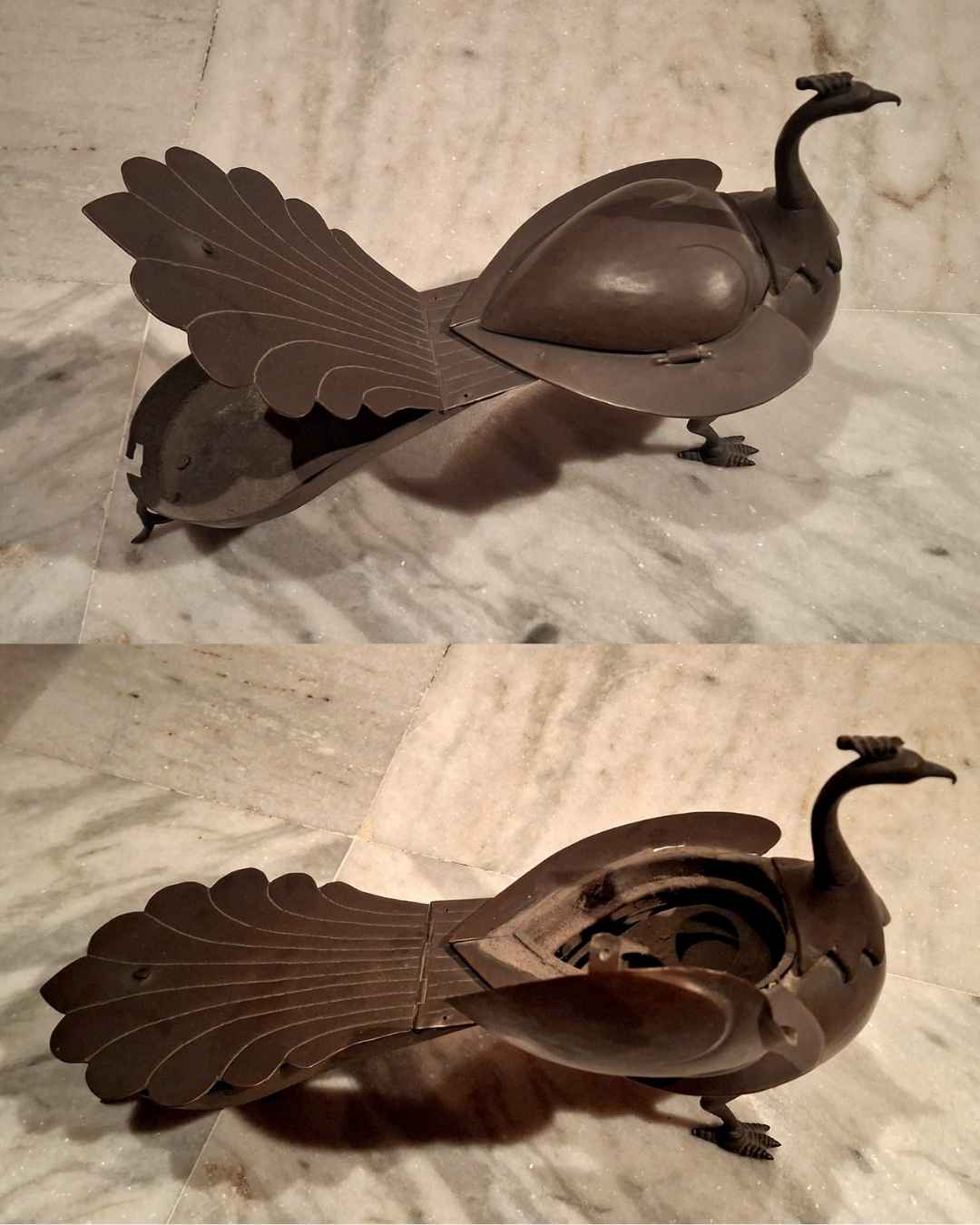
In Aryani Banerjee’s south Kolkata home stands a late 19th-century brass paandani shaped like a peacock. It once belonged to her great-grandmother, Surobala Gupta of Dulali, in undivided Bengal (now in Bangladesh’s Lalmonirhat District, Rangpur Division).
“As the tail opens up, there is space to keep the betel leaf,” Banerjee explained, opening the wings, revealing the compartments for condiments.
Today, it is a decor that adorns a side table in her living room. She recalls guests staring in awe as the peacock would unfurl. “It turned the simple act of offering paan into theatrics.”
A vintage wedding car
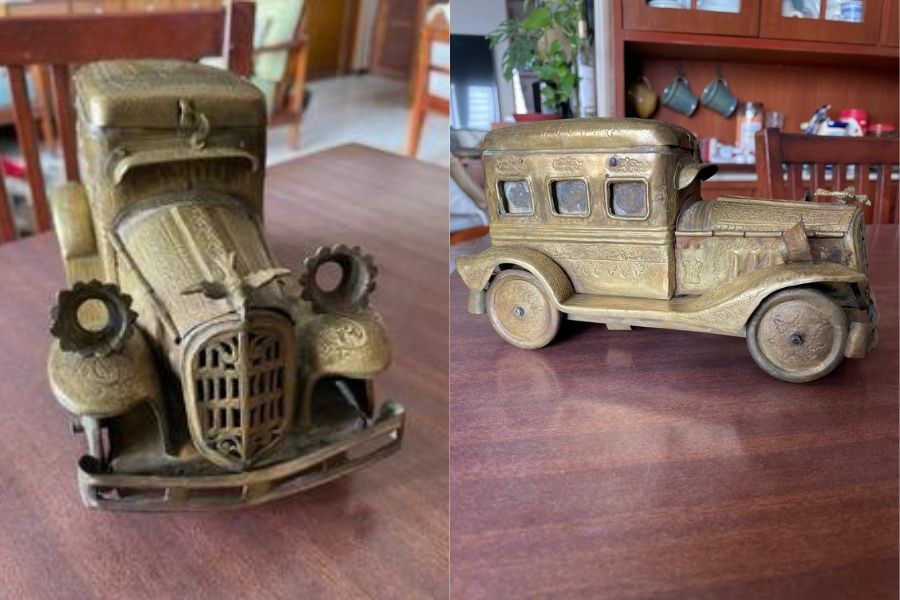
Swati Bhaduri’s heirloom arrived as part of her mother-in-law’s bridal trousseau. Shaped like a vintage car, the pandabba stored paan in its bonnet and fresh leaves in its body.
“After lunch, we would all sit together and she would distribute paan. It was like a ceremony,” Swati said.
Now inherited by her husband, the car remains a conversation starter, parked at their home.
The silver duck
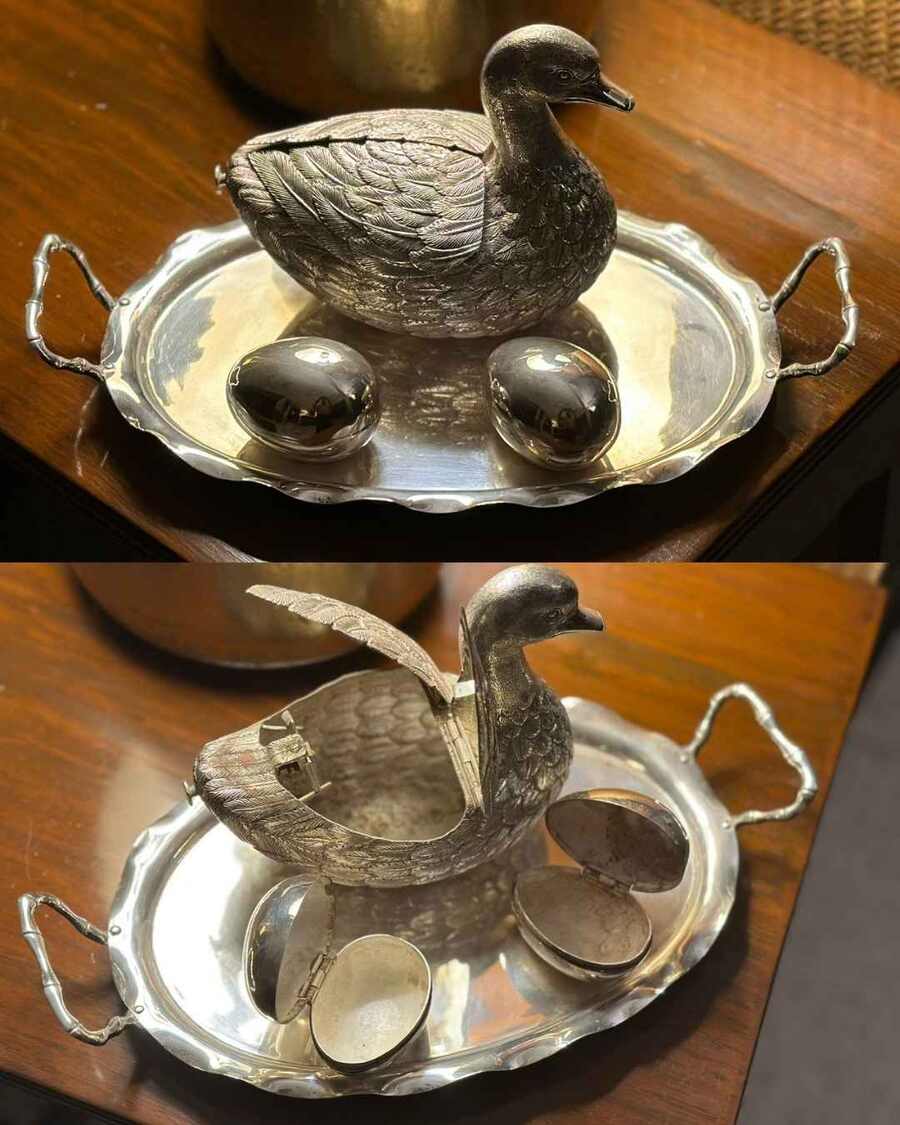
In Ayan Ghosh’s home, a silver paan daan in the shape of a duck with two delicate eggs has never held a paan. It came to the family as part of his wife Priobrota Ghosh’s grandmother Renuka Mondal’s trousseau in the late 1940s.
“It has never been used to serve paan. Polished every quarter, the piece once belonged to Renuka Mondal of Allenby Road, a noted singer and dancer who sang with Dilip Kumar Roy. She probably also performed in front of Subhas Chandra Bose. She met him in 1938 and got an autograph,” Ghosh said.
The paan daan descended from Renuka Mondal through her daughter, Saswati Baksi of Ballygunge Place, to her granddaughter Priobrota Ghosh.
Zamindari echoes
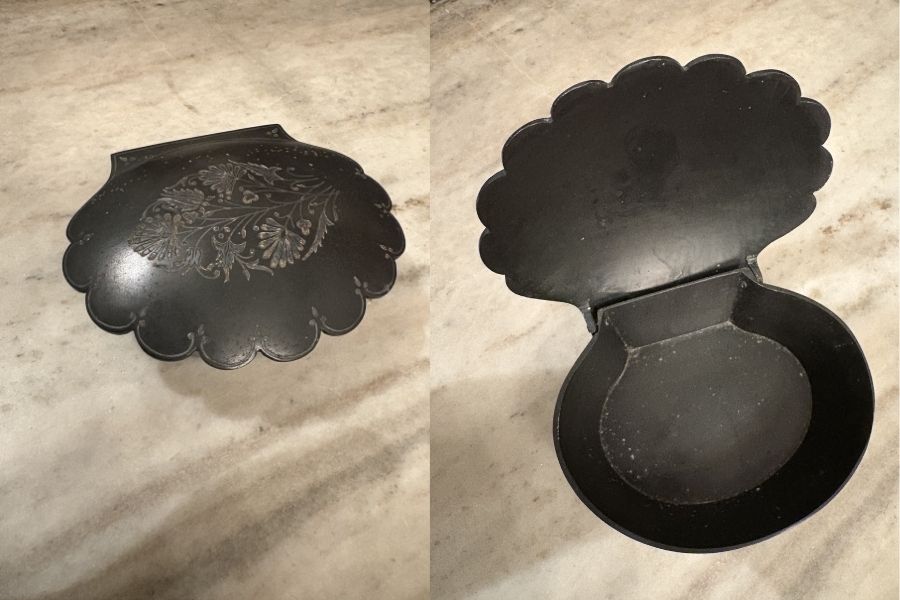
Aerica Sardar’s heirloom paan er dabba came to her paternal grandmother, Ashima Sardar, as a wedding gift in 1962. “She used to keep paan-er moshla in this and sometimes paan too. She had it directly from this box.”
Ashima hailed from zamindar roots in Bangladesh’s Debhata before she was married in the Sardar family of Khulna. Long before independence, the family moved to erstwhile Calcutta.
The ornate box in the shape of a seashell or jhinuk, now a showpiece, is not a paan daan but a dabba. It was used to carry readymade paan.