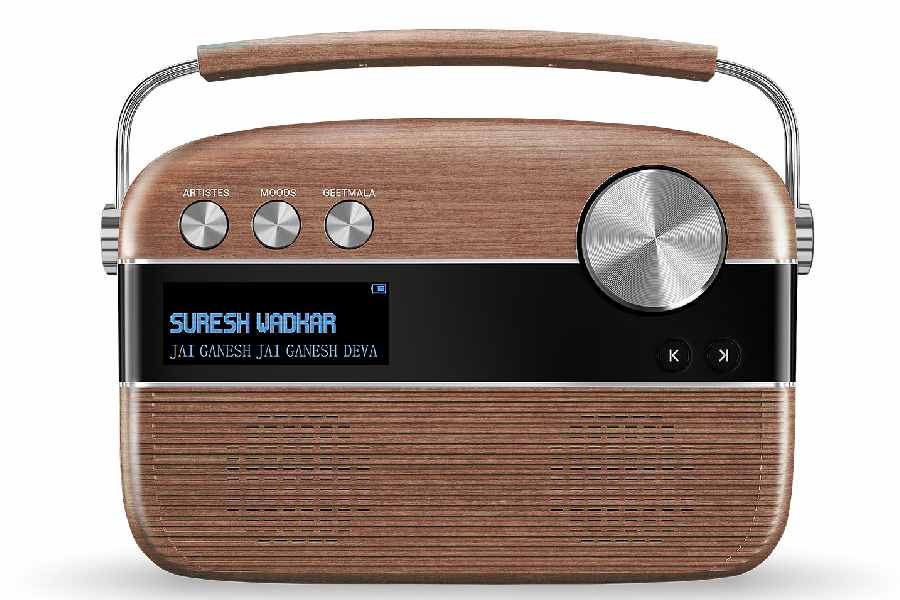
Our time was different. Hamara zamana kuch alag tha, said the 65-year-old woman in Kanpur. She continued, “From early morning, we stayed tuned to Vividh Bharati. In our house, the radio kept playing for the greater part of the day.” The elder yearned for the simplicity and convenience of enjoying music from a bygone era.
Similar views from other seniors who grew up with the radio in the background created a “penny drop moment” for Vikram Mehra, managing director of music company Saregama India Ltd. This was in 2015. Mehra says he imagined creating something like a “memory box” or an emotional time machine for people like them. A generation for whom songs and films are entwined with personal milestones — a birthday, a first job, an anniversary.
The insight came after the company rolled out a nationwide research to understand consumer behaviour and find new customers for its vast digital music library. Saregama India, which used to be The Gramophone Company of India Ltd. in the last century, has a huge audio repository comprising 1,60,000 plus songs in many languages. And yet, this over-a-century-old collection was inaccessible to a large section of the audience.
“In the course of focused group discussions and chats, we discovered that the older generation was looking for a simple device to play their favourite music,” says Mehra. “Not something with a touchscreen but something that would give them a tactile feeling, something with knobs or switches.”
Nostalgia as product category
When Mehra discussed this concept with Avinash Mudaliar, head of the innovation team at the company, he too said that people over 50, like his mother, rarely opened any streaming app for music consumption. Mudaliar, 49, who has since moved to HT Media Labs, says, “The explosion of apps, icons, menus, updates and layered user journeys created friction rather than excitement for the older generation.” He realised that this audience craved nostalgia, familiarity and emotional comfort. He tells The Telegraph, “Music for them is not utility. It is memory.”
Saregama recognised that nostalgia itself could be a product category. This realisation seeded the concept of Carvaan — a portable music player pre-loaded with olden songs. The Persian karwan after all means journey or a group of travellers.
Instead of forcing people to adapt to the modern digital interface, Saregama decided to embed a powerful digital music engine in a form that people were comfortable with. And that form mimicked the radio that had dominated the 20th century. Says Mudaliar, “In many ways, it would not be just a technological innovation but it would also reduce technological intimidation.”
No manuals, please
Next, Mudaliar sat down with product designer Jai Wadhwani in the innovation lab. Both of them idolised German industrial designer Dieter Rams, who had been design head at Braun. Rams subscribed to the philosophy that good design is unobtrusive, intuitive and honest — as little design as possible. Wadhwani and Mudaliar spent time researching Braun’s radio sets, tape systems and minimalist interfaces along with classic Indian radio sets such as the Murphy Radio, which had familiarity and warmth woven into their frames.
Says Wadhwani, who is now design director of the design agency Silverscoop, “The key design principle we borrowed was reduction. Remove clutter. Remove cognitive load. Minimise buttons.” Adds Mudaliar, “Letting the object feel emotionally simple rather than technologically intimidating was my brief.”
Wadhwani shares with The Telegraph images of his basic black-and-white sketch of the Carvaan prototype and its mini paper mockup. He says, “There were only a few primary menu buttons and a central rotator or navigation dial — something tactile, like old radios that could be used instinctively without requiring any manual.”
Mind the randomiser logic
For his engineering team —comprising Sunep Imchen and Siddhartha Banerjee — Mudaliar laid down the algorithm at the heart of which is a randomiser logic. Basically, it ensures that the uploaded songs do not play in a loop. For instance, if you select a category, say, Kishore Kumar Classics, the algorithm plays the songs in a continuous, unexpected sequence so you never know what is coming next, but it remains strictly bound to one particular artiste, which in this case is Kishore Kumar. “Also, in every new listening session, songs you have already played are not repeated.”
Mehra says the idea was not to make playlists and keep the “sense of serendipity alive” from the olden time of Vivid Bharati. He continues, “You don’t have any control over which song is going to be played next. The radio presenter would play songs following requests read out from postcards from places like Jhumri Telaiya in then Bihar for programmes like Aap ki Farmaish or Manchahe Geet. People of an earlier generation
accept life’s unpredictability and uncertainties, and are not deluded into believing that they can control things. They were happy to listen to songs that aired randomly as elements of surprise.”
To make the product more utilitarian, they accommodated support for an FM radio, a Bluetooth speaker, a USB port and a rechargeable battery. Mudaliar and Banerjee took the device prototype to Shenzhen in China to have it replicated for mass manufacturing. “Explaining everything while negotiating the language barrier was a big challenge,” recalls Banerjee. “Logistics was another hurdle. Shipping the final products to Nhava Sheva port in Mumbai required negotiating a whole lot of licenses at the customs office,” adds Imchen.
The Great Indian Joint Family
In May 2017, Carvaan was formally launched with over 5,000 pre-loaded Hindi songs. There were three simple buttons to choose from — Artistes, Moods (romance, sad, classical, ghazal, etc.) and Geetmala. The last was a dedicated audio category featuring the entire 50-year-old collection of the iconic Binaca Geetmala, a popular radio programme, originally hosted by the legendary Ameen Sayani.
Mehra now teamed up with The Womb, an independent advertising agency based in Mumbai, to market and position the unique product. Kumar Ajit took care of sales and marketing. “Eventually, we zeroed in on the idea to promote Carvaan as a gift,” says Mehra.
Mudaliar explains how in contemporary India, millions of young people move away from smaller towns to larger cities chasing education, jobs and opportunities. He says, “Parents age alone in smaller towns while children build their lives elsewhere. And with migration comes a quiet layer of guilt.” He outlines the philosophy. “When someone gets their first salary, they usually buy their father a mobile phone or their mother a sari. But after that, the gifting cycle becomes functional and repetitive. Birthdays, anniversaries, retirements, Dussehra, Diwali or New Year, people want to give their parents something more meaningful. Carvaan helped children gift a slice of a shared memory.”
What followed is what the team calls the “multiplier effect of the Indian family structure”. Mudaliar says, “One uncle would see a Carvaan at a relation’s home, a husband would buy one for his parents, and then the wife would want one for her side of the family too. Word-of-mouth was not advertising-driven but by emotion shared across households.” Families were soon buying not one Carvaan but three or even four, sometimes more across the extended family ecosystem.
According to Mehra, till now over 6 million units of Carvaan have been sold and 5 to 6 lakh units are sold every year.
“The product spread less like electronics and more like affection,” says Mudaliar. In the meantime, the device acquired patents from both the Indian and US patent offices. Later, Saregama brought out newer versions of Carvaan in categories like Hindustani Classical, Ghazal, Sufi, Devotional and also in various regional languages including Bengali, Tamil, Malayalam.
And that is how, by leveraging its own archival wealth and reaching out to an audience category companies usually set aside for healthcare or insurance products, Team Carvaan created an indigenous invention with deep roots in India’s sonic culture and rewrote 21st century tech history.
Pitch Perfect

Vikram Mehra
‘Anthropology triumphs technology. Understanding the customer is more important than churning out a fancy gadget’
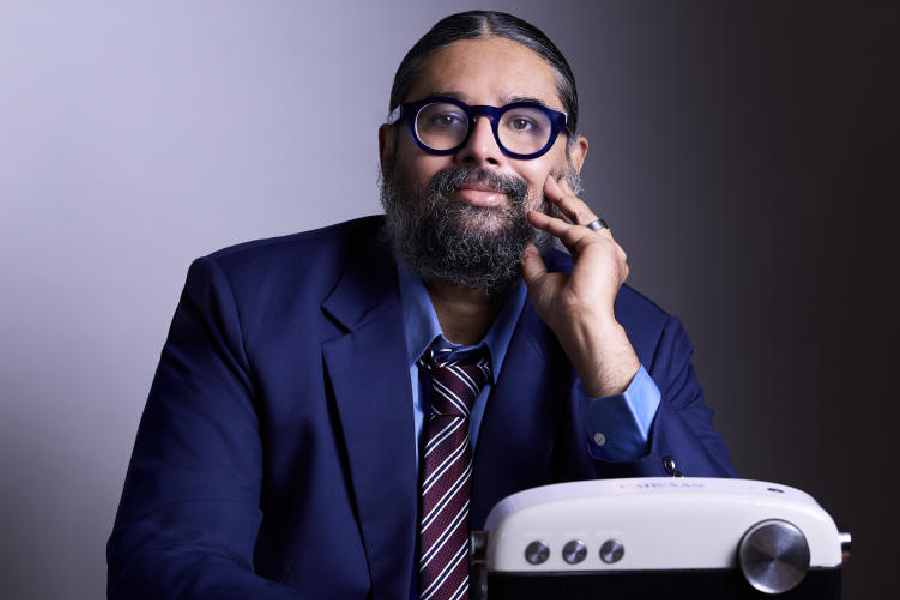
Avinash Mudaliar
‘Music for our audience is not utility; it is memory, familiarity and emotional comfort’
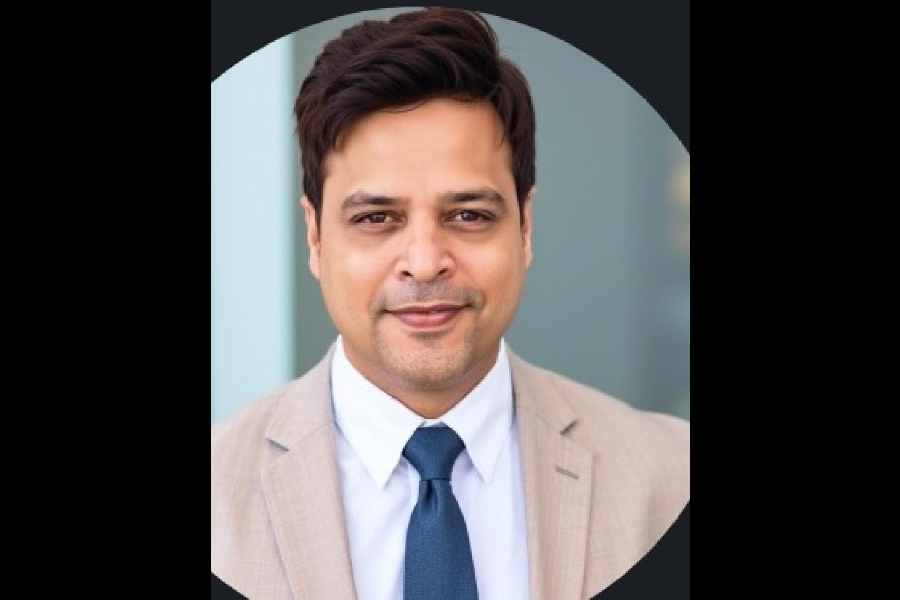
Jai Wadhwani
‘The key design principle was — remove clutter, reduce cognitive load, minimise buttons. This device was not going to be technologically intimidating’

Siddhartha Banerjee
‘We had to ensure the quality of the MP3 player. The music had to sound good and yet not take up too much space’

Sunep Imchen
‘At the heart of the device is an MCU or microcontroller unit. It works on a randomiser logic, so the songs do not play in a set sequence’

Kumar Ajit
‘We aimed to position Carvaan as the ultimate nostalgic gift for parents and elders.’