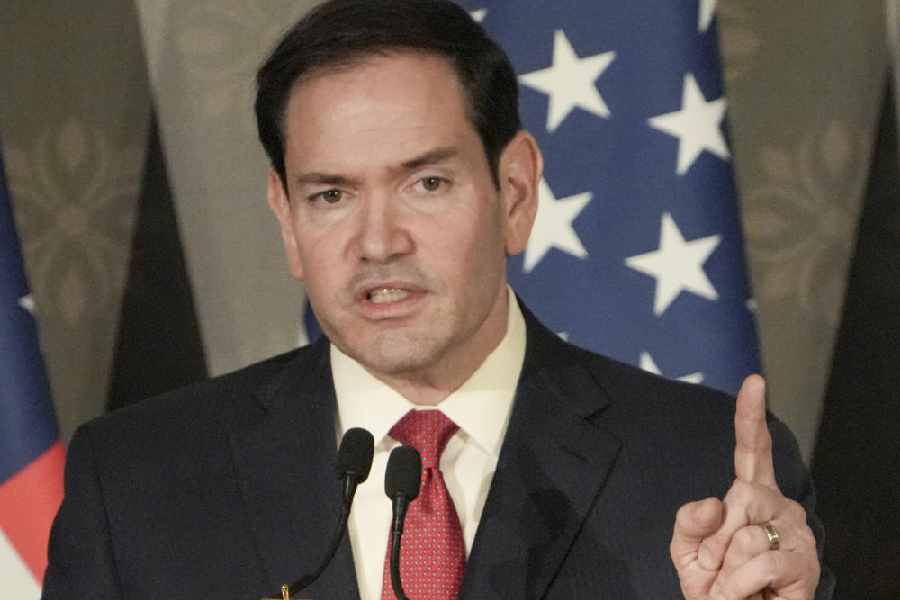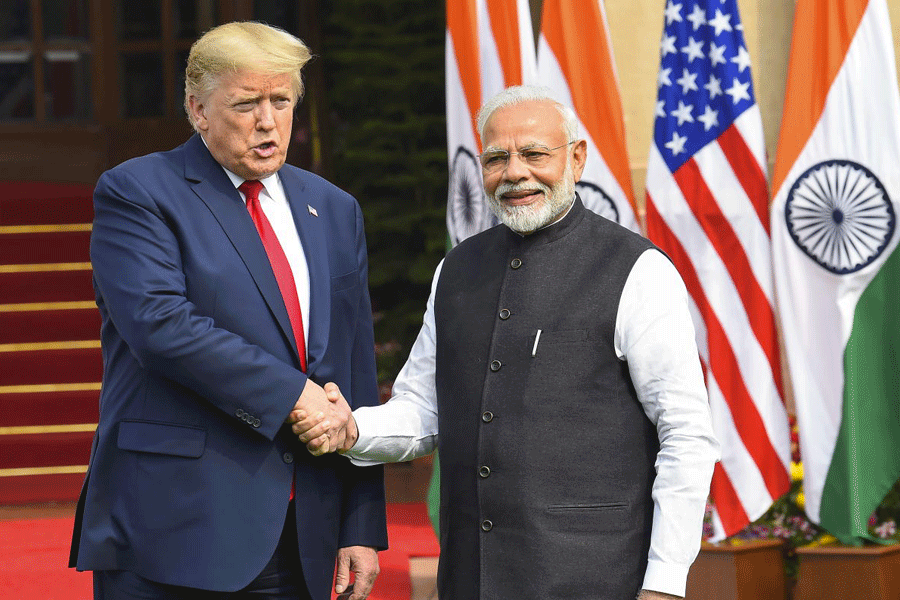
Indian exports to the US will now face a 10 per cent tariff from February 24 after President Donald Trump issued a fresh proclamation imposing a temporary import surcharge, following a US Supreme Court ruling that struck down his sweeping global tariffs.
The move lowers the effective reciprocal levy on Indian goods from the earlier 18 per cent under the proposed interim trade framework, offering relief to exporters while introducing a new 150-day global surcharge regime.
Supreme Court verdict triggers new tariff order
In a 6-3 verdict written by Chief Justice John Roberts, the US Supreme Court ruled that the tariffs imposed by Trump on nations around the world were illegal and that the president had exceeded his authority when he imposed the sweeping levies.
Hours after the ruling, Trump signed a proclamation titled “Imposing a Temporary Import Surcharge to Address Fundamental International Payments Problems”.
The order states:"I impose, for a period of 150 days, a temporary import surcharge of 10 per cent ad valorem on articles imported into the United States, effective February 24, 2026".
A White House fact sheet said Trump is invoking his authority under Section 122 of the Trade Act of 1974, which “empowers the President to address certain fundamental international payment problems through surcharges and other special import restrictions”.
The temporary import duty will take effect February 24 at 12:01 am eastern standard time.
Impact on India: Tariff drops to 10%
With the new 10 per cent surcharge applicable globally, Indian goods will now face only this levy instead of the earlier 18 per cent rate under the interim trade understanding.
The US had earlier imposed a reciprocal tariff of 25 per cent on India in August. An additional 25 per cent was levied over India’s purchases of Russian crude oil, taking the total to 50 per cent.
Subsequently, the punitive 25 per cent linked to Russian oil was removed after India committed to scaling back direct or indirect imports of energy from Moscow and increasing purchases of American energy products. Under the interim trade framework, reciprocal tariffs were to be reduced to 18 per cent.
However, exporters say the fresh proclamation resets the rate to 10 per cent.
Federation of Indian Export Organisations (FIEO) Director General Ajay Sahai said the tariffs on Indian goods will now be 10 per cent.
The 10 per cent levy is over and above the existing Most Favoured Nation (MFN) duties in the US. For example, if a product attracts a 5 per cent MFN duty, the effective duty will now be 15 per cent, compared to 30 per cent earlier (5 plus 25 per cent).
Think tank Global Trade Research Initiative (GTRI) said: "Reciprocal tariffs are down to 10 per cent now".
GTRI Founder Ajay Srivastava suggested that India should re-evaluate the interim trade deal with the US, noting that reciprocal tariffs now apply only on about 55 per cent of the value of Indian exports, while roughly 40 per cent of goods fall under exempted categories.
However, sectoral tariffs — including 50 per cent duties on steel, aluminium and copper, and 25 per cent on certain auto components — will continue.
The fact sheet clarified that certain goods are exempt from the temporary duty due to US economic needs. These include critical minerals, energy products, natural resources and fertilizers not sufficiently produced domestically, selected agricultural products such as beef, tomatoes and oranges, pharmaceuticals and ingredients, certain electronics, passenger and heavy-duty vehicles, and certain aerospace products.
‘India deal is on’: Trump
Despite the court setback, Trump insisted there is no change in the trade arrangement with India.
When asked whether the interim trade framework stands after the Supreme Court ruling, Trump said “nothing changes”.
“Nothing changes. They'll be paying tariffs, and we will not be paying tariffs. So deal with India is they pay tariffs. This is a reversal for what it used to be, as you know, India and I think Prime Minister Modi is a great gentleman, a great man, actually, but he was much smarter than the people that he was against in terms of the United States, he was ripping us off. So we made a deal with India. It's a fair deal now, and we are not paying tariffs to them, and they are paying tariffs. We did a little flip,” Trump said.
“The India deal is on…all the deals are on, we're just going to do it” in a different way,” Trump said.
On bilateral ties, he added:“I think my relationship with India is fantastic and we're doing trade with India. India pulled out of Russia. India was getting its oil from Russia. And they pulled way back at my request, because we want to settle that horrible war where 25,000 people are dying every month,” Trump said.
He said his relationship with Prime Minister Modi “is, I would say, great”.
Trump attacks court, repeats Pakistan claim
Trump lashed out at the Supreme Court justices who ruled against him, calling them "fools and lapdogs”.
“The Supreme Court's ruling on tariffs is deeply disappointing, and I'm ashamed of certain members of the Court, absolutely ashamed for not having the courage to do what's right for our country,” Trump said.
He also reiterated his claim of mediating between India and Pakistan.
“I also stopped the war between India and Pakistan. As you know, there were 10 planes were shot down. That war was going and probably going nuclear. And just yesterday, the prime minister of Pakistan said President Trump saved 35 million lives by getting them to stop,” Trump said.
“And I did it largely with tariffs. I said, ‘Look, you're going to fight, that's fine, but you're not going to do business with the United States, and you're going to pay a 200 per cent tariff, each country’. And they called up and they said, ‘we have made peace’,” Trump said.
“Tariffs have likewise been used to end five of the eight wars that I settled. I settled eight wars, whether you like it or not, including India, Pakistan, big ones, nuclear, could have been nuclear,” Trump said.
Bilateral trade snapshot
During 2021–25, the US was India’s largest trading partner in goods.
The US accounts for about 18 per cent of India’s total exports, 6.22 per cent of imports, and 10.73 per cent of overall bilateral trade.
In 2024–25, bilateral trade stood at USD 186 billion, including USD 86.5 billion in exports and USD 45.3 billion in imports.
With the new 10 per cent levy set to take effect February 24, exporters say the development provides interim clarity, though the broader contours of the India-US trade pact remain under negotiation.