“I have no fear of losing my life — if I have to save a koala, or a crocodile, or a kangaroo, or a snake, mate, I will save it,” Steve Irwin.
Surprisingly, many people do share Steve Irwin’s penchant to rescue even a dreaded wild animal, realising its existence is cardinal for balance in the ecosystem. Human beings and animals have been living together in harmony for centuries, particularly in forest states like Jharkhand, Assam, Meghalaya and Tripura. In fact, it is this spirit to conserve that ensures that governments and wildlife agencies initiate efforts to build sanctuaries, parks and safe habitats for wildlife.
 |
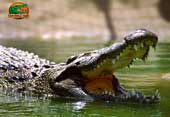
It was primarily with the objective of conservation that the government set up a crocodile park at Mutta in 1980. Known as the Mutta Mugger Prajnan Kendra, the park is situated some 35 km from the city. The park also serves as a breeding centre for the endangered species; Mugger crocodiles.
Though it began on a positive note, sadly, there has been a steady decline in the number of crocs in the park. Currently, there are only 15 Muggers at the breeding centre. And that includes only one male and its mate. Other crocs, unfortunately, are too small to breed.
“There were as many as 60 crocodiles when I joined the centre in 1987. But the park registered a sharp decline over the years due to a high mortality rate. The crocodiles usually succumbed to pneumonia,” lamented Manaki Tirki, a casual labourer, also assigned to feed the reptiles.
The pneumonia was triggered from a very basic source. In the park there are 12 cages each with its individual pond. One cage, is a bit larger, where the male and female croc are kept together. Experts believe that the pneumonia was triggered by the cool pond-water during the winter.
“The death rate has dipped in the past year for the forest department made the arrangement of three water heaters to supply lukewarm water during the winter to save them from pneumonia,” said Tirki. “We did have a few more crocs here. But the breeding centre supplied five crocodiles to the Sanjay Gandhi Biological Park at Patna and Birsa Munda Zoological Park, Ormajhi, in the past two years,” said guard Sahu Sheikh. He added, “As a breeding centre it has to cater to the zoos.”
Usually, crocs eat fish, birds, mammals and occasionally smaller crocodiles. In the Mutta centre there is provision for 15 kg of beef, three days a week, for feeding them. Manaki Tirki is the man responsible for boiling the meat and feeding them. “They are sensitive creatures. They recognise me and come over to the ponds’ surface the moment I come in with the tub,” he says with a smile.
The crocodiles are large aquatic reptiles. They tend to congregate along slower rivers and lakes. The larger crocs can prove to be dangerous to human lives, too. In fact, they are the cause of death for hundreds of people each year in parts of South Asia and Africa.
While the Mugger possibly is the most endangered species that the park breeds, it is also the most dangerous. Muggers are very fast over short distances and have extremely powerful jaws and sharp teeth for tearing flesh. They are also part of ancient lores. One famous story from a Hindu pantheon includes how Krishna saved a big elephant from the jaws of a croc on the bank of Ganga at Sonepur in Bihar where Asia’s biggest animal fair is organised every year to celebrate the occasion.
The crocodiles have an ancient lineage, and are believed to have changed little since the time of dinosaurs. They are ambush hunters, waiting for fish or animals to come close, then rushing out to attack. As cold-blooded predators, they can survive long periods without food. In fact, a dangerous wild animal, it has the potential to attract human curiosity. People would want to see them from close quarters and parks such as the one in Mutta, has the potential to invite tourists.
Sadly, the approach road to the park is broken all along from Ormajhi. Either one has to be robust enough to walk 15 km on feet from Ormajhi, or they must possess a jeep to reach this park located deep in the forest. Yours truly walked 10 km after the car carrying him failed to bear the trenches and craters on the road and broke down midway.