
Ranchi, May 20: The government has decided to establish 100 new colleges across Jharkhand, for which around Rs 425 crore has been earmarked in the 2016-17 financial year.
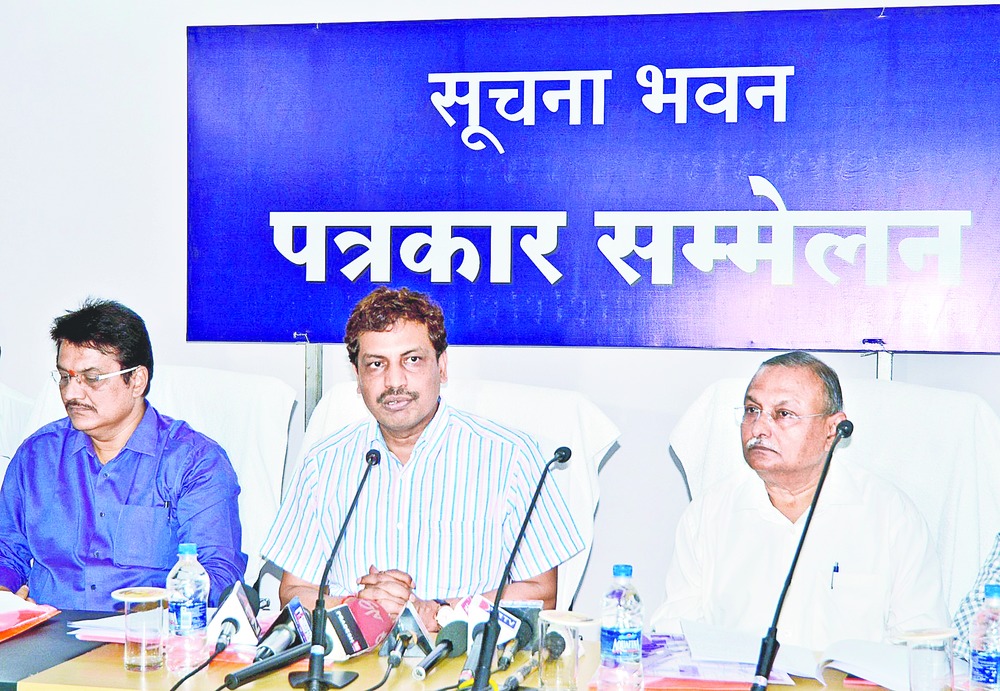
Higher and technical education secretary Ajoy Kumar Singh said this at a news meet at Suchana Bhavan today, and added that Jharkhand needed some 600 new colleges to improve its Gross Enrolment Ratio (GER) of 8.1 per cent as against the national average of 19.4 per cent.
GER is calculated on the basis of the number of colleges available for every one lakh students in the age group of 18-23 years.
"In Jharkhand, on an average only 28 colleges are available for one lakh students (18-23 years). There are a total of 428 colleges, including BEd and technical, in the state. This huge deficiency cannot be bridged at one go. Hence, we are moving in a phase-wise manner," Singh said.
Singh added that a degree college would be opened in each Assembly constituency on a priority basis. "The government has plans to increase GER up to 32 per cent by the end of 2022," he added.
A recent survey revealed that 35 out of the 81 constituencies do not have any college.
Women education will be the focus area and the government has already allocated funds for setting up 11 colleges for women in Simdega, Gumla, Lohardaga, Khunti, Koderma, Chatra, Ramgarh, Pakur, Sahebganj, Seraikela-Kharsawan and Latehar.
These apart, four colleges for professional education will be opened shortly. One of them will come up in Jamshedpur while the other three projects are at the planning stage. Moreover, proposals for setting up 61 new polytechnicsacross Jharkhand are also being considered.
Talks are on to upgrade Ranchi College as a varsity while Sanskrit University will be built in Deoghar and one in the coal belt.
Singh said mass-scale recruitment would be carried out to meet the required student-teacher ratio at higher education institutions.
Also present at the news meet was B. Rajeshwari, director of Jharkhand Education Project Council, who beamed light on school education and highlighted various measures taken to increase enrolment, curb dropout rates and overall academic and personality development of students.
Asked if private schools across Jharkhand were following the RTE norms vis-à-vis enrolment of 25 per cent students from the BPL category, the director said: "The rule is not binding on schools that don't get government support. But I don't think that the regulation is followed totally."
"We don't have the exact figure of BPL students enrolled under this provision. At the end of an academic year, the department seeks requisition from schools for tuition fees to be paid by the government against the number of BPL students admitted. So far, we are spending Rs 9 crore on this account," she added.