
Lawyer Rajeev Dhavan is known for his street-fighter-in-court spirit. But that reputation took a break recently when he decided to quit his Supreme Court practice after a tiff with the Chief Justice of India (CJI), Dipak Misra. Hearing for a case in which the AAP government in Delhi has challenged the high court's decision to uphold the lieutenant governor as the administrative head of the National Capital Region was on; Dhavan felt he was not allowed to articulate all his arguments.
Dhavan has since rethought his decision after pressure from well-wishers and clients - a sitting judge advised him against it, so did many retired judges, his clients cried "betrayal" - but he feels things will not be the same after this. "I will now be a leper and may well be seen as a hypocrite."
More often than not, the senior advocate has rushed in where everybody fears to tread, taking on the judiciary in the courtroom and outside it. But he doesn't quite agree when he is told that he is perceived as a professional browbeater, someone who gets into messy arguments with the Bench. "If you look at all my run-ins over the years and string them together, I may come out as a belligerent lawyer. But if you look at them individually, I mostly stood up for my right or the rights of the Bar."
About his fitful quitting, he says he felt insulted that he had to plead to be heard over a constitutional matter and was threatened with contempt; that too after 25 years at the Bar. He had made peace with himself and his circumstances. His chartered accountant had told him he could live off his earnings comfortably. An occasional teaching assignment would be a good additional income, he was told. He even let go of most of his staff, gave them handsome severance cheques. "Some of them had encashed the cheques by the time I asked them to join back," he chuckles.
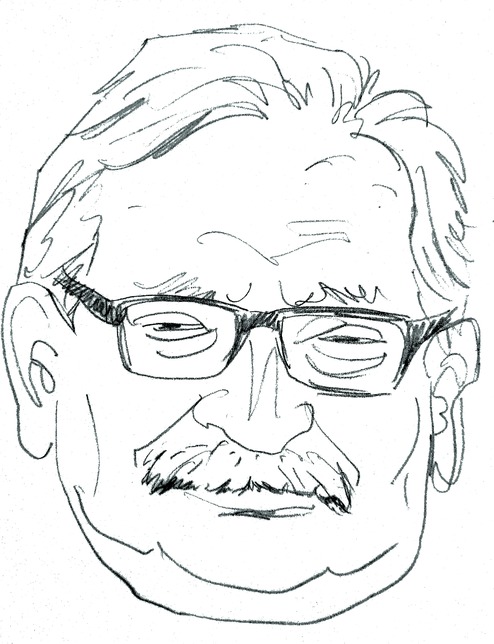
We are in Delhi's New Friends Colony, sitting in the visitor's room that doubles up as Dhavan's office when he is at home. The 71-year-old sits upright in his chair across a large table with files and papers. He is in a blue shirt and a shiny blue Nehru jacket and there is a muffler around his neck. It's a cold morning and the heater blowing hot air is not warm enough, he complains. He remembers how he didn't feel this cold even in England, where he spent nearly three decades.
Dhavan can regale his listeners with anecdotes on the judiciary like no other. And he is not stingy with his comments either. He has an opinion on almost every Supreme Court judge he has encountered - former and current. "A's judgments could be bought." "X was like a Sultan." "Y's orders are mostly gobbledygook." "Z is the most corrupt judge ever."
His takes on judgments are colourful. For instance, he calls the Supreme Court verdict on playing the national anthem in theatres "popcorn nationalism", and the one on the ban on crackers during Diwali, "absurd and silly".
Can he cite one pending case that forced him to withdraw his decision to quit? That would be the Babri Masjid case. Dhavan has represented the Babri Masjid Action Committee before the Allahabad High Court over the title to the land on which the mosque stood before being destroyed by a mob in 1992. "Quite frankly I have a bad feeling about the adjudication of the Babri Masjid case. I don't know why it is being hurried up. I get a feeling that the Supreme Court is not going to be able to deal with this decision in the present atmosphere in fairness and calmness... Justice Misra is retiring in October and it is the first appeal and there are 12,000 pages in typescript. It will take a very very long time in court if it is to be adjudicated fairly. Unfortunately, I find the speeding up of this case really scary."
Dhavan had termed the Allahabad High Court verdict on Babri Masjid a panchayat decision in which the "land was divided without any basis and it was horribly unfair and illiterate in places". The high court had decreed that two-thirds portion of the disputed land in Ayodhya be shared by two Hindu plaintiffs and one-third be given to the Sunni Muslim Waqf Board.
Although Dhavan comes from a family of jurists, he himself was in his mid-forties when he first wore a robe and argued his case in Supreme Court.
"I started with Kapil Sibal as a kind of a research assistant in 1990. But within two years I became an independent lawyer and within five years of practice, I was designated senior advocate," he says with some pride.
Before that he had spent most of his time studying and teaching public law and jurisprudence in the United Kingdom. In fact, he says it was his teaching assignment in Belfast in Northern Ireland, in the early Seventies, that shaped his mind a great deal. "As I taught, bombs were going off everywhere and state power asserted itself in ways that were quite despicable. That strengthened my resolve to look at the state with suspicion and my belief in secularism was strengthened even further."
But Dhavan's initial years in India were not the greatest of times. He calls the demolition of the Babri Masjid the "most devastating event" of his lifetime. It's been a slippery slope since then, he says. "It makes me wonder if India has lost its humanity. I believe that although we have a secular Constitution, we are ceasing to be a secular people."
He points to the scars on his nose and forehead and says, "I was beaten up in Cambridge and also London because of my race. It put me in the position of looking at things from the point of view of minority victims. Protecting minorities at all costs became part of my psyche."
This stance has not made him very popular in a climate that fosters intolerance, encourages divisiveness. Threatening phone calls and letters describing him as a Muslim and "Muslim lover" have been constant for years. "Some people say that I am totally pro-Muslim. That I am. I feel they are victimised, beaten up and pogroms have been carried out against them. I have fought for reservation in jobs for Muslims in Andhra Pradesh and other states."
He fears their position may get worse. "And it is supported by demagoguery using false narratives like vikas and other slogans. The rise of Hindutva fundamentalism is veering towards fascism and I am using the word 'fascism' advisedly. The state is effectively a Hindu state. The fight is now between Hindu fundamentalism and the sanity of secularism."
Dhavan calls Right-wing Hindu organisations - the ones who can go to great lengths to embarrass the minorities - Narendra Modi's "real army".
The apex court is not untouched by the growing assertion of the Hindu Right, he claims. "The Supreme Court at present hasn't proved itself to be the champion of the minorities as it is constantly looking for balances and they [judges] are tilting towards the Hindu view."
He traces this tilt to the destruction of the Babri Masjid and he cites case after case where the apex court, according to him, has shown its "Hindu bias". "When Justice R.C. Lahoti was the CJI, he had no business constituting a seven-judge bench to say that cow slaughter can be prohibited completely. This overturned the 1958 decision that had tried to strike a balance on the issue. Why did the CJI go out of his way on this when he was at the verge of retirement? On Babri Masjid, the Muslims were not allowed to pray on the specious ground that they could pray anywhere. I see a subtle destruction of an equilibrium which is so essential for secularism."
As for the Supreme Court and its current functioning, wherein internal flare-ups have become a public spectacle, Dhavan says, "I have never seen the court as sharply divided as now and I am speaking as a historian of the Supreme Court."
Criticism of the Supreme Court or its judges has been a touchy issue with journalists, bureaucrats and advocates living in the fear of being hauled up for contempt, but Dhavan has been speaking his mind for years now.
He talks about the lack of "real jurists" barring one or two in the Supreme Court and attributes the decline to the turn-of-the-century trend of appointing people without proper scrutiny. Besides, he asserts, the judiciary is not an ivory tower. "We can't be supine. The Supreme Court is a great institution but I believe that a strong critique is very essential."
tétevitae
After his schooling from Sherwood, Nainital, Dhavan joins Allahabad University for his LLB. His father, Shanti Swaroop Dhavan, is a high court judge
Leaves for the University of Cambridge thereafter, even becomes president of the Cambridge Union in 1970
1972-1990: Completes PhD from London University. Teaches at various universities in the UK and US
1990: Returns to India and starts practicing in the Supreme Court. By 1995, becomes senior advocate
Some big-ticket cases other than Babri are the Mandal case; fights for and against reservation in 1992 and 2007, respectively; wins case that recognised medical practice as a 'service' under the Consumer Protection Act
Is part of a battery of lawyers fighting for Sahara chief Subrata Roy
Is a human rights activist, has written several books on legal and human rights
The recent tiff with Misra is no one-off. Known to be hot-headed, he clashed with Justice G.S. Singhvi in 2013 during the 2G case and had differences with CJI T.S. Thakur too in 2016