Friday, 19 June 2026
Friday, 19 June 2026
Friday, 19 June 2026
Saudi Arabia has reported its first civilian deaths since the war involving Iran began. A military projectile fell on a residential area, killing two people — an Indian citizen and a Bangladeshi national.
Twelve other Bangladeshis were injured, according to a Saudi statement issued on Sunday evening.
Iran on Sunday indicated it had chosen Ayatollah Ali Khamenei's son Mojtaba as his successor.
The development comes as tensions rise across the Middle East after hundreds of Iranian missiles and drones were launched at Gulf and other regional targets during the nine‑day conflict.
Arab League chief Ahmed Abouel Gheit, speaking at a diplomatic meeting on Sunday, criticised Iran for a "reckless policy" of attacking Arab countries. The fighting has widened across the region.
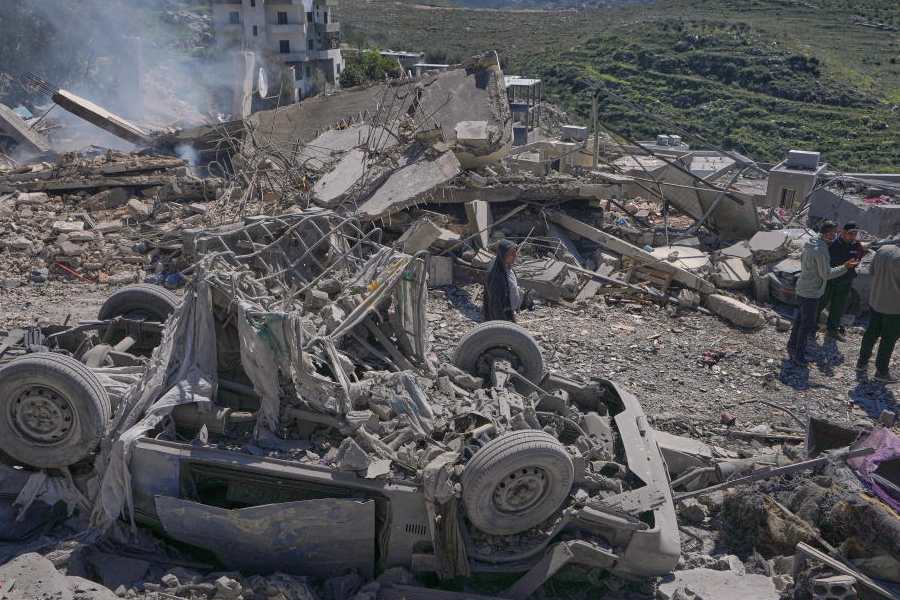
Israel carried out strikes in southern Lebanon and Beirut and targeted oil storage facilities in Tehran. Israeli Prime Minister Benjamin Netanyahu said there would be "many surprises" in the next phase of the conflict.
Iran also hit a desalination plant in Bahrain. Earlier on Sunday, Iran’s Foreign Minister Abbas Araghchi said a US airstrike damaged an Iranian desalination facility on Qeshm Island, adding that "the US set this precedent, not Iran."
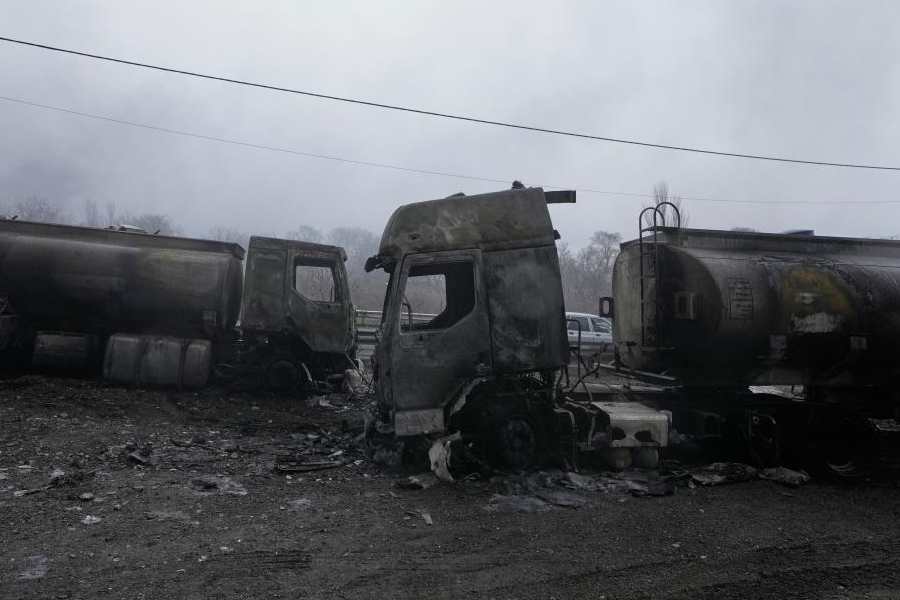
Desalination plants are key sources of drinking water across the Gulf. An Israeli strike on oil storage sites in Tehran sent flames into the night sky on Saturday, according to Associated Press video.
It appeared to be the first time a civilian industrial facility has been targeted in the conflict. The war began on February 28 after joint US‑Israeli strikes on Iran.
Officials say at least 1,230 people have been killed in Iran, more than 300 in Lebanon and around a dozen in Israel. Iran’s foreign minister said Tehran is seeking a permanent end to the war rather than a temporary pause in fighting.
Abbas Araghchi said "they have to explain why they started this aggression." He added, "there should be a permanent end of the war and unless we get to that, I think we need to continue fighting for the sake of our people and our security."
He said the war "was imposed on us" by the United States and Israel and described Iran’s actions as "legal acts of self-defense." The US State Department said more than 32,000 Americans have left the Middle East since the war began.
Most travelled on commercial flights, though the department arranged nearly two dozen charter flights that carried several thousand US citizens to Europe and the United States.
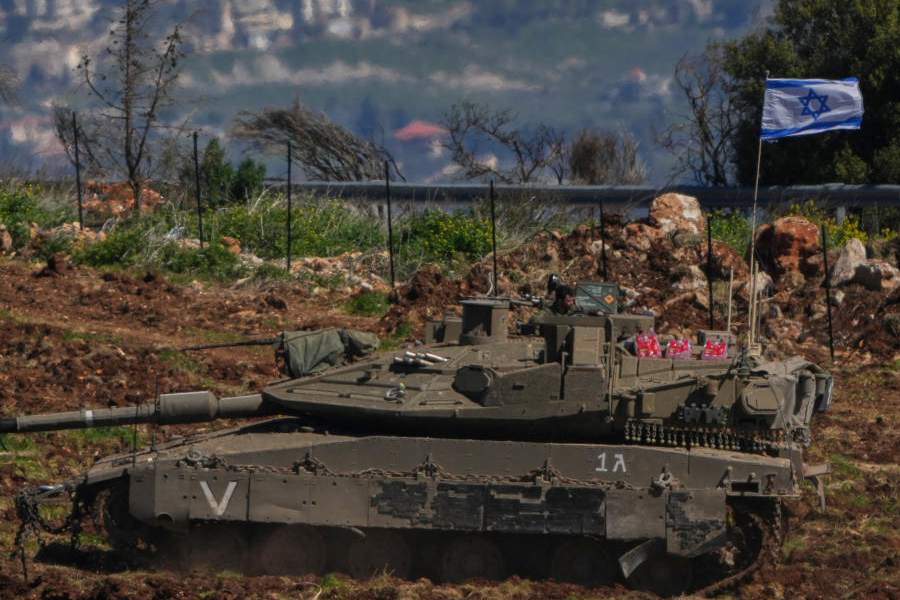
More than 19,000 Americans sought information on security or travel options. The Israeli military said two soldiers were killed in fighting in southern Lebanon on Sunday, the first military deaths since the war began.
One of them was identified as 38‑year‑old Maher Khatar from Majdal Shams in the Israeli‑annexed Golan Heights. The name of the second soldier has not been released as his family is still being notified.
An Iranian official criticised US‑Israeli strikes on oil facilities, saying they had pushed the conflict into a "dangerous phase."
Foreign Ministry spokesman Esmaeil Baqaei said, "These attacks on fuel storage facilities amount to nothing less than intentional chemical warfare against the Iranian citizens."
He added that the fallout from such attacks "will not be confined within Iran's borders." Lebanon’s foreign minister also condemned a drone strike that hit a British airbase in Cyprus and was believed to have been launched from Lebanese territory.
Youssef Rajji said, "I called on our Cypriot friends not to confuse the Lebanese state with those acting outside its authority and legal framework."
In Israel, rescue services said three people were injured when an Iranian missile struck central parts of the country. A 40‑year‑old man was in serious condition, a 25‑year‑old man suffered moderate injuries and a 56‑year‑old man was slightly injured.
The strike left a deep crater and threw a car over a wall. Egyptian President Abdel‑Fattah el‑Sissi warned of the wider impact of the war.
In a phone call with French President Emmanuel Macron, he spoke about "grave repercussions, including rising energy prices and disruptions to supply chains and air and maritime traffic."
The Israeli military also said Iran launched another barrage of missiles later in the day and that air defence systems were activated to intercept them.
In the occupied West Bank, Palestinians do not have the sirens and bomb shelters that Israelis rely on during missile attacks.
In Ramallah, residents watched the sky at night as missiles and interceptions lit up the distance, with debris reported falling in some areas but no injuries.
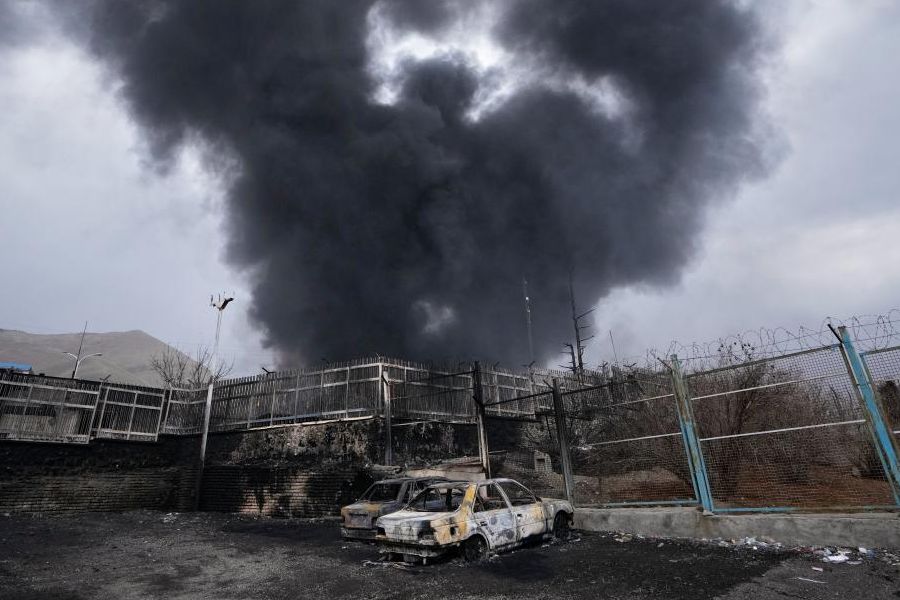
In Kuwait, firefighters brought under control fires at Kuwait International Airport and at a government agency building hours after missile and drone strikes early Sunday.
Authorities said fuel tanks at the airport and the headquarters of the Public Institution for Social Insurance were damaged, but no casualties were reported.
Lebanon’s health minister said 83 children were among the 394 people killed in the past week of fighting between Israel and Hezbollah. The Israeli offensive began after Hezbollah launched rockets into northern Israel in the early days of the wider war.