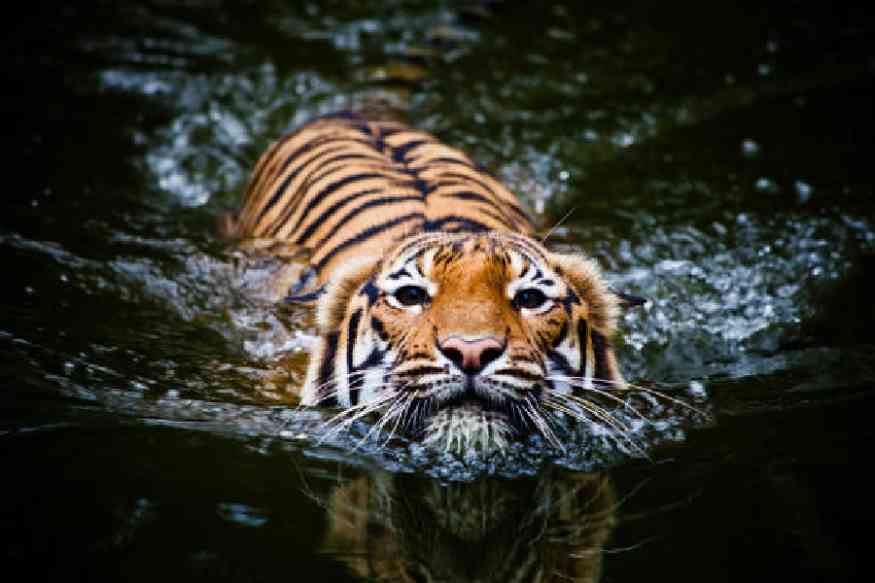
Tigress T-39 of Ranthambore National Park has become one of the longest-living big cats in the reserve, reaching around 18 years of age and setting a new benchmark for survival in the wild, forest officials said.
Officials said tigers in the wild typically live for 10 to 15 years, making T-39's longevity remarkable as she has survived without any human intervention or support.
The officials have observed behavioural changes in the ageing tigress, who is now frequently seen in outer zones such as Gada Dub, Patwa Bavdi and Kundi, indicating a natural shift towards quieter areas with advancing age.
Deputy Conservator of Forests Manas Singh said T-39 has contributed significantly to the park's tiger population by giving birth to cubs on three occasions.
"She has lived entirely in natural conditions without medical aid or supplementary feeding. Her life reflects resilience and harmony with nature," he said.
Forest teams are closely monitoring her movement to ensure the safety of both the animal and nearby human settlements, the officials added.
T-39 is often compared to the legendary tigress Machli, also known as T-16, which lived up to around 20 years and gained global recognition.
Machli, who died in 2016, was known for her remarkable feat of killing a 14-foot crocodile in 2003, earning titles such as "Crocodile Killer" and "Lady of the Lake".
The officials said that while Machli set longevity records, T-39's lifespan is equally notable, as it has been achieved entirely under natural conditions.
They described T-39 as a "living legacy" of Ranthambore's conservation success.