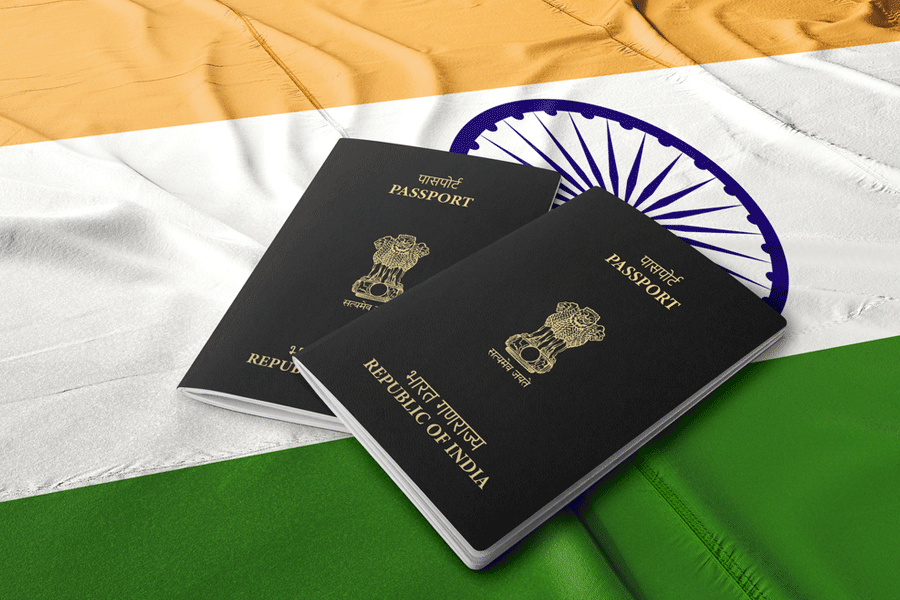
The external affairs ministry official’s clarification on Wednesday that the passport is a travel document, and not a proof of citizenship, reflects a complex legal reality that is not new but has become a cause for anxiety in the context of the special intensive revision (SIR).
Q: If passport is not proof of citizenship, then what is?
A: India does not have one specified document of citizenship. The Citizenship Act, 1955, regulates who can be a citizen of the country and how it can be acquired. A person can become a citizen of India if born here or is of Indian descent. Then there is citizenship by registration, and also naturalisation specifically for individuals who have excelled in certain fields. Documents issued by different authorities are specified to establish citizenship of all four categories.
Q: Which document(s), if any, prove Indian citizenship?
A: The answer depends on who is asking. If it is to apply for a passport, then there are different sets of documents for residents of Jammu and Kashmir or Nagaland and those living in other parts of India. Further, the documents required differ according to category of citizenship.
What placed passports higher than other documents in terms of verifiability is that a police officer visits the applicant and checks the antecedents before granting or rejecting clearance for issuance, which is mandatory.
The required proof of citizenship varies from one exercise to another. For example, the SIR accepts an Indian passport issued at any time. But in Assam’s National Register of Citizens, only passports (and other government papers) issued before March 25, 1971, are counted as automatic proof of citizenship.
Q: When a passport is viewed worldover as the most authoritative document issued by any country, how is it not a proof of citizenship in India?
A: According to former foreign secretary Nirupama Rao, a passport does not create citizenship. Nor is it the legal instrument that finally determines citizenship if that status is challenged before a court. Like many democracies, India distinguishes between citizenship law and passport law. In rare cases involving fraud, disputed parentage or illegal acquisition, citizenship may have to be established through the provisions of the Citizenship Act and supporting evidence. That is why a passport is not regarded in law as conclusive proof in every conceivable circumstance.
The government further cities Section 20 of The Passports Act, 1967, according to which an Indian passport can be issued to persons who are not citizens of India under certain conditions and “in public interest”.
Q: What bearing does the SIR have on citizenship in India?
A: The SIR introduced a citizenship document-based verification of electors. The SIR put the onus of proving one’s eligibility through documents that the Election Commission believes can ascertain one’s “date and/or place of birth” in accordance with the provisions of the Citizenship Act. The only assumption that the EC makes is that those whose names or parents’ names are on the previous intensively prepared roll are eligible to vote.
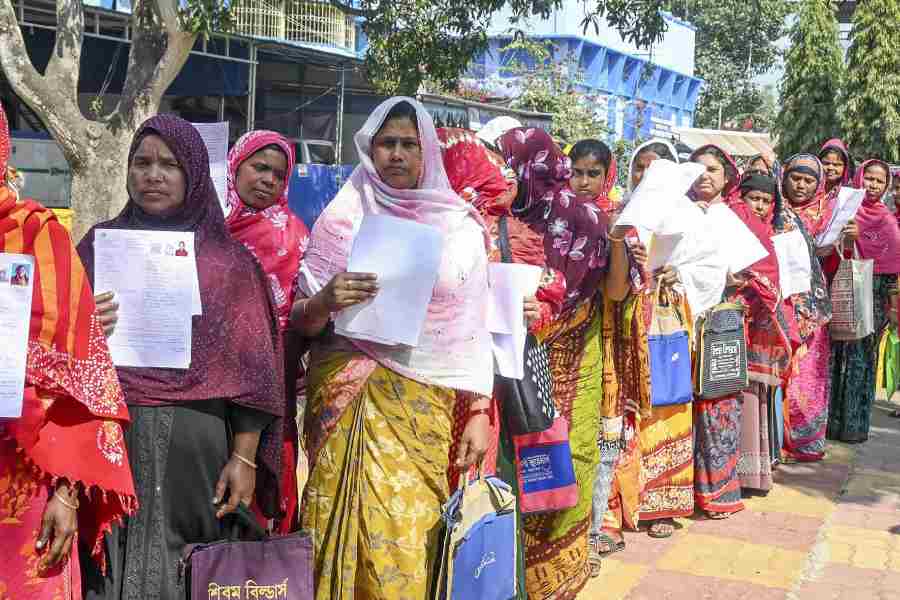
If one’s name cannot be “mapped” to the previous intensive roll, the elector can be summoned by an electoral registration officer to prove their eligibility with any one of 11 specified documents to enumerate oneself as a voter. Aadhaar will be accepted only as proof of identity along with these specified documents.
Q: What about the NRC?
A: An amendment to the Citizenship Act in 2003 mandated a National Register of Citizens, which would provide a national identity proof for all citizens. But the exercise to update this in Assam — which has had an NRC since 1951 — has been mired in controversy. The Registrar General of India has not notified it or given it legal sanctity and the Comptroller and Auditor General found it error-ridden. Assam chief minister Himanta Biswa Sarma said in June last year that he would deport all “foreigners” even if they were in the NRC.
Union home minister Amit Shah had said in 2019 that an NRC would be created for the entire country. For this, the National Population Register (which will include foreigners living in India as well, and designate them as such) would need to be updated. That has to be done during a national population census. But the Centre has not yet announced whether it would update the NPR during the ongoing census.
Q: Why is Aadhaar not our national identity card?
A: The identity card that most Indians now have is the Aadhaar. The Aadhaar (Targeted Delivery of Financial and Other Subsidies, Benefits and Services) Act, 2016, says: “Aadhaar number or the authentication thereof shall not, by itself, confer any right of, or be proof of, citizenship or domicile in respect of an Aadhaar number holder.” It records biometric data and is issued to all legal residents of the country, including foreigners, as well as NRIs — and is not restricted to citizens.
Q: What about Electors Photo Identity Cards (EPICs)?
A: First introduced in 1993, these cards had photos and details of voters in order to thwart bogus electors. They were issued to anyone on the electoral rolls — for which it is mandatory to be an adult Indian citizen of sound mind, ordinarily a resident of the place where they are registered to vote.
EPICs do not guarantee the right to vote, which is available only if one’s name is on the electoral roll for an election that one wishes to vote in. Also, not having an EPIC is not a disqualification from voting as one can show other documents as well to prove one’s identity at the polling booth. These are not considered proof of citizenship as there is no procedure to surrender them if one accepts the citizenship of another country. It is illegal, however, for a foreigner to vote in India.