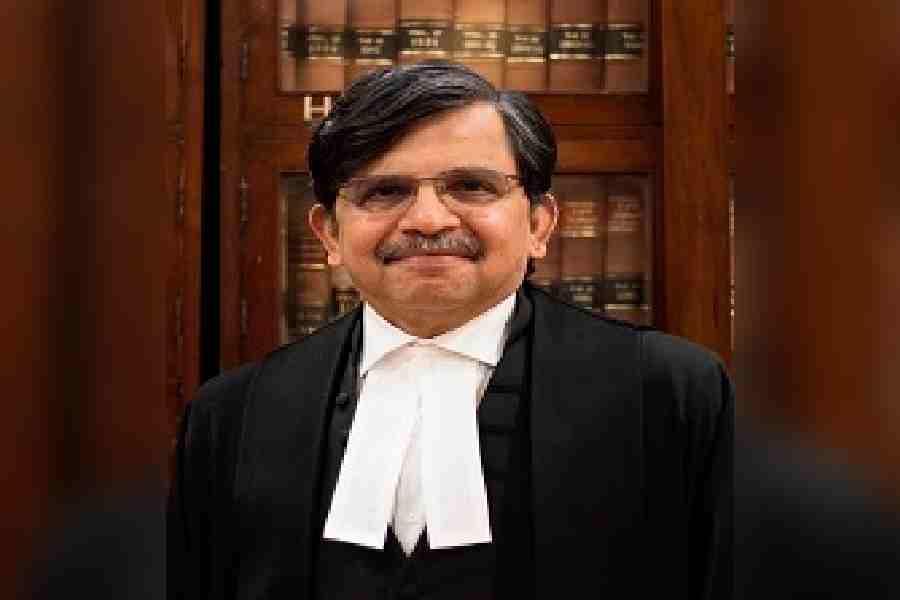
Six years after a late-night executive order abruptly derailed his career within India’s capital judiciary, Justice S. Muralidhar has re-emerged on the global stage, wielding the same uncompromising legal lens that once cost him his bench in New Delhi.
As chair of the United Nations Independent International Commission of Inquiry, the retired Indian jurist has unveiled a scathing report accusing Israeli security forces of deliberately targeting and killing Palestinian children.
The inquiry concluded that at least 20,179 children were killed over a two-year period, accounting for nearly 30 per cent of all Palestinian fatalities. The commission declared that Israel’s military campaign and systemic actions amounted to genocide, war crimes and crimes against humanity.
The report outlined a chilling pattern of behaviour, including the targeted use of snipers and precision drone strikes against minors, alongside blockades that induced widespread starvation.
Muralidhar’s panel highlighted systematic attacks on vital civilian infrastructure, specifically neonatal and maternity care facilities, which it argued directly compromised the community's reproductive future.
The findings also documented instances of sexual violence and arbitrary detentions of children in the West Bank. While Israel’s foreign ministry fiercely dismissed the report as an "outrageous propaganda piece" and a "libelous sham," the commission insisted that the evidence established an undeniable "genocidal intent" to destroy Palestinian society from its roots.
For close observers of the Indian legal ecosystem, Muralidhar’s unflinching stance before a global military power is entirely characteristic. It carries deep echoes of the dramatic episode that turned him into an overnight symbol of the debate around judicial independence under the Narendra Modi administration.
In February 2020, as deadly communal riots tore through northeast Delhi, Muralidhar, then a senior judge of the Delhi High Court, convened an extraordinary midnight hearing at his residence to ensure safe medical passage for the wounded.
The following afternoon, he sharply reprimanded the Delhi police for failing to register criminal cases against ruling party politicians for hate speech. "We cannot let another 1984 happen in this city under our watch," Muralidhar had warned.
Within hours of his rebuke, the government issued an unprecedented midnight notification shifting Muralidhar to the Punjab and Haryana High Court. The timing sparked national outrage, prompting a rare strike by the Delhi High Court Bar Association, which condemned the transfer as a punitive strike against an independent judge.
The shadow of executive displeasure lingered; the approval for his elevation to larger benches was withheld; he retired from the Orissa High Court without reaching the Supreme Court.
In September 2022, the Supreme Court Collegium recommended Justice Muralidhar’s transfer to the Madras High Court. The government stalled the decision for six months. The collegium recalled the proposal in April 2023.
The farewell Justice Muralidhar got on retirement from the Orissa High Court was also unprecedented, with lawyers lining up from the court to the street as a mark of respect.
Now operating out of Geneva, the veteran jurist remains an inconvenient truth-teller to power. It is not just a one-off “Gaza report” assignment. The commission is an ongoing investigative body created by the UN Human Rights Council in 2021 to investigate alleged violations of international humanitarian law and human rights law connected to the conflict and to report periodically to UN bodies.