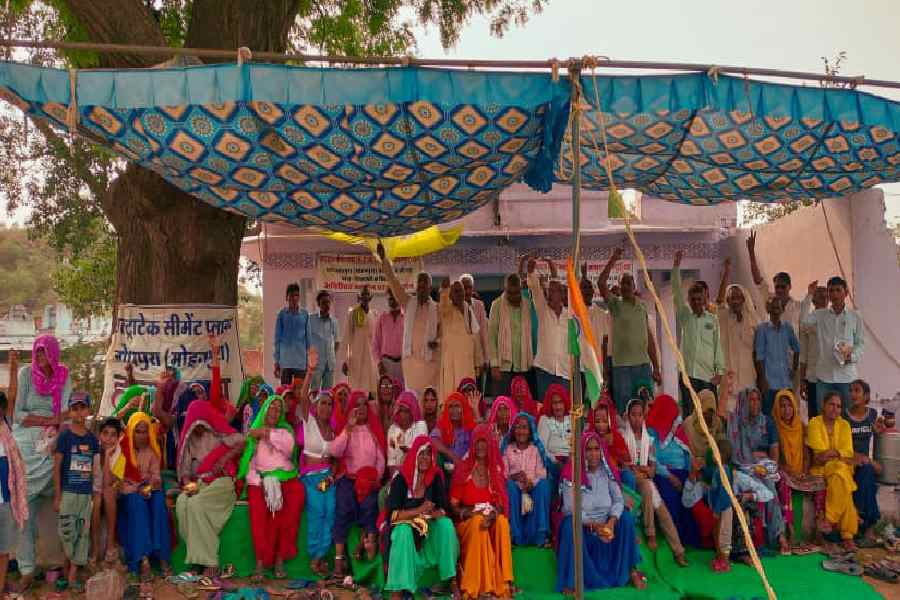
Hundreds of villagers from Rajasthan’s Jodhpura gathered outside the Kotputli district collector's office on Tuesday, May 23, launching a renewed protest and hunger strike over what they describe as the continued failure to implement a National Green Tribunal (NGT) order aimed at protecting residents from the impacts of nearby mining and stone-crushing operations.
The demonstration, organised under the banner of the Jodhpura Sangharsh Samiti, marks more than 1,295 days of sustained agitation against mining and crushing activities linked to an UltraTech Cement plant operating near residential areas.
Five members of the committee began a 24-hour fast on Friday. Women from the village are expected to join the hunger strike on Wednesday, expanding a movement that has increasingly drawn participation from entire families affected by dust, blasting and noise pollution.
The protesters are demanding full implementation of an NGT order issued on November 3, 2025, which directed authorities and the company to address environmental and public safety concerns. Villagers argue that key provisions of the order remain unfulfilled nearly eight months later.
"We have come here because the administration has failed to ensure compliance with the tribunal's directions," said Kailash Yadav, secretary of the Jodhpura Sangharsh Samiti. "This movement has always remained Gandhian and non-violent, but people are losing faith when orders are passed and nothing changes on the ground."
Residents allege that blasting continues within 250 to 300 metres of schools, temples and populated areas, despite restrictions prohibiting such activity within 500 metres of habitation. They also complain of persistent dust emissions from crushing units, nighttime noise and the glare of high-mast lighting affecting daily life.
"This is not only an environmental issue; it is about our right to live with dignity," said Radheshyam Shuklawas, a senior member of the movement. "People are facing health problems, sleepless nights and constant uncertainty while waiting for action that was promised months ago."
The struggle in Jodhpura has become a prominent example in Rajasthan's wider debate over mining, environmental compliance and rural livelihoods. Protesters say their continued presence outside government offices challenges claims that large-scale extraction can be conducted sustainably when communities living closest to the operations continue to bear the costs.
As the fast enters its second day with women preparing to take part, villagers say they will remain at the site until authorities provide a clear roadmap for implementing the tribunal's directives.