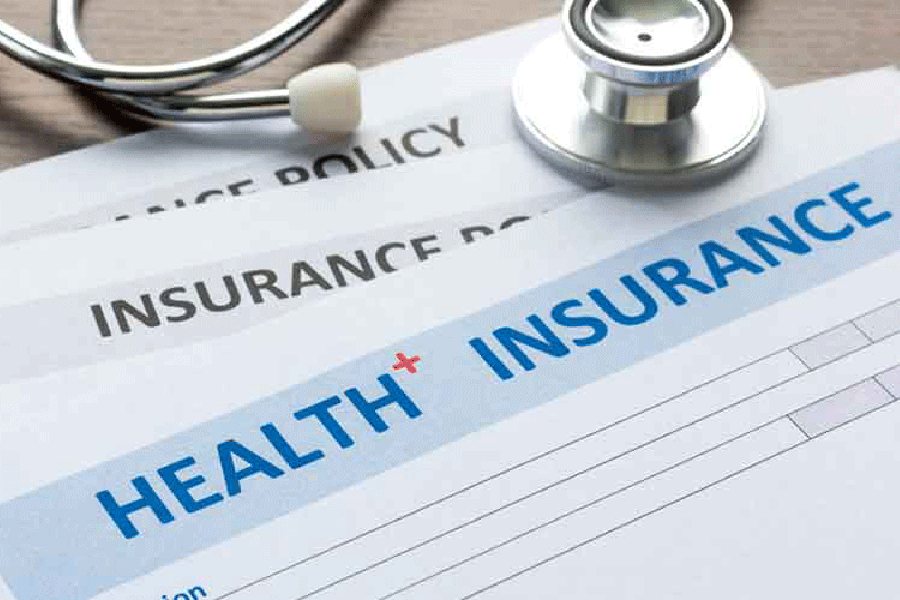
Health insurance premiums have doubled or more over the past three years for over half of the respondents in a nationwide survey, amid concerns that rising fees are not matched by additional benefits.
The survey by LocalCircles, an online platform tracking citizens’ concerns, analysed responses from 17,200 people across 320 districts, and found that 21 per cent experienced premium jumps of 100-150 per cent, 11 per cent saw increases of 150–200 per cent, and another 21 per cent faced hikes exceeding 200 per cent.
Sections of respondents have cited the addition of “riders” — optional features added to existing health insurance policies that came with extra premium fees. Among these are a rider for “modern” treatment, a rider that increases the maximum limit of cataract treatment, and a rider covering non-medical expenses.
In some instances, companies have restructured policies to encourage policyholders to accept new riders.
For example, an existing policy with a maximum limit of ₹50,000 for cataract treatment allows it to rise to 10 per cent of the sum insured with an extra premium. Under this rider, a policyholder with a sum insured of ₹12 lakh could increase their cataract coverage to ₹1.2 lakh.
One health insurance company has set maximum limits for various “modern” treatments — such as oral chemotherapy, immunotherapy, robotic surgeries and laser-assisted prostate vaporisation — and offered to eliminate those limits for policyholders who pay extra.
For instance, an existing policy would have a maximum payout of ₹1,00,000 for oral chemotherapy, ₹5,00,000 for robotic surgery, or ₹2,50,000 for prostate vaporisation. With the rider, those limits disappear, and the policyholder can claim up to 100 per cent of the sum insured.
Previously uncovered non-medical expenses — such as arm slings, cervical collars, crepe bandages, gloves, knee braces, nebuliser kits, oxygen masks and pelvic belts — can now be claimed up to ₹15,000 for an additional premium.
“Given the number of new riders and additional premium fees, we have to ask: what does the base premium cover at all?” a consumer who was not among the survey respondents told The Telegraph.
LocalCircles has also received complaints from respondents whose insurance companies did not pass on the benefit of the 18 per cent GST reduction on health insurance premiums.
One respondent noted that their premium increased to ₹22,491 in March 2026 from ₹19,659 in March 2025, questioning where the GST benefit had gone.
“Our findings appear to warrant a full-scale scrutiny of such premium increases. Insurance regulators need to probe deep into the mechanisms and reasons for such hikes,” said Sachin Taparia, chief executive officer of LocalCircles.
The Insurance Regulatory and Development Authority of India (IRDAI), the apex regulatory body for insurance, and some industry representatives have attributed the rising premiums primarily to medical inflation and increasing hospital bills.
Some insurers told the IRDAI that they have repriced older or loss-making products to maintain viability, which has also contributed to higher renewal premiums.
A health economist said broader structural factors may also be pushing up premiums, including demographic shifts and the rising cost of private hospital care.
“A combination of factors is likely driving the increases,” said Indranil Mukhopadhyay, a health economist and member of the Jan Swasthya Abhiyan, a network of patients’ rights advocates.
“More elderly people are now covered by insurance, and there are few effective checks on prices charged by private hospitals. We have anecdotal evidence that hospital bills are rising, but there is very little public data on what hospitals actually charge insurers,” Mukhopadhyay said.
The rising costs, Taparia said, are shaping how consumers view health insurance.
“Many consumers feel trapped,” Taparia added. “Those who have held policies for some years are reluctantto migrate to other companies, fearing they may losesome of the benefits from existing policies.”