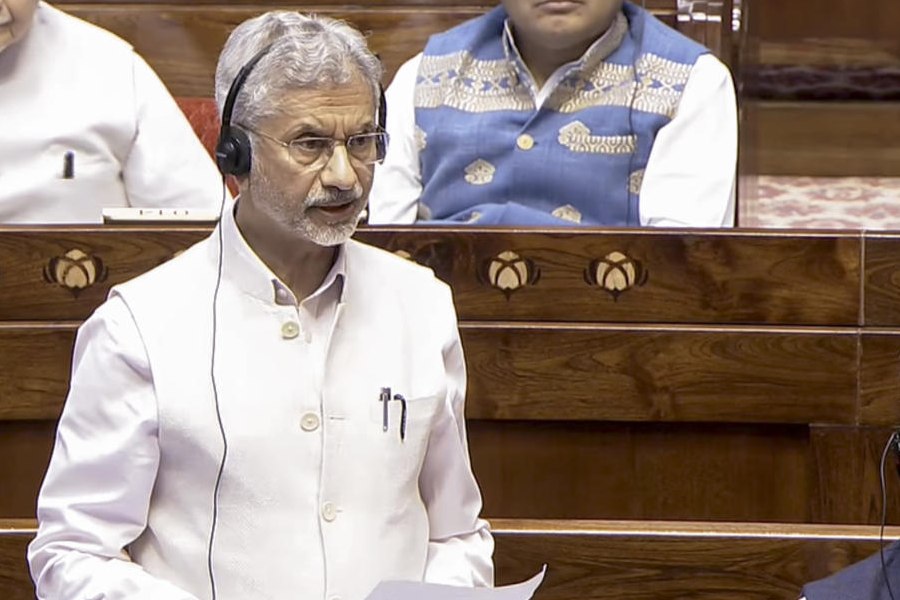
India has taken steps to ensure the safety of Indian nationals in the Gulf while safeguarding the country’s strategic interests, external affairs minister S. Jaishankar told the Parliament on Monday.
Nearly 67,000 Indian nationals have returned from the region so far through additional commercial flights and other arrangements amid partial airspace openings, Jaishankar said.
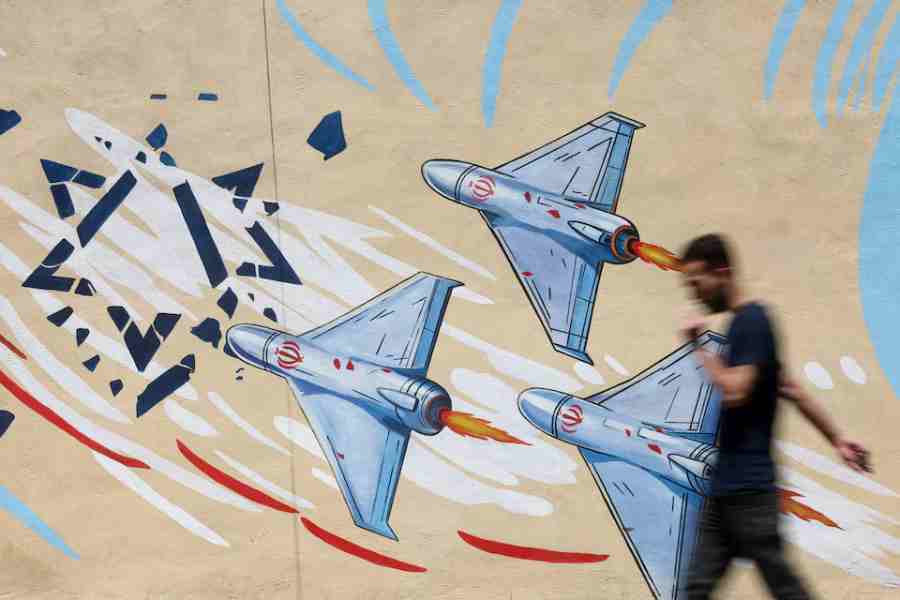
The hostilities, which began on February 28, involve fighting between Israel and the United States on one side and Iran on the other. Attacks have spread to Gulf countries, causing casualties and heightening fears of a wider regional escalation.
Nearly one crore Indians live and work in Gulf countries, while a few thousand are in Iran for study or employment. The Gulf region is vital for India’s energy security and trade, accounting for nearly $200 billion in commerce.
The Cabinet Committee on Security met on March 1 under Prime Minister Narendra Modi to review the evolving situation, including regional security, economic activity, and the safety of Indians in the Gulf, Jaishankar added.
Jaishankar said the government has taken several steps to assist Indian nationals in the region. Diplomatic missions have helped with relocation and evacuation efforts, including facilitating travel to neighbouring countries such as Armenia for onward return to India.
The government has issued travel advisories since January, urging Indians to avoid non-essential travel to Iran and to remain in contact with the Indian embassy if already there.
The external affairs minister also noted that attacks on merchant shipping had affected Indian seafarers, with casualties reported and one Indian mariner still missing.
The ministry of external affairs has set up a control room to monitor the situation, while the directorate general of shipping has created a quick response team to help Indian seafarers.
Prime Minister Modi spoke with the leaders of the UAE, Qatar, Saudi Arabia, Kuwait, Bahrain, Oman, Jordan, and Israel, all of whom assured the safety of the Indian community in their countries.
Jaishankar said he had also spoken with Iranian foreign minister Abbas Araghchi on February 28 and March 5.
“While attempts have been made, contacts with Iran at the leadership level are obviously difficult at this time. I have, however, spoken to (Iranian) foreign minister Araqi on 28th February and 5 March 2026. We will continue these high-level conversations in the coming days,” he said.
Jaishankar also informed Parliament that an Iranian vessel, IRIS Lavan, had docked at Kochi on March 4 after India granted permission on humanitarian grounds.
Jaishankar added that India has called for de-escalation and a return to dialogue and diplomacy, stressing respect for the sovereignty and territorial integrity of all states in the region.
“India is in favour of peace and urges a return to dialogue and diplomacy. We advocate de-escalation, restraint, and ensuring the safety of civilians. The wellbeing and security of the Indian community in the region is our priority. And our national interests, including energy security and trade, will always remain paramount,” he said.
He added that India had expressed concern at the outset and urged all sides to exercise restraint, avoid escalation, and prioritise civilian safety. “Dialogue and diplomacy remain the only viable path to resolve the crisis,” Jaishankar said.
Earlier in the day, Opposition MPs staged a protest in Parliament demanding a discussion on the West Asia conflict and criticising the government for its “silence” on the crisis.
Opposition leaders, including Congress president Mallikarjun Kharge, former party chief Rahul Gandhi and Samajwadi Party chief Akhilesh Yadav, participated in the protest.
Opposition floor leaders met in Kharge’s chamber to plan their approach for the second half of the Budget session. Those present included SP’s Ram Gopal Yadav, DMK’s Dayanidhi Maran, NCP’s Supriya Sule and Shiv Sena (UBT)’s Sanjay Raut.
In a post on X, Kharge said, “As the Parliament reconvenes for the second part of the Budget session, the US-Israel war with Iran has reached our backyard. In this context, it is imperative to have a full-fledged discussion on the current geopolitical crisis.”
He added: “A one-sided statement by the EAM is not the solution. We need to collectively take the nation into confidence. The GOI must come out with a detailed contingency plan to ensure our energy security, assist our traders, diversify supply chains for our exports and stop penalising our people with price hikes. The Opposition demands sensitivity towards our people.”
Later, Opposition MPs staged a protest near the Makar Dwar of Parliament holding a banner that read: “Gulf burning, oil shock. Indians stranded. India needs leadership — not silence.”
Slogans were raised against the government and Prime Minister Modi. Kharge, Gandhi, Yadav and TMC MP Sagarika Ghose were among those present.