Jharkhand’s push to revive India’s collapsing vulture population has taken its first concrete step in more than a decade, with the state preparing to operationalise its inaugural Vulture Conservation and Breeding Centre in Ranchi.
The state cabinet has approved a memorandum of understanding with the Bombay Natural History Society (BNHS), giving the project the technical support it lacked since its sanctioning in 2009.
“The state cabinet on Monday approved the proposal for the signing of a memorandum of understanding with BNHS for its technical support. We will make efforts to make the centre operational by next year,” Chief Conservator of Forests (Wildlife) S R Natesh told PTI.
The centre, located in Muta, 36 km from Ranchi, was built with an outlay of ₹41 lakh and includes a main aviary, a small hospital, and two care units. Despite being completed in 2013, it never opened — the project stalled between bureaucratic hurdles and the environment ministry’s refusal to permit the housing of vultures, a retired forest official said.
With the new agreement, Jharkhand expects to collaborate with existing centres to source birds and begin breeding. “The BNHS will provide technical support and supervise the centre. We will soon begin correspondence with other vulture centres in the country to bring the birds from their centres to Jharkhand for breeding purposes,” Natesh said.
In 2015, the forest department sent four casual workers to the Pinjore vulture breeding centre in Haryana for training on handling vultures in captivity.
Natesh said the centre needs some repairs, which will start soon. "We will request additional funds from the government for the purpose," he added.
The official added they would also begin a census of vultures in the state from December 15, along with tiger estimation.
Vultures are protected under Schedule (1) of the Wildlife Protection Act.
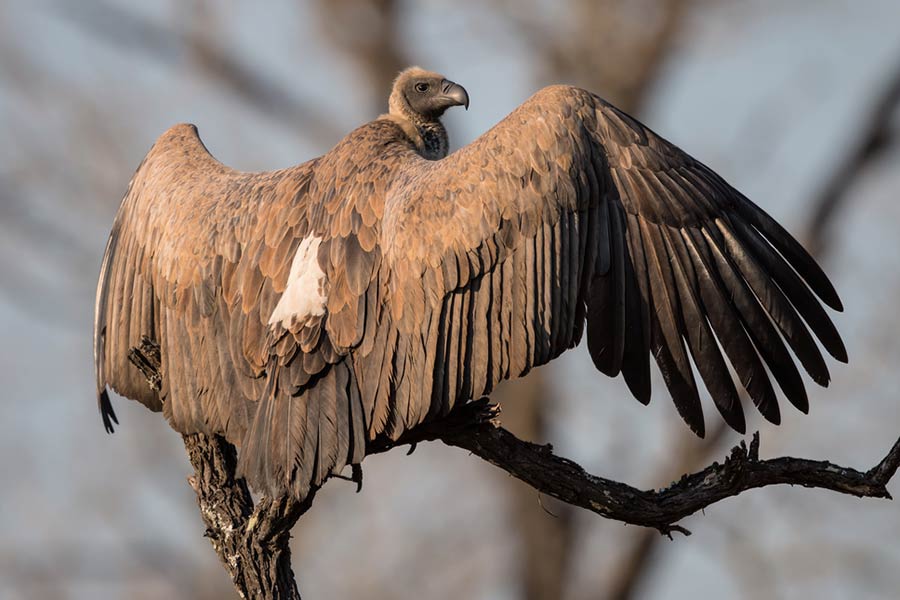
"Nine species of vultures are found in the country. Of them, six have been seen in Jharkhand, such as white-backed vulture, long-billed vulture, Himalyan vulture (migratory), Egyptian vulture, red-headed vulture and Cinereous vulture," BNHS Jharkhand coordinator Satya Prakash told PTI.
Once abundant across India, vultures have nearly disappeared due to poisoning linked to the veterinary drug diclofenac.
Prakash said vultures feeding on contaminated cattle carcasses either die of acute kidney failure or suffer reproductive failure.
"Vulture population in the country is around 10,000. Its number has increased in Jharkhand in recent years. According to recent studies, the number will be between 400 and 450 in the state," he added.
The bird is mostly found in Hazaribag and Koderma districts, but they have also been spotted in other areas of the state, Prakash said.
To boost conservation efforts, a 'vulture restaurant' has been set up in Koderma district, aimed at providing diclofenac-free animal carcasses. The facility, located on one hectare at Gumo under Tilaiya Nagar Parishad, serves as a designated feeding site for the birds.