The Iran war is threatening to throw Lucknow’s vibrant culinary scene into disarray.
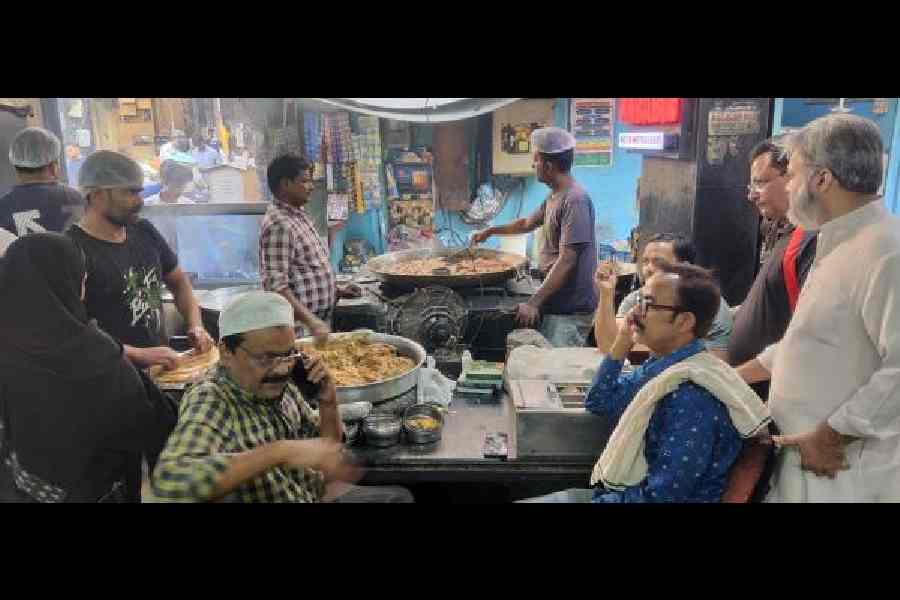
The disruption in the supply of commercial LPG cylinders has forced Tunday Kababi and Raheem Nihari — famous for their melt-in-your-mouth galawati kebabs and exquisite meat stews — to cut down on the quantity of food they prepare on a daily basis.
Although these traditional Iranian dishes are cooked on clay stoves that use coal and charcoal as fuel, they are kept warm on burners that run on LPG. Both restaurants need around two cylinders per day.
“The commercial LPG cylinder crisis has started hurting us even though we don’t depend on it to prepare nihari and naan. They are cooked on a wood charcoal fire. But biryani and nihari are kept warm on stoves that run on LPG,” said Shoeb Ahmad, owner of Raheem Nihari.
“We have already started preparing a limited quantity of food because we are unable to serve all customers,” he added.
The term “nihari” originates from the Arabic word nahar (day/morning), as the slow-cooked meat stew was traditionally eaten in the early morning. Restaurant owners, mostly near Akbari Gate in old Lucknow, stick to the tradition and start preparing the dish at dawn.
Some popular accounts link nihari to Layla, who is described as having dark hair and eyes by 12th-century Persian poet Nizami Ganjavi in his masterpiece Layla and Majnun.
The local food culture was shaped by nobles and aristocrats who came from Khorasan province of modern-day Iran and settled here, beginning with Saadat Ali Khan in 1724. Khan later founded the Awadh dynasty in India and introduced culinary traditions from Persia to his capital in Faizabad and Lucknow. Nihari, kebabs and rumali roti quickly became crowd favourites.
Parents of Seyyed Ahmad Musavi Hindi, the paternal grandfather of Iran’s first Supreme Leader Ayatollah Ruhollah Khomeini, had also shifted to Awadh from Iran. Hindi was born in Kintoor village in Barabanki district. He went to Iran and Iraq on a pilgrimage in the 1830s and settled down at Khomein in Iran’s Markazi province. Ali Hosseini Khamenei, who was recently killed in a US-Israel strike, was nominated by Khomeini as his successor.
“It was because of this emotional connection that Awadh (central Uttar Pradesh) erupted in protests following Khamenei’s killing,” said Abu Bakr of Tunday Kababi.
“We have reduced our production of kebab, pulav and rumali roti by 60 per cent because of the disruption in commercial LPG cylinders. We use coal for cooking, but need LPG to keep the food warm. We can’t serve cold food to customers,” he said.
Unesco had last year designated Lucknow as a “Creative City of Gastronomy”.
Although the Yogi Adityanath government has dismissed reports on the unavailability of LPG cylinders, over 60 per cent of restaurants and eating joints in Lucknow remained closed on Wednesday, while the rest prepared limited food.
Those eateries that only use LPG said they would run out of stock in four to five days and would have to pull down shutters after that.
Avinash Tripathi, vice-president of the Uttar Pradesh Adarsh Vyapar Mandal, said: “Nobody is able to procure commercial LPG cylinders. Owners of food carts are badly affected because they didn’t have extra cylinders in stock. Big restaurateurs will also not be able to continue with their business if the crisis is not resolved in the next few days.”
Government hospital canteens, which prepare food for patients, are also feeling the heat.
Dr Himanshu Kumar, chief medical superintendent of Balrampur Hospital in Lucknow, said they were planning to switch to firewood stoves once their LPG stock runs out. “We are able to procure LPG cylinders at the moment but are ready to use firewood to cook food for the patients,” he said.
The hospital serves food to over 400 patients thrice a day.
Pinning the supply glitch on hoarders, Adityanath has directed officials concerned to take strict action against those creating an artificial crisis.
Samajwadi Party president Akhilesh Yadav accused the government of failing to curb hoarding and denying the crisis. “The crisis is there before our eyes, but the government doesn’t accept it. It is taking us to a point where we will all start using firewood to cook food,” he said.