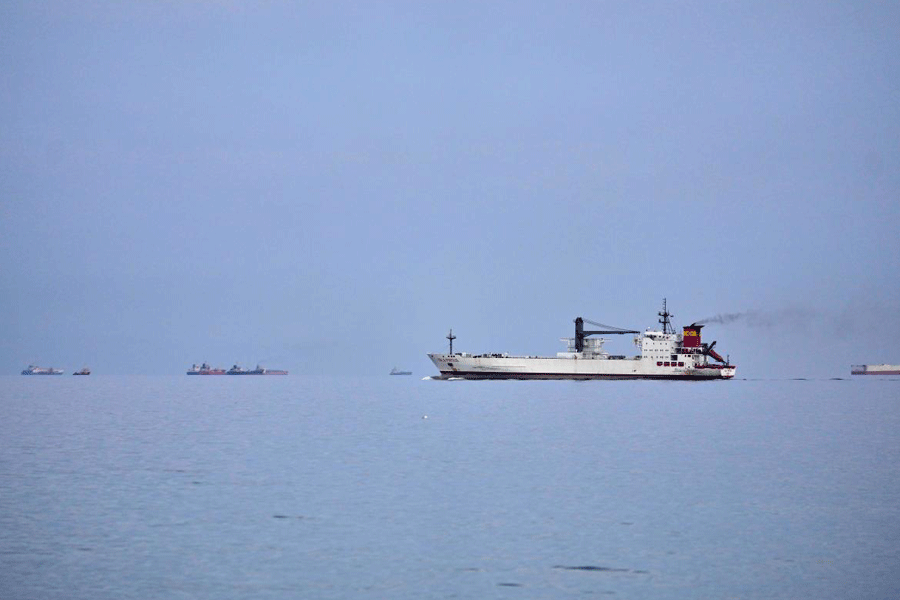
India on Thursday joined a UK-initiated virtual meeting of 35 countries to explore ways to reopen the Strait of Hormuz, the crucial shipping lane whose closure has triggered a global energy crisis.
Foreign secretary Vikram Misri represented India at the meeting, which the BBC said was being “billed as the beginning of efforts to assemble a coalition capable of ensuring security in the Gulf shipping channel”.
Earlier, external affairs ministry spokesperson Randhir Jaiswal, asked at the weekly briefing whether India had been invited, had confirmed that Misri would represent the country at the meeting, chaired by British foreign secretary Yvette Cooper.
Announcing the UK’s decision to host such a meeting, British Prime Minister Keir Starmer had on Wednesday said the initiative would bring together 35 countries to “assess all viable diplomatic and political measures that we can take to restore freedom of navigation, guarantee the safety of trapped ships and seafarers, and resume the movement of vital commodities”.
According to the Indian readout, Misri underscored the importance of the principles of freedom of navigation and unimpeded transit through international waterways.
He emphasised the impact of the crisis on India’s energy security and underlined that India was the only country to have lost mariners in attacks on merchant shipping in the Gulf.
Misri argued that the way out of the crisis consisted of de-escalation and a return to diplomacy and dialogue involving all the parties concerned.
While there was no immediate readout on the meeting from the British Foreign and Commonwealth Office, the BBC quoted Cooper as saying the world was witnessing Iran hijack an international shipping route to hold the global economy hostage.
“This is hitting the trading routes for Kuwait, Bahrain, Qatar, the UAE, Saudi, Oman, Iraq, but that means liquid natural gas for Asia, fertiliser for Africa, and jet fuel for the world,” the BBC quoted Cooper.
“That Iranian recklessness towards countries who were never involved in this conflict, which we and 130 countries across the world have strongly condemned at the United Nations, is not just hitting mortgage rates and petrol prices and the cost of living here in the UK and in many different countries across the world, it is hitting our global economic security,” the BBC quoted Cooper.
Among the countries expected to participate in the meeting were France, Germany, Italy, Canada and the United Arab Emirates.
The US was not expected to attend after President Donald Trump washed his hands of the Hormuz blockade in reaction to many countries’ lackadaisical response to his call to help America reopen the Strait.