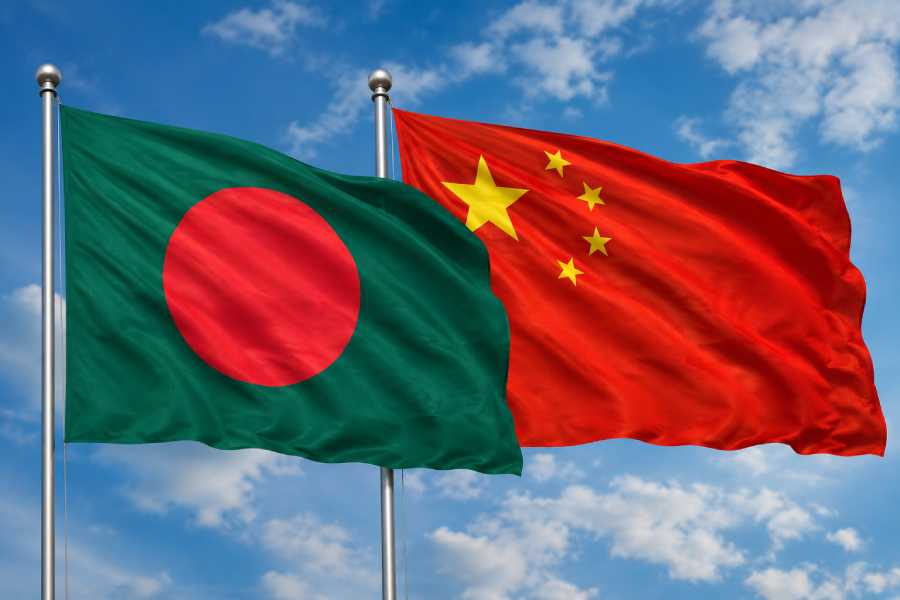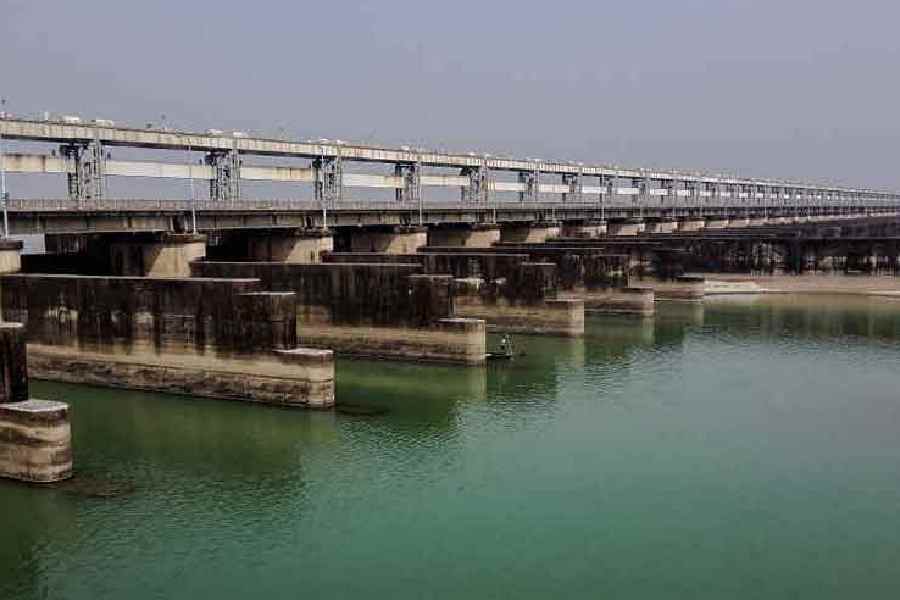
Bangladesh on Wednesday approved a mega project to build a barrage on the Padma river, which it said would help "negate the negative impact" of India's Farakka Barrage upstream.
The development comes months before the Indo-Bangladesh Ganges Water Sharing Treaty is due to expire in December. The Padma is known as the Ganges in India.
The Executive Committee of the National Economic Council (ECNEC), chaired by Prime Minister Tarique Rahman, cleared the first phase of the Padma Barrage project at an estimated cost of Tk 34,497.25 crore (approx USD 280 million), officials here said.
One of the main objectives of the project is to store water on the Bangladesh side to "negate the negative impact of the Farakka Barrage" on the Ganges, Water Resources Minister Shahiduddin Chowdhury Anee told reporters after the ECNEC meeting.
He, however, clarified that issues relating to the 54 common rivers shared by India and Bangladesh are not linked to the project.
The minister said the barrage is being built in Bangladesh’s national interest and did not require any discussion with India.
“Padma Barrage is a matter of Bangladesh's own interest, and there is no need for any discussion with India over the issue,” he said.
Anee, however, said discussions with India on the Ganges waters are continuing. “Discussions are necessary regarding the Ganges, and those are ongoing," he said.
India commissioned the 2,240-metre-long Farakka Barrage in West Bengal in 1975 to divert water from the Ganges into the Hooghly river to flush out silt and maintain the navigability of the Kolkata port.
The Farakka issue has long remained a sensitive subject in Bangladesh, with successive governments and experts alleging that reduced dry-season water flows downstream caused salinity intrusion, river degradation and adverse effects on agriculture and ecology in the lower riparian country.
India has consistently maintained that the Farakka Barrage was built primarily to preserve the Kolkata port and that water-sharing issues have been addressed through bilateral mechanisms and agreements, including the 1996 Ganges Water Sharing Treaty between the two countries.
The state-run BSS news agency reported that the Padma river project aims to "restore major river systems, reduce salinity intrusion and strengthen irrigation and ecological sustainability" across large parts of Bangladesh.
Officials said the project, fully financed by Bangladesh and targeted for completion by 2033, would cover 19 districts across the Rajshahi, Dhaka and Barishal divisions.
They said the project is designed to restore the flow and navigability of major river systems in the three divisions, as they suffered severe degradation over the decades.
According to the project documents, the proposed barrage is expected to improve navigability and water flow in major rivers, prevent salinity intrusion from the Bay of Bengal and support agriculture, fisheries and biodiversity conservation.
Two hydropower plants with a combined generation capacity of 113 MW are also planned under the project.
Independent experts in Bangladesh, meanwhile, expressed concern over the Padma Barrage project, warning that it could trigger environmental and morphological consequences similar to those attributed to Farakka.
US-based Bangladeshi geologist Ahad Chowdhury cautioned in an article published in the Daily Star newspaper that the project will "potentially accelerate sediment starvation" and threaten the survival of Bangladesh’s deltaic ecosystem.
“As a geologist who witnessed the Mississippi Delta’s catastrophic land loss, I recognise this pattern and the urgency of choosing a different path,” he wrote.
Former UN Development Policy Research chief Nazrul Islam also warned that the barrage could lead to heavy sedimentation upstream and increase the risks of floods and erosion along a 145-km stretch of the Padma river.
The experience of India’s "Farakka Barrage testifies the fact”, he wrote in an article published in Bengali Daily Prothom Alo.
Islam also cautioned that increased water availability in Bangladesh’s southwestern region during the dry season could reduce flows in rivers in the central region and the northeastern Meghna basin.
He urged the government not to proceed with the project "without objective feasibility studies".