Group Captain Shubhanshu Shukla’s journey from the cockpit to orbit reached a rare point of recognition on Monday when he was awarded the Ashoka Chakra, India’s highest peacetime gallantry award.
The honour places him in a small group of Indians whose service has extended beyond conventional theatres of duty and into space. In June last year, Shukla created history by becoming the first Indian to visit the International Space Station (ISS).
He was part of the Axiom-4 mission, marking India’s return to human spaceflight after more than four decades.
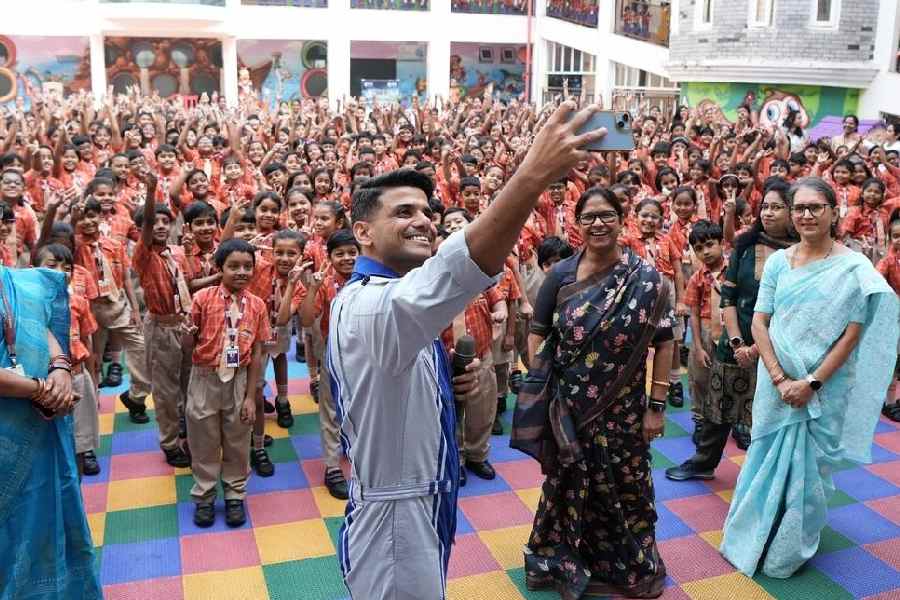
With that mission, Shukla also became the second Indian to travel to space, 41 years after cosmonaut Rakesh Sharma flew aboard a Russian Soyuz in 1984.
Shukla’s 18-day stay aboard the ISS was closely followed back home, not for spectacle but for what it represented: India’s renewed participation in human space missions through international collaboration.
His presence on the ISS placed the Indian Air Force officer at the centre of a mission that involved scientific work, operational discipline and long-duration spaceflight experience, areas that are expected to feed into India’s future space ambitions.
Before space, there was aviation in its most demanding form. A fighter pilot by training, Shukla has logged over 2,000 hours of flight time across a wide range of aircraft.
His flying experience includes frontline fighters such as the Su-30 MKI, MiG-21 and MiG-29, strike aircraft like the Jaguar, and trainer and transport platforms including the Hawk, Dornier and An-32.
The breadth of this record reflects years of operational service within the Indian Air Force, across roles that demand precision and sustained physical and mental endurance.
The Ashoka Chakra is rarely awarded and is typically associated with acts of valour outside active combat. Shukla’s recognition highlights how gallantry is now being defined across new domains of national service, including space.
His mission combined military training with civilian spaceflight objectives, blurring traditional boundaries while retaining the core values of discipline and duty.
Shukla’s award was part of a larger list of gallantry honours approved by President Droupadi Murmu on the eve of Republic Day. In total, 70 armed forces personnel were cleared for gallantry awards this year, including six posthumous honours.
The list includes one Ashoka Chakra, three Kirti Chakra and 13 Shaurya Chakra awards, one of them posthumous. It also features one Bar to Sena Medal (gallantry) and 44 Sena Medals (gallantry), reflecting a wide spectrum of service across the armed forces.
Among those awarded the Kirti Chakra are Major Arshdeep Singh, Naib Subedar Doleshwar Subba and Group Captain Prashanth Balakrishnan Nair.
Their inclusion alongside Shukla underscores the varied nature of service being recognised this year, from ground operations to air and now space.