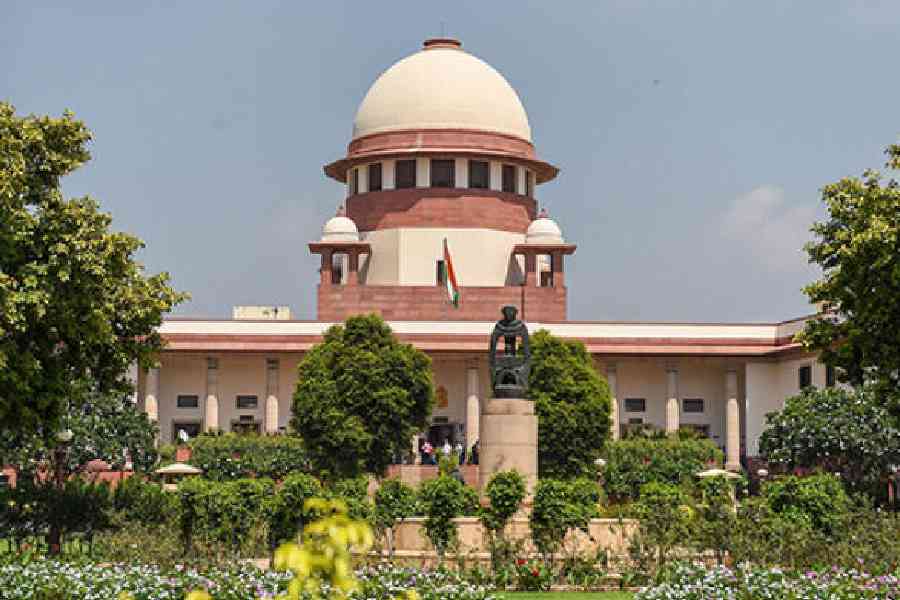
The government has the power to withdraw any electricity duty concessions to industries and other consumers, the Supreme Court has ruled.
“The recipient of a concession has no legally enforceable right against the government to (the) grant of a concession except to enjoy the benefits of the concession during the period of its grant,” the bench of Justice P.S. Narasimha and Justice Alok Aradhe said.
“This right to enjoy is a defeasible (open to revision) one in the sense that it may be taken away in exercise of the very power under which the exemption was granted.”
The bench allowed an appeal from the Maharashtra government against a 2009 Bombay High Court judgment that held the state had failed to justify its withdrawal of power duty concessions to private industries that use captive (their own) power plants. The state had cited the need to increase its revenues.
“…Decision(s) relating to levy or exemption of electricity duty necessarily involves balancing the need to encourage industrial growth against the requirement of maintaining fiscal stability,” the apex court judgment, authored by Justice Aradhe, said.
“The government, being accountable for (the) management of public finances, must retain the flexibility to recalibrate such policy when circumstances so demand.”
The judgment said the respondents (Reliance Industries and others with captive power plants) had been unable to show that the state’s decision “was based on any irrelevant consideration or that it was manifestly arbitrary”.
“The justification advanced by the state, namely, (the) augmentation of public revenue and addressing the fiscal constraints, cannot be regarded as extraneous or unreasonable,” it said.
Maharashtra had in April 2000 issued notifications withdrawing the electricity duty concessions to private industries that use captive power plants, while sparing cooperatives.
The high court, in an October 2009 judgment, held that the objective of granting power duty exemptions under Section 5A of the Bombay Electricity Duty Act, 1958, was to encourage industries to generate their own power.
It said the state could not draw a distinction between a cooperative sugar factory and a private sugar factory.
Further, the high court ruled that a budgetary deficit was not a justifiable ground for withdrawing the concession, and that the state’s notifications were discriminatory and arbitrary, and suffered from the non-application of mind.
But the apex court ruled: “…There could be no assurance that the exemption from payment of electricity duty which was in the nature of concession would continue for all time to come.
“The very nature of exemption implies that it may be modified or withdrawn if the government considers such a course of action necessary in public interest.
“The captive power generators therefore do not possess any legally enforceable right to insist upon continuation of exemption indefinitely. Their right was limited to enjoy the benefit of exemption during the period for which it remained in force.”