Relatives of the late Seema Prajapati have been streaming in to pay their respects since she died on 29 December. However, they are either arriving with water in bottles or simply refusing to drink the water at her house.
The family of daily wage labourers has been buying cold drinks to offer to the guests.
According to her brother Jitendra Prajapati, Seema, 50, was fine the day before she died. “She started vomiting around 4:30 in the morning. There was a sudden burst of vomiting and diarrhoea. We couldn’t even take her to the hospital; she died on the way,” he told The Telegraph Online.

Fear has gripped Indore’s Bhagirathpura neighbourhood after at least six people – per the district collector – died and hundreds were hospitalised after drinking contaminated water.
Officials say that 398 patients have been admitted to hospitals, of which 256 have been discharged; 11 people remain in ICUs at the time of writing this article.
Authorities have said that the construction of a public toilet right above a drinking water pipeline caused sewage to seep into the supply. The toilet was built without a septic tank.

Jitendra’s 17-year-old daughter, Ashika, was admitted to the hospital for the same reasons and with the same symptoms as Seema but she has been discharged.
“The water we have been receiving in our homes has been dirty for over a month, but for the last few days the water has tasted bitter,” said Jitendra. Water from the Narmada is their only source of water for all purposes, so the family would boil the water before drinking.
“We had no other option,” Jitendra said.
Indore relies on the Narmada for its water needs. The water from the river is brought to Indore via pipelines laid by the municipal corporation and supplied to households on alternate days.
Jitndra said that some residents of their lane complained to the authorities about the quality of water that was being provided to them; he alleged that no measures were taken.
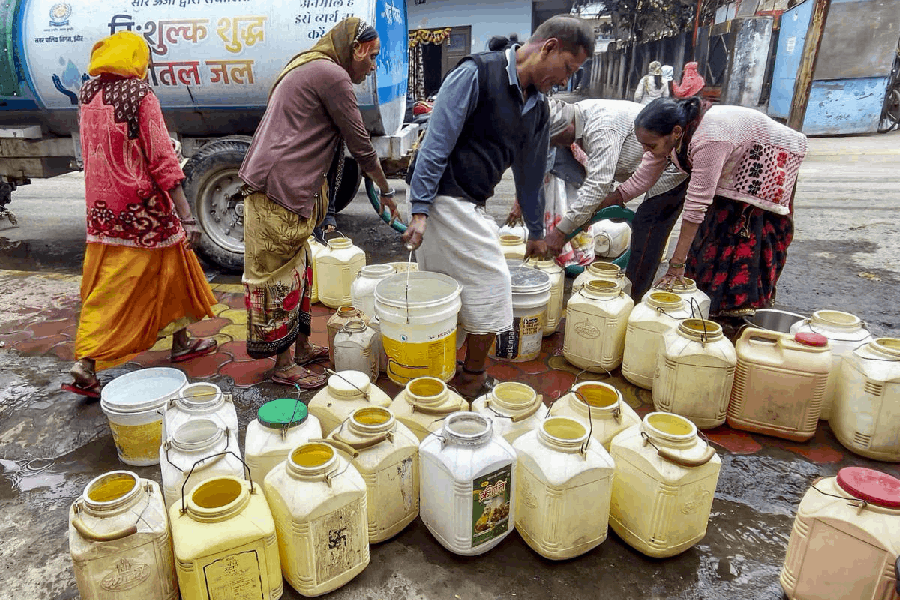
The water supply has been halted. Tankers are regularly visiting the neighbourhood to supply water to residents. Some residents have reportedly complained that the tanker water is yellowish in colour.
The tankers haven’t yet reached the narrow lane where Jitendra and his family live. So, the family members visit a nearby relative’s house to fill buckets of water daily and bring it back for the whole family to use. The relative’s house has a connection to a borewell, hence the water is comparatively cleaner.
“I have now bought an RO [reverse osmosis filter], and we are finally getting RO water for the family,” he added.
Local residents have only been visiting tea shops and eateries that are making their brew and cooking their food in RO or mineral water; otherwise they are sceptical to even drink water in Bhagirathpura and its adjacent areas.
Authorities have said that efforts are underway to contain the contamination. Health teams have been dispatched across the length and breadth of Bhagirathpura to screen residents and diagnose those with symptoms.
Some of the families of the deceased have received compensation of Rs 2 lakh, but they allege that no “proper help” has come their way yet.
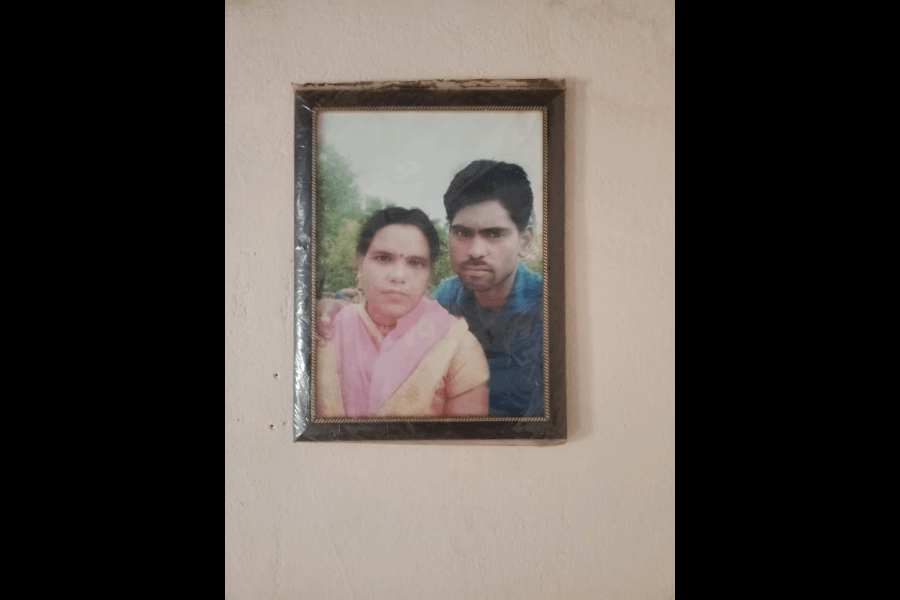
Uma Kori and Bihari Kori (Sourced by the correspondent)
Bihari Kori, 31, hasn’t received any compensation yet. His wife, Uma Kori, 29, died on 28 January; she had symptoms similar to the other victims.
“I had stopped at a local shop on my way home from work and bought jalebis for my wife and brother. She ate the jalebis and we went to sleep peacefully. Everything was normal. But around 3am, Uma started to vomit. I initially thought it was a case of food poisoning and didn’t think any nearby clinic would be open at that hour, so I waited,” said Bihari.
By 8am, her condition had worsened. The vomiting didn’t stop. Bihari took his motorcycle and went to get a doctor since she was in no condition to move. The doctor said that she was “severely dehydrated” and “needs to be admitted immediately to a hospital.”
“But I couldn’t find a single car or ambulance. I called my brother, and we took her to the nearest hospital, 7 km away, on a motorcycle. My brother was riding, my wife was in the middle, and I was holding her from the back while she was unconscious.”
By the time they reached the hospital and he had done the formalities, she was declared dead.