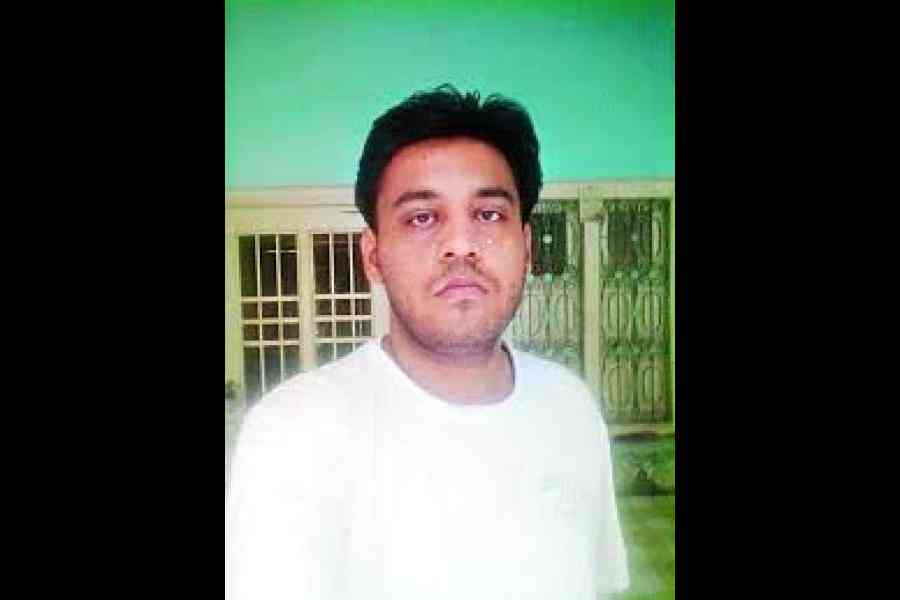
Delhi High Court has rejected the plea of the mother of Jawaharlal Nehru University student Najeeb Ahmed, who has been missing since 2016 after a clash with activists of the RSS-backed Akhil Bharatiya Vidyarthi Parishad, against the CBI’s closure report.
The court, however, asked the CBI to extract information from the mobile phones of the ABVP supporters.
The court passed the order on December 19, but it was uploaded on its website on Monday. In June, a local court accepted the CBI’s closure report on the case of Najeeb, a biotechnology student, who went missing from the Mahi-Mandavi hostel on October 15, 2016, after a scuffle with students from the ABVP who were campaigning for a hostel poll.
The university has held that Najeeb initiated the brawl but former chief proctor A.P. Dimri found four ABVP cadres — Vikrant Kumar, Ankit Roy, Sunil Singh and Vijender Thakur — guilty of assaulting the student. Dimri resigned after the four were merely transferred to other hostels as a temporary measure. Roy unsuccessfully contested the student union polls in 2017 for the ABVP.
Najeeb’s mother, Fatima Nafees, filed a protest petition against the closure report, pointing out that the CBI was unable to retrieve data from the mobile phones of Vikrant and two other suspects, and submitted the opinion of experts that digital forensic tools such as Cellebrite UFED and Cellebrite Premium could be used to do this.
Justice Sanjeev Narula said: “...It is directed that in the event the software tools referred to above are available with the CBI or can be reasonably procured, the same shall be deployed for the purpose of extracting data from the mobile devices of the aforesaid witnesses...”