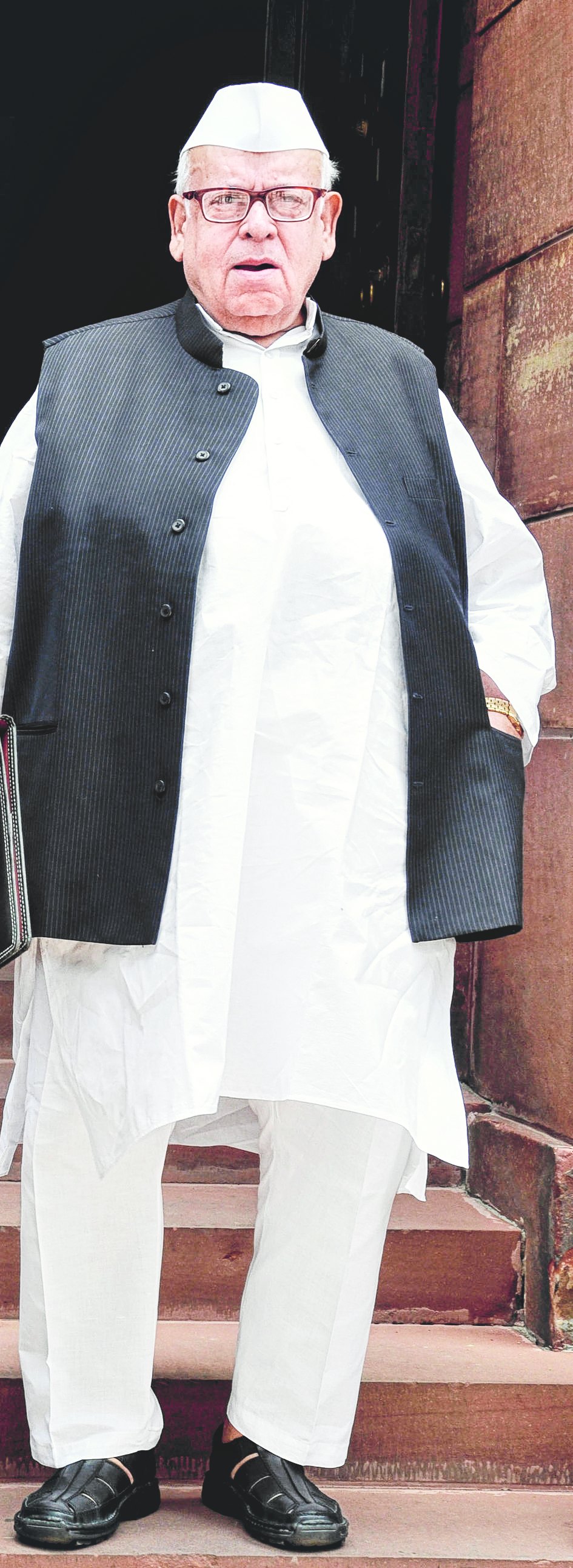

New Delhi, March 31: The Supreme Court today declined to stay the sacking of Mizoram governor Aziz Qureshi, and said his application would be referred to the five-judge Constitution bench that is to be formed to rule on the Centre's powers to remove governors.
Qureshi, an appointee of the previous UPA government, was sacked on March 28.
He had approached the Supreme Court after the Narendra Modi government came to power last year and the Union home secretary telephoned to ask him to resign as Uttarakhand governor. That matter was referred to a Constitution bench, which is yet to be formed. Qureshi was later transferred to Mizoram.
Today, he filed an application seeking a stay on his removal. Senior counsel Vivek Tankha mentioned the application before the Chief Justice around 10.30am "for urgent consideration".
However, a bench of Chief Justice H.L. Dattu and Justice Arun Misra did not consider the plea for early hearing and said the matter would be heard by the Constitution bench, to which the original petition was referred on August 21.
In the application for stay, Qureshi through counsel Rishabh Sancheti told the court that he has "not committed any act which is not befitting the primacy and majesty of his high constitutional position".
"The respondents (Centre) have resorted to deliberately maligning him, by giving media reports regarding certain incidents, which are false reports and have no existence. Therefore, it is submitted that the withdrawal of pleasure is actuated by malafides, and is replete with malice in law," the counsel said.
Under Article 156(1), the governor holds office during the pleasure of the President.
Qureshi said no notice or intimation was given, nor did any information ever travel to the office of the governor regarding there being any act or cause which does not befit his high constitutional position, warranting his removal.
Citing the apex court's ruling in the 2010 B.P. Singhal vs UoI case, Qureshi said though no reason need be assigned for a governor's removal, the power under Article 156(1) cannot be exercised in an arbitrary, capricious or unreasonable manner.
In the 2010 judgment, the court had said: "A governor cannot be removed on the ground that he is out of sync with the policies and ideologies of the Union government or the party in power at the Centre. Nor can he be removed on the ground that the Union government has lost confidence in him. It follows therefore that change in government at the Centre is not a ground for removal of governors holding office to make way for others favoured by the new government."
Qureshi's application said: "The removal is a colourable exercise of power and therefore bad in the eyes of law.... While it is true that nothing prevents the cabinet to advise the President for removal of a governor of a state, based upon a legally valid 'cause' and for such a legally valid 'cause' no notice need be given, no reason need be assigned; but a 'cause' must exist, a 'reason' must be available."