India will prioritise meeting domestic fuel demand before considering supply requests from countries such as Bangladesh and other regional buyers and the Centre has promised to increase supplies of commercial LPG to states that fast-track the rollout of piped gas networks.
"Rashtrahit sarvopari [Nation First]," Sujata Sharma, joint secretary in the Union Ministry of Petroleum and Natural Gas, said at a media briefing Wednesday on the energy supply scenario.
“Domestic fuel demand has to be met first. If there is a surplus after meeting all of the domestic demand, a decision can be taken by the appropriate authority." Sharma said in response to a question about requests from neighbouring countries seeking fuel from India.
Bangladesh, Sri Lanka, and the Maldives have requested emergency fuel supplies from India to mitigate shortages caused by the West Asia conflict. Bangladesh sought diesel in excess of the 5,000 tonnes it receives via a pipeline under an existing arrangement. Sri Lanka and the Maldives, too, have sought additional fuel supplies from India.
Besides Bangladesh, India also supplies fuels like petrol, diesel and LPG to Nepal and Bhutan. Nepal has reportedly requested an additional 3,000 tonnes of LPG monthly.
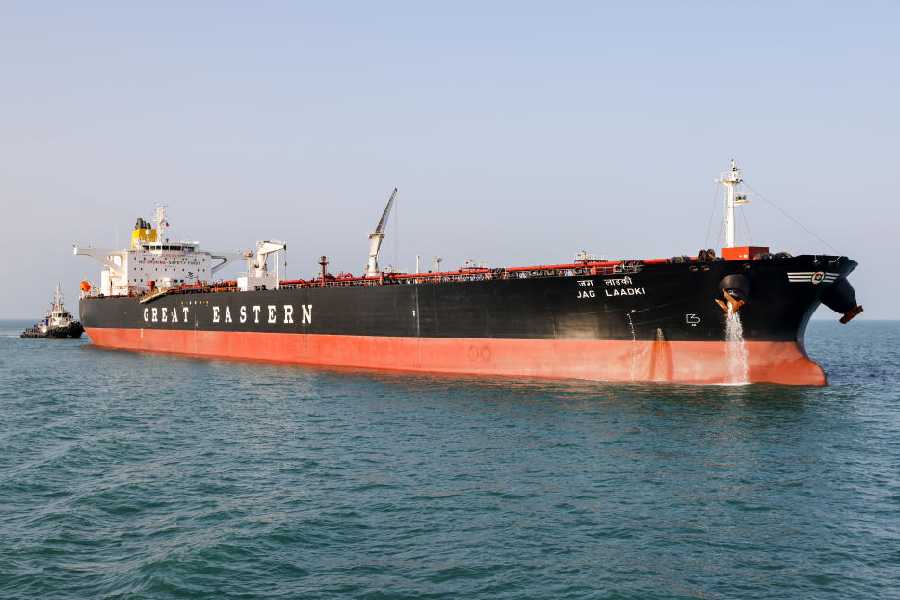
India has surplus refining capacity – it makes fuels more than its annual consumption – and exports the surplus. However, the war on Iran has disrupted supplies of crude oil (raw material) as well as products like LPG.
India imports about 88 per cent of its crude oil, 50 per cent of natural gas, and 60 per cent of LPG.
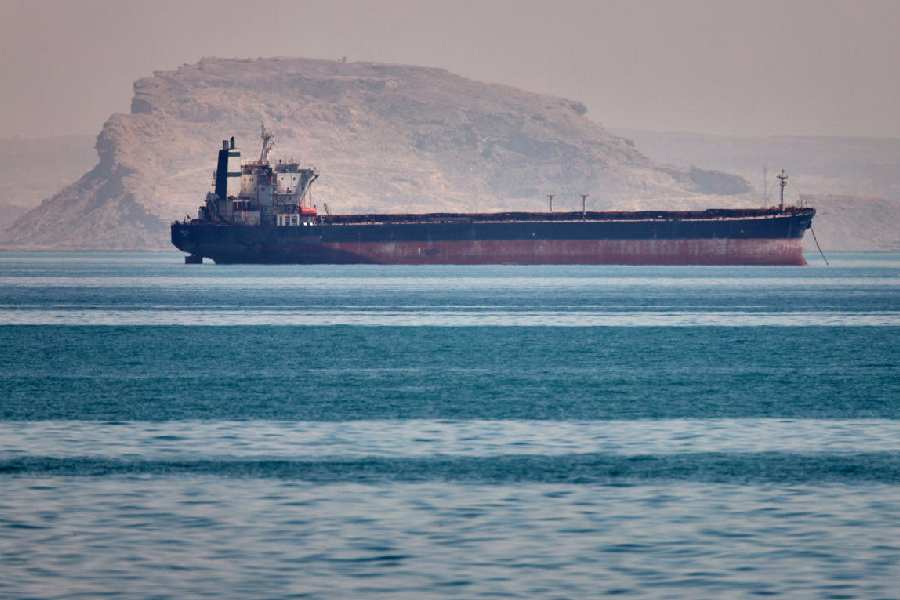
Before the war broke out, more than half of the crude oil that India imported came from countries like Saudi Arabia, Iraq and the UAE, which use the Strait of Hormuz for shipping. As much as 85-95 per cent of LPG and 30 per cent of the gas came through the strait.
With the strait being blocked, India has managed to partially offset crude oil supplies through alternative sources, such as Russia, West Africa, the US and Latin America. However, sourcing from outside of the Middle East is costlier due to higher freight and insurance charges.
Piped-gas push
The central government has offered to raise commercial LPG supplies to 30 per cent in states that expedite the rollout of piped natural gas.
Cooking-gas cylinder supplies to commercial establishments such as hotels were initially cut off, but later a fifth of the requirement was released.
Sharma said that while LPG supplies are constrained, piped natural gas (PNG) supplies to households and industries continue unabated.
"LPG users should shift to PNG wherever there is a city gas distribution (CGD) network nearby," she said.
She said the ministry has written to states, offering 10 per cent more commercial LPG if they grant deemed permissions to all old applications, and the same after 24 hours of new application for laying pipelines, cut annual rental/lease charges and allow dig and restore schemes.
"The onus is on states and Union Territories to take this reform forward and expedite approvals," she said.
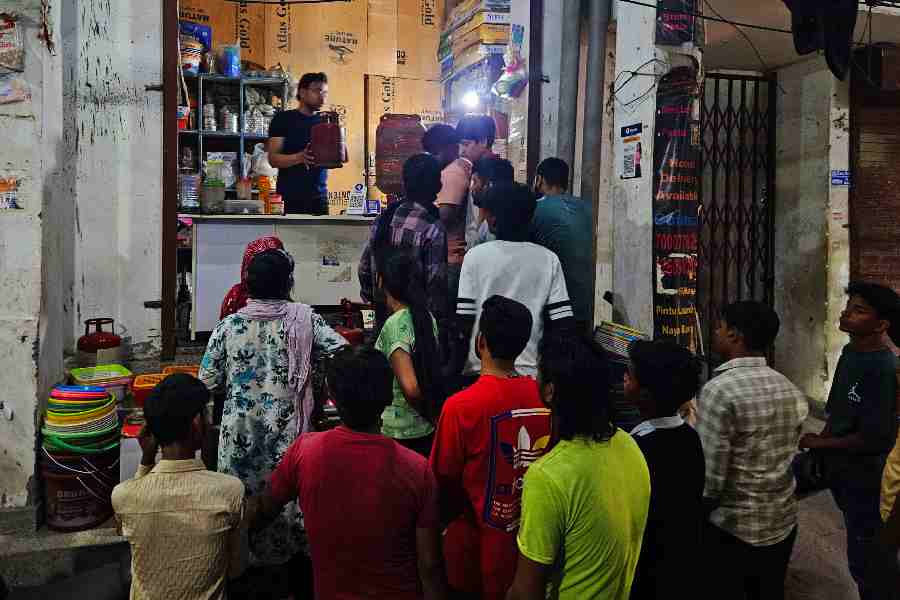
On the LPG supply situation, she said there was no dry out anywhere in the country. "The situation, however, continues to be worrisome" primarily because the imports have been blocked, she said.
Online bookings have increased to 93 per cent, but consumers continue to queue up at dealerships.
"LPG consumers are requested to wait after doing online booking. Cylinders will be delivered to their homes," she said. "There is no need for panic booking or going to LPG distributors."
On Wednesday, oil secretary Neeraj Mittal wrote to all state governments and UTs stating that city gas operators have complained about high charges for right of use (ROU) for laying and digging as well as lease rent being levied, which has "dampened the CGD [city gas distribution] investment climate".
To improve the investment environment and expedite the adoption of natural gas as a lean fuel and the substitution of scarce LPG supply, the state governments should minimise the levy of charges, he said, citing that just 1.6 crore domestic piped cooking gas connections are being issued by CGD entities despite a commitment of 12.63 crore.
"If this gap can be bridged through ease and cost of doing business reforms, one can easily generate economic activity and earn higher corresponding revenue from a larger pie," he wrote.
Mittal said 1 per cent additional allocation of LPG will be done to states that form panels for approval of CGD applications and resolving grievances.
An additional 2 per cent allocation will be given to those who grant deemed CGD permissions to all old applications and to new applications after a lapse of 24 hours of applying for laying pipeline.
States would get an additional 3 per cent of LPG if they introduce a 'Dig and Restore Scheme' for CGD entities so they can dig and restore roads, etc, on their own, thereby eliminating restoration charges.
States that reduce annual rental/lease charges for laying/operating the CGD network to zero will get 4 per cent additional commercial LPG, he said.
States can give evidence of implementation of the reforms to get the additional LPG, he added.
Sharma said commercial LPG stocks have been placed with states and they have been asked to decide on the priority for their usage. So far, 15 states and Union Territories have issued LPG distribution guidelines.
Also, states have been given 48,000 kilolitres of additional kerosene for meeting cooking and other needs, she said, adding that 12 states have utilised this additional quota.
India, she said, continues to be self-sufficient in petrol and diesel, with no fuel dry-outs reported at retail outlets. Asked about jet fuel (ATF), she said there are enough supplies.