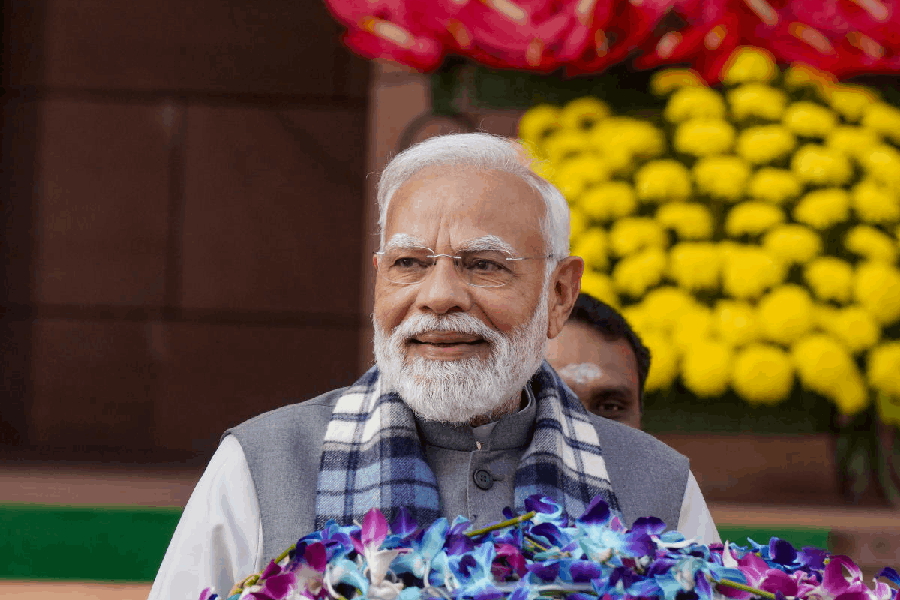
The new complex that will house the Prime Minister’s Office (PMO) has been officially named ‘Seva Teerth’, officials said on Tuesday.
The complex, now in its final stages of completion, was previously known as the ‘Executive Enclave’ under the Central Vista Redevelopment project. In addition to the PMO, the ‘Executive Enclave’ will also include the offices of the Cabinet Secretariat, the National Security Council Secretariat, and India House — a designated venue for high-level discussions with visiting foreign dignitaries.
According to officials, ‘Seva Teerth’ has been envisioned as a workplace that embodies the spirit of service and acts as the centre where national priorities are shaped. They added that India’s public institutions are undergoing a “quiet but profound shift”.
They said the idea of governance is transitioning from ‘satta’ (power) to ‘seva’ (service) and from authority to responsibility, noting that this transformation is “not just administrative, but cultural and moral”.
As part of this shift, Raj Bhawans — the official residences of state governors — are also being renamed ‘Lok Bhawans’.
Officials stated that under Prime Minister Narendra Modi, governance spaces have been redesigned to reflect ‘kartavya’ (duty) and transparency.
"Every name, every building and every symbol now points to a simple idea. Government exists to serve," they said.
In recent years, several iconic government spaces have been renamed to align with this ethos. Rajpath, the ceremonial boulevard stretching from Rashtrapati Bhavan to India Gate, was renamed Kartavya Path. In 2016, the prime minister’s official residence was renamed Lok Kalyan Marg, a name intended to emphasise public welfare over exclusivity and remind elected governments of their responsibilities.
The Central Secretariat has also been named Kartavya Bhavan, envisioned as a large administrative hub centred on the principle of public service as a commitment.
"These changes mark a deeper ideological transition. Indian democracy is choosing responsibility over power and service over status," the officials said.
"A shift in names is also a shift in mindset. Today, they speak the language of seva, kartavya and citizen-first governance," the officials added.