The BJP-led Maharashtra government’s decision to cancel the five per cent reservation for Muslims in education and government jobs has triggered a fresh political confrontation, with Opposition parties calling it discriminatory and legally unnecessary.
A recent government resolution cancelled all previous decisions and the ordinance granting five per cent reservation in government and semi-government jobs and educational institutions for the socially and educationally backward Muslim group under the Special Backward Category (A).
At the heart of the controversy lies an ordinance issued in 2014 by the then Congress-NCP government, which provided five per cent reservation to Muslims in education and jobs.
The ordinance never became a confirmed law and lapsed after a change in government and lack of legislative follow-up. The present move to formally withdraw that framework has raised questions across party lines.
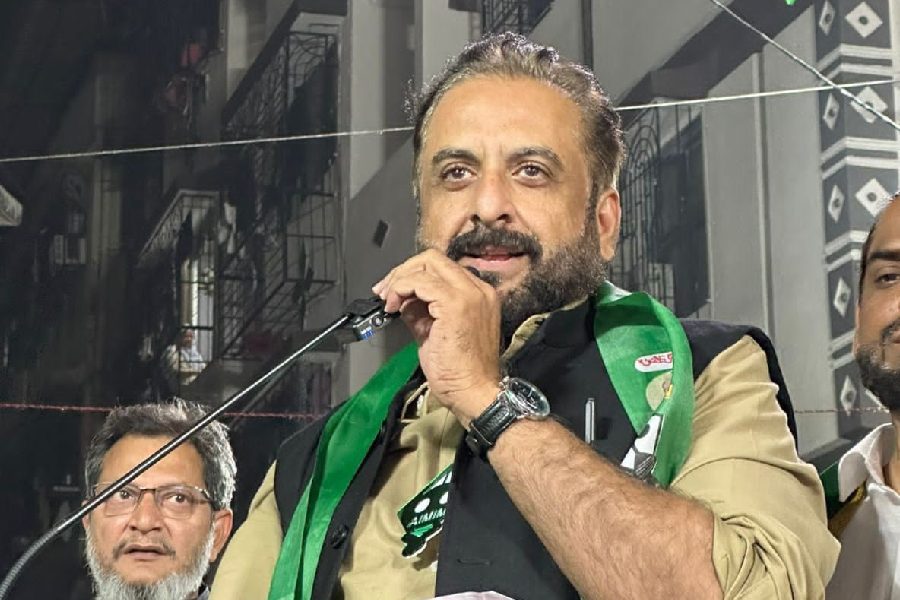
Samajwadi Party leader Abu Asim Azmi said: “The 2014 ordinance never became a confirmed law and lapsed. Why make a formal announcement to invalidate something that was already ineffective? If the intent was social justice, the incomplete process should have been pursued with a strong legal foundation.”
Citing Constitutional provisions, Azmi said Articles 15(4) and 16(4) empower governments to create special measures for socially and educationally backward groups.
He suggested sub-classification within the Socially and Educationally Backward Classes (SEBC) category to ensure equitable distribution of reservation benefits, provided it remains within the 50 per cent cap and is backed by reliable data and surveys.
“Social justice is not a political game; it is the soul of the Constitution,” Azmi added.
The Congress described the decision as harmful to democracy and an injustice to Muslims. Mumbai Congress president Varsha Gaikwad said the move contradicted the BJP’s ‘Sabka Saath, Sabka Vikas’ agenda.
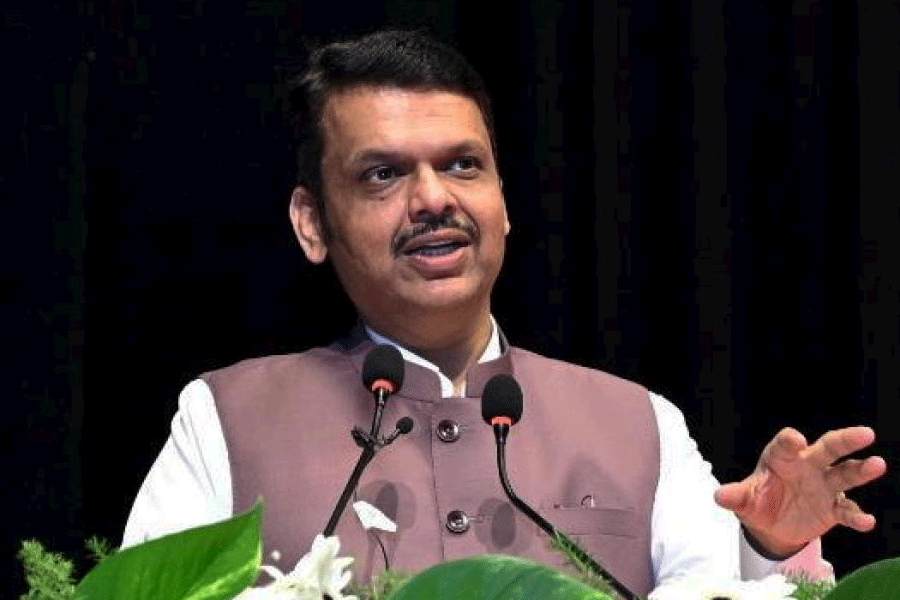
“The Congress-NCP government in 2014 announced a five per cent reservation in education and jobs for the Muslim community, but Chief Minister Devendra Fadnavis failed to take positive steps in that direction,” said the MP from Mumbai North-Central.
Gaikwad also pointed out that the Bombay High Court had upheld the five per cent reservation in education for the Muslim community, but alleged that the state government did not implement it fully.
Former state Congress working committee member Naseem Khan termed the decision “extremely wrong” and said it would deprive minorities of opportunities.
“The subsequent Devendra Fadnavis government did not take the process forward, and even after the Bombay High Court granted interim relief for 5 per cent educational reservation, its implementation was not ensured,” Khan alleged.
He further accused the government of discontinuing welfare schemes for minorities and curtailing scholarships introduced earlier.
The NCP (Sharadchandra Pawar) said the cancellation showed that the BJP does not value Muslim leaders within its own ranks and allies. “It also shows that these Muslim leaders won’t get justice from the BJP,” said NCP (SP) spokesperson Clyde Crasto.
AIMIM leader and former MP Imtiaz Jaleel went further, linking the decision to employment aspirations among Muslim youth. “They want Muslim youths to run autorickshaws, wash their cars and do such menial jobs only,” he alleged.
“Leaders of the ruling party still have the mentality of keeping the Muslim community at a stage where its members wash their cars, fry 'pakodas' and drive autorickshaws. They have a similar attitude towards the Dalit community. They don't want the youth from the Muslim community to become IAS and IPS officers,” Jaleel told reporters in Chhatrpati Sambhajinagar.
He also appealed to the Muslim community to use their ‘zakat’ funds for education rather than religious construction.
“The Muslim community is like an organ in the human body,” Jaleel said, adding that the organ may not be perfect, but it cannot be cut and thrown away.