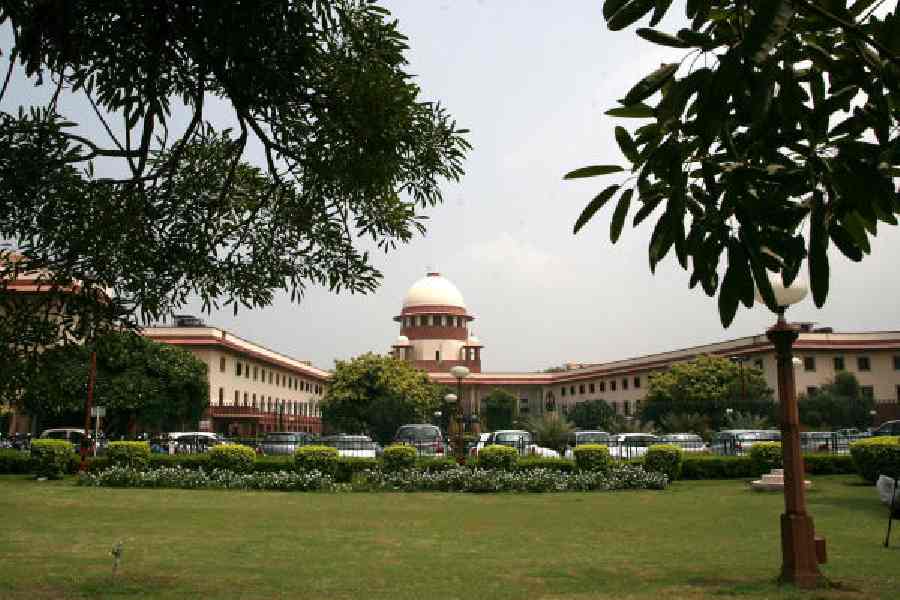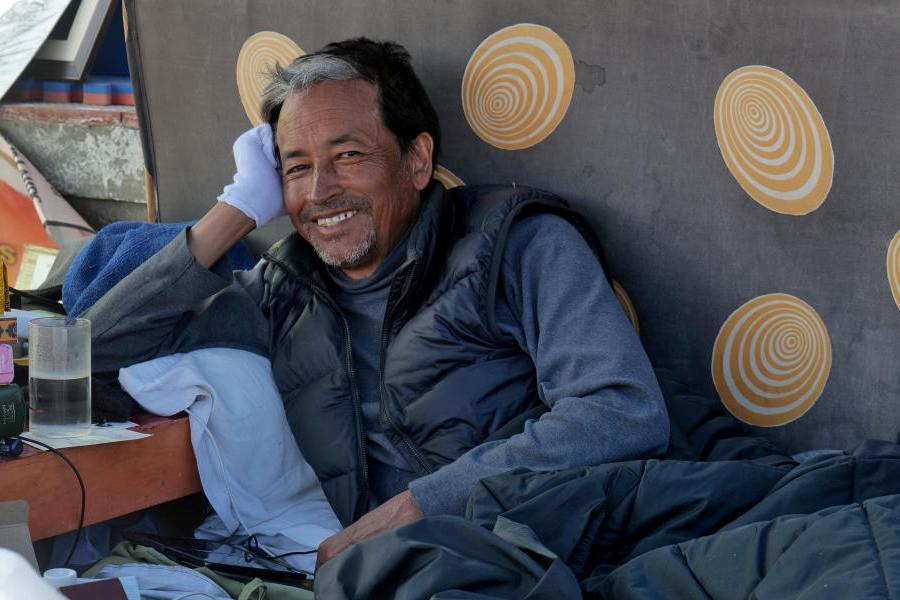
The Supreme Court on Monday witnessed a sharp exchange over whether climate activist Sonam Wangchuk could address the court from Jodhpur jail through video conferencing.
Wangchuk, currently detained under the National Security Act, had sought permission to join the proceedings virtually, a request the Centre opposed. The court was hearing a petition filed by Gitanjali J Angmo, Wangchuk’s wife, challenging his detention.
Her plea asserts that the decision to invoke the NSA was arbitrary and violated fundamental rights.
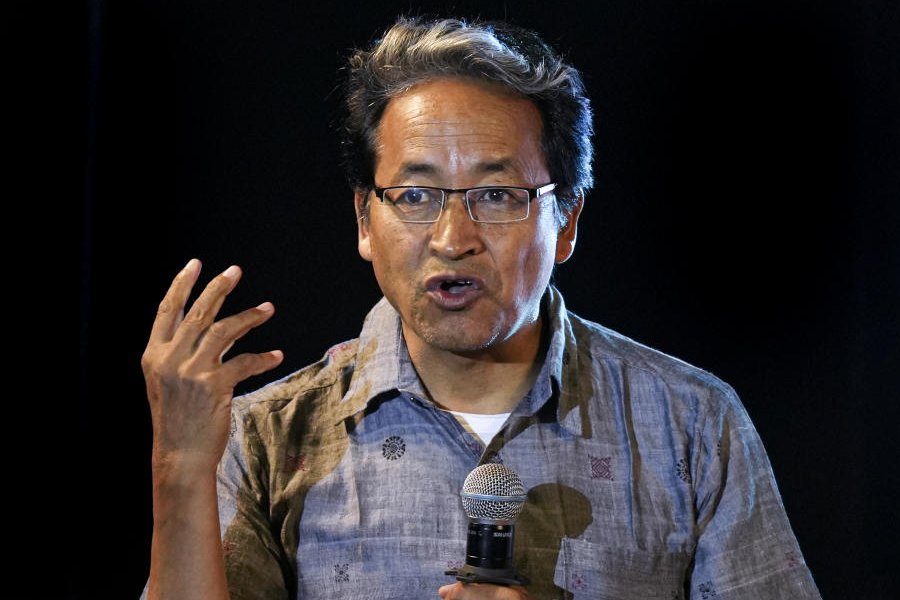
Senior advocate Kapil Sibal, representing Angmo, told the bench of Justices Aravind Kumar and N. V. Anjaria that Wangchuk wanted to be connected from jail through video. He urged the bench to allow the request.
Solicitor General Tushar Mehta, appearing for the Centre, pushed back. “We will have to give the same treatment to all convicts across the country,” he said, opposing the request. The bench adjourned the matter to December 15.
This case has seen multiple adjournments. On November 24, the court deferred the hearing after Mehta sought time to respond to Angmo’s rejoinder.
Earlier, on October 29, the court had asked the Centre and the Ladakh administration to reply to Angmo’s amended plea.
Wangchuk was detained on September 26, two days after violent protests in Leh demanding statehood and Sixth Schedule status for Ladakh. Four people died and 90 were injured. Authorities accused the activist of inciting the unrest.
The amended plea argues that the detention order “is founded upon ‘stale FIRs, vague imputations, and speculative assertions’, lacks any live or proximate connection to the purported grounds of detention and is thus devoid of any legal or factual justification”.
It adds that such an exercise of preventive powers “amounts to a gross abuse of authority, striking at the core of constitutional liberties and due process”.
Angmo’s petition also questions the sudden targeting of someone widely recognised for his work in education, innovation and environmental conservation. It says the claim that Wangchuk fuelled the September 24 violence is unsupported.
She states that Wangchuk had condemned the violence on his social media platforms, noting that it would lead to the failure of Ladakh’s “tapasya” and the peaceful effort of the last five years. She added that it was the saddest day of his life.
Under the NSA, the government can detain an individual for up to 12 months to prevent actions deemed “prejudicial to the defence of India”. The order can be revoked earlier, but the law provides wide discretion to authorities.