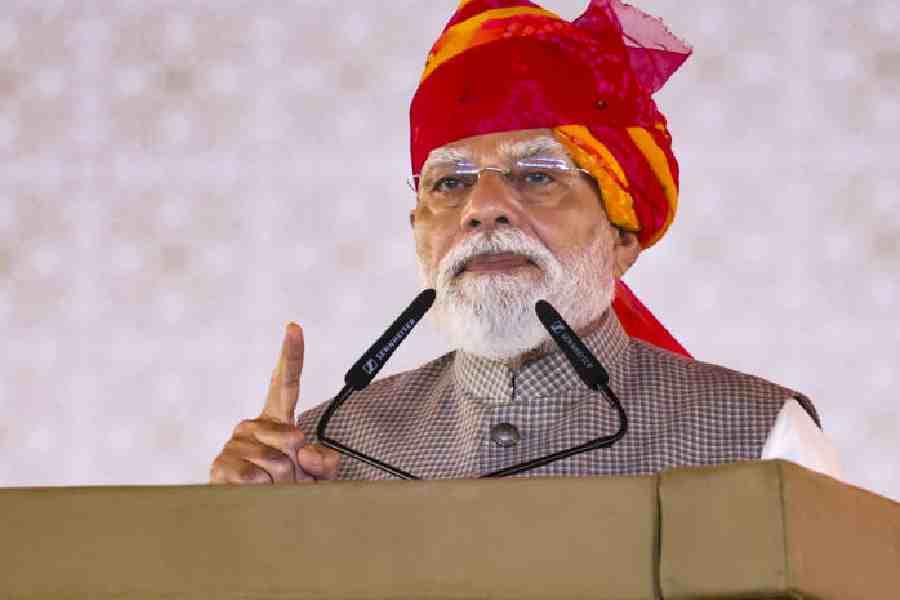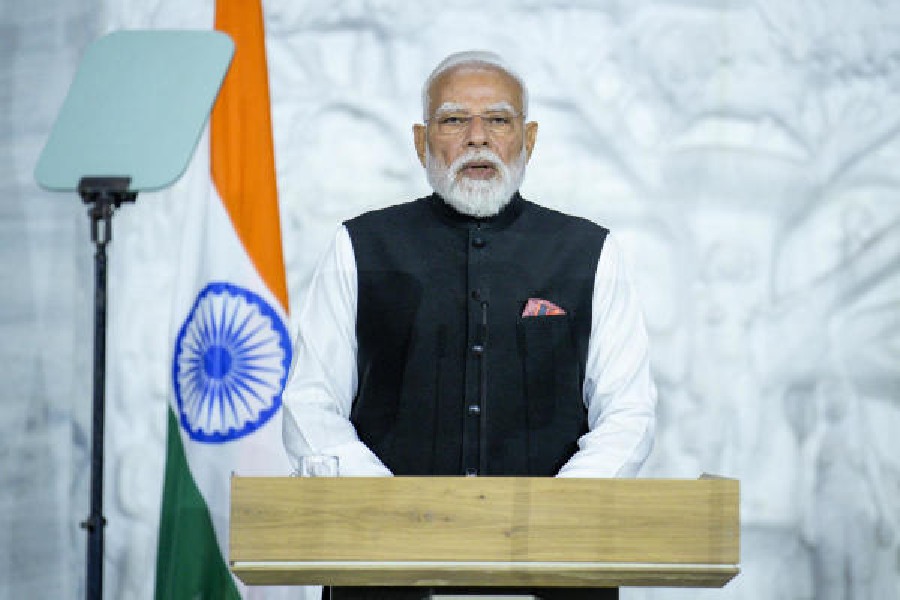
The BJP on Tuesday claimed “unprecedented” public support for Prime Minister Narendra Modi’s appeal to conserve fuel and asserted the price hikes in India remained among the lowest globally, trying to counter Opposition attacks.
The Opposition has blamed the fuel price increases on broader economic mismanagement, targeting Modi in particular.
The BJP’s official X handle (@BJP4India) posted a video of an unspecified Delhi road with sparse traffic, purportedly during the peak evening hours, describing it as evidence of citizens responding to Modi’s appeal.
“When leadership is dedicated to the nation, when every moment is devoted to the country’s welfare, the entire nation stands united in support,” the party said in a post accompanying the video.
“See the unprecedented support and unwavering trust of citizens in response to PM Modi’s appeal.”
No official mobility data has yet confirmed any significant reduction in peak-hour traffic in Delhi following Modi’s appeal to save on fuel.
Further, the Commission for Air Quality Management invoked Stage 1 of the Graded Response Action Plan across Delhi-NCR, with the AQI rising to 208 (poor).
Stage 1 enforces 27 preventive measures, including vehicular restrictions, before air pollution escalates to more severe levels.
The worsening of air quality comes despite the Delhi government’s measures to conserve fuel, including two mandatory work-from-home days for government employees, a “Metro Monday” initiative to encourage people to take public transport, and staggered office timings.
BJP social media head Amit Malviya posted on X that the fuel price hikes in India, caused by the West Asia conflict, were among the lowest globally. “India stands out as the exception,” he asserted.
Malviya said that with Brent crude remaining above $100 a barrel, fuel prices had surged across the world.
He said petrol prices were up by more than 44 per cent and diesel prices by 48 per cent in the US, and by 19 per cent and 34 per cent, respectively, in the UK.
He underlined that petrol was costlier by 20.9 per cent and 13.7 per cent, respectively, in France and Germany, and diesel by 31 per cent and 19.8 per cent.
In contrast, fuel prices in India had risen only by about 4 per cent, Malviya said, accusing the critics of ignoring the broader global context.
“India stands out as the exception. For 76 days after the crisis began, Indian public sector OMCs absorbed massive under-recoveries, reportedly around ₹1,000 crore per day, instead of passing the burden directly to citizens,” he said.
“Even after the recent revision of 91 paise per litre, fuel prices in India have risen by only about 4%, among the lowest increases anywhere in the world outside heavily subsidised Gulf economies.”
The BJP’s X handle accused the previous UPA government of failing to build any new strategic oil reserves during its decade in power from 2004 to 2014. It lambasted the Lok Sabha leader of the Opposition, Rahul Gandhi, for questioning the government on energy security.
“All the major Strategic Oil Reserves built in the country were established under the leadership of Shri Atal Bihari Vajpayee ji and Prime Minister Shri Narendra Modi,” the BJP said in a post on X.
“From 2004 to 2014, during the 10 years that Congress was in power, they did not build even a single new Strategic Oil Reserve for energy security. And today, Rahul Gandhi is raising questions on energy security.”
The BJP claimed that India’s position during global crises would have been “even stronger” had the Congress acted earlier on oil reserves. The post was accompanied by a video of an analyst elaborating on this point, which, according to the BJP, “exposes the reality of Congress’s politics”.
Seeking to counter the Opposition criticism of Modi for undertaking extensive foreign trips amid the crisis while urging citizens to conserve fuel, the BJP claimed the recent diplomatic engagements had resulted in “big wins for India”.
“Strategic partnerships. Semiconductor deals. Energy security. PM Modi’s diplomacy is turning global ties into national gain,” the party said on X.
This was accompanied by a graphic highlighting the agreements and initiatives linked to each country Modi visited: the UAE, Sweden, the Netherlands and Norway.