Calcutta, May 8: Burnpur has finally got a spanking new steel plant. But it's been set up at such a massive cost that the re-invented IISCO Steel Plant (ISP) is at great risk of turning into parent SAIL's great white elephant.

A combination of time and cost overruns means that the steel plant - to be dedicated to the nation by Prime Minister Narendra Modi on Sunday - will weigh heavy on the books of SAIL, which undertook the ISP's revival about a decade ago when the Chinese economy was booming and that nation's gigantic factories opened their maws to consume steel in staggering quantities.
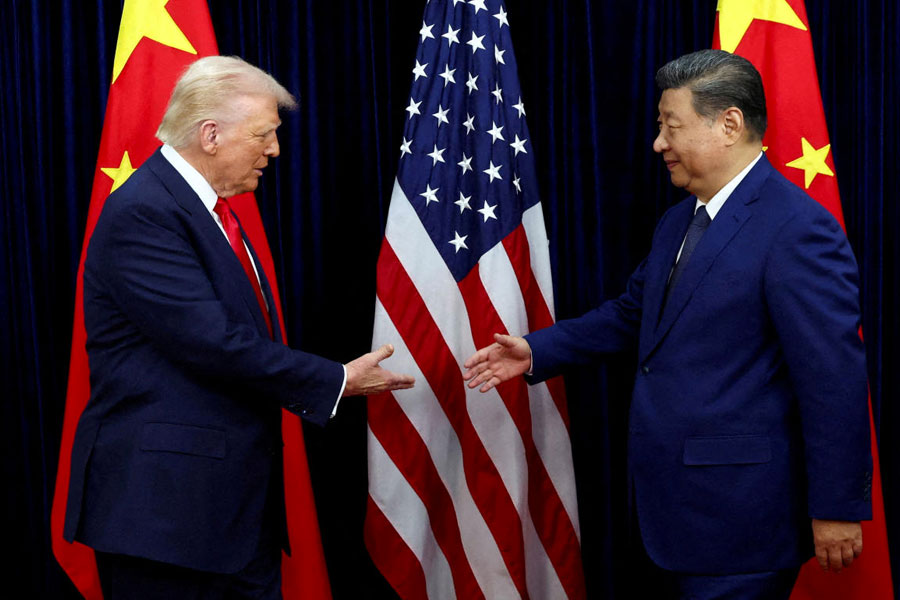
The manufacturing boom in China has slowed in the past two years, partly because the Xi Jinping regime wanted to engineer a "soft landing" for an economy that once seemed to run on steroids - sending the fortunes of steel companies around the world into a deep downward spiral.
That means the ISP is condemned to become the closest equivalent to Mao's backyard steel plant in India.
The new ISP has a steel-making capacity of 2.9 million tonnes. But the plant that was originally scheduled to start operations in 2010 slipped badly on time schedules because of a squabble over the acquisition of a small patch of land that delayed the project by two years.
Result: costs ballooned to over Rs 18,500 crore from an original estimate of a little over Rs 8,800 crore.
Put that in perspective: industry mandarins say it costs about Rs 5,500 crore to set up a greenfield steel plant with a capacity of 1 million tonnes. In the case of IISCO, it's about 16 per cent higher at around Rs 6,400 crore per million tonne.
Burnpur and IISCO's chequered history dates back to the time when James Erskine founded Bengal Iron Works in 1870 at Kulti, which is nearby. Martin & Co - a venture formed by Sir Acquin Martin and Sir Rajendranath Mookerjee - acquired the Kulti unit later. The two partners later set up a steel plant at Burnpur in 1939, eventually merging the iron-making facility in Kulti with the steel plant and placing it under the superintendence of Martin Burn, a managing agency.

IISCO's fortunes slid in the late sixties until it was nationalised in 1972 and became a wholly owned subsidiary of SAIL in 1979. The IISCO steel plant never regained its glory even though several tycoons mulled its takeover, attracted by its prized iron ore reserves in Chiria and Gua, both of which are now in Jharkhand.
The suitors ranged from Ramnath Goenka to Lakshmi Niwas Mittal over a period of 30 years - but everyone backed off because of its poor prospects for revival and the burden of dealing with a truculent workforce numbering over 25,000.
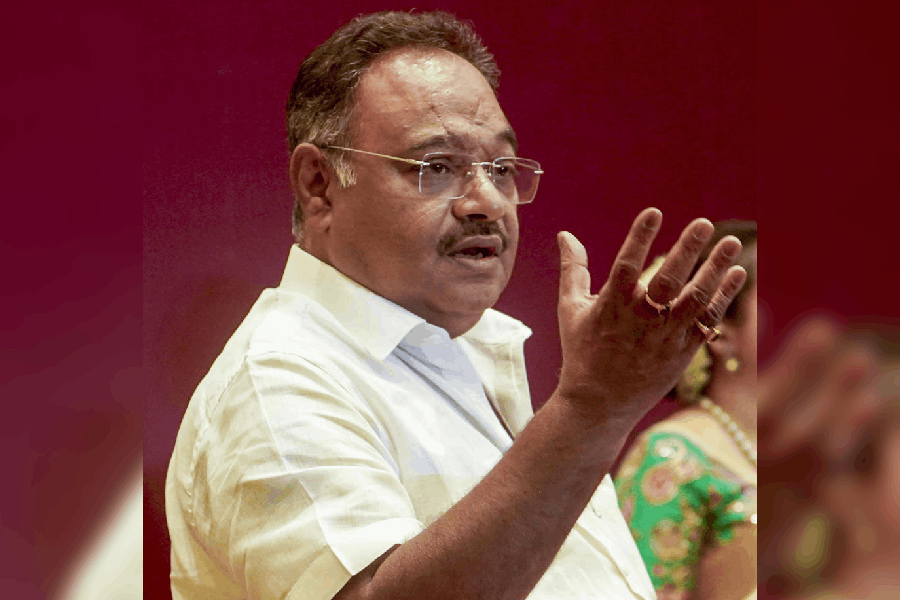
"It will be challenging to make the IISCO Steel Plant profitable not only because of the cost overruns but also due to its product-mix," said Sushim Banerjee, secretary-general of the Institute of Steel Development and Growth (ISDAG).
Banerjee added: "SAIL may be able to eke out some profits but it will have to market the products aggressively."
The unit will produce low-margin long products like wire rods, TMT bars and beams used in the construction sector rather than the more lucrative flat products that processing industries like consumer durables and automobiles prefer.
Since long products are sold to projects (multi-storey buildings, flyovers and factories) with a low prospect for repeat orders, companies need to go in for aggressive marketing, a quality that SAIL is not known for. Flat products, in contrast, attract long-term commitments from large customers.
The ISP has been steadily going downhill and reported a pre-tax loss of Rs 635 crore in 2013-14.
There's no reason to believe that things will change in a hurry even though SAIL chairman C.S. Verma seems gung-ho about engineering a turnaround at the ISP once all the facilities, like a sinter plant and the coke oven, become operational.
"We have recently operationalised various facilities which are under stabilisation. As the facilities get stabilised and production is ramped up, ISP will gradually improve its profitability. Units are expected to turn profitable from this year," Verma said.
Subhendu Bhattacharya, a steel ministry official-turned-entrepreneur, believes the fortunes of the ISP hinge on the availability of good quality iron ore from the captive mine at Gua in Jharkhand and the productivity of the blast furnace. But he concedes that this will happen only when the demand for steel in the country picks up and the pricing improves.
But one nagging question won't go away: why did SAIL decide to revive the ISP when it could very well have closed it down and ramped up steel-making capacity at the Durgapur Steel Plant, which is barely 50km away?
Blame it all on political machinations that often override economic pragmatism.
No private sector enterprise would have opted to have two plants of similar size in such close proximity. And let's not forget that the DSP had no land constraints that would have stymied its expansion.
"SAIL has to keep the social aspect in mind. The PSUs are not only driven by efficiency parameters like Return on Investment (ROI) - a metric that the private sector pays close attention to," said Banerjee, a former SAIL executive who spent considerable time dealing with the ISP.
The ISP was a loss-making venture for the best part of three decades since it was nationalised in 1972.
The 1-million-tonne steel plant operated at barely a third of its capacity because of its outdated plant and obsolete technology. A militant and unionised workforce in Left-ruled Bengal did not help matters.
Successive governments, starting from P.V. Narasimha Rao's to Atal Bihari Vajpayee's to Manmohan Singh's, have tried to sell the ISP and held informal talks with several corporate chieftains.
Tata Steel, Mittal Steel and Caparo were approached. Their initial interest waned after a visit to the plant site and a meeting with its employees. "They just did not know how to tackle the 25,000-strong workforce," said an industry official who was privy to those negotiations.
Nor did SAIL know how to tackle its white elephant. The ISP's losses ran into hundreds of crores but the PSU could not shut operations and farm out the employees to other plants, fearing a political backlash.
IISCO remained in limbo between 1992 and 2004. But the steel boom sparked by an expansionist China changed the gameplan. SAIL was more willing to consider the ISP's revival.
Pressure from the Left Front government, the biggest ally of the Congress in UPA I, worked. SAIL too realised the importance of securing the lease for the Chiria iron ore mine, which was the ISP's biggest asset. That's why SAIL agreed to merge the ISP with itself so that it could grab the Chiria lease.
But even after its revival, the Beast of Burnpur will be a plodding pachyderm that will leave a deep imprint on SAIL's financial numbers for a considerable period of time.