The question of defections and the limits of party control over legislators returned to the centre of parliamentary debate on Monday, with Opposition members in the Rajya Sabha calling for reforms to the anti-defection law and warning that unchecked floor-crossing erodes the mandate given by voters.
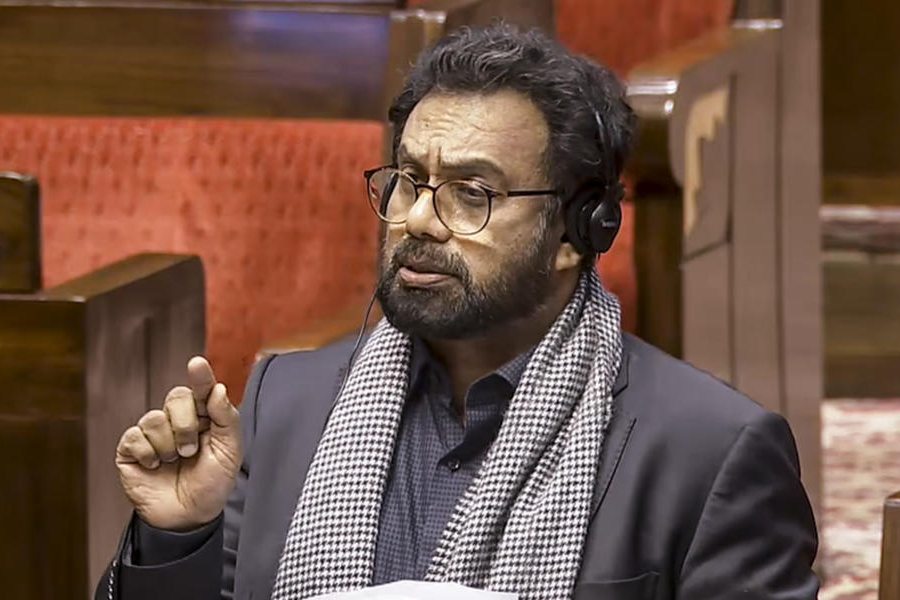
Participating in a discussion on election reforms, K.R. Suresh Reddy of the Bharat Rashtra Samithi (BRS) and John Brittas of the CPI(M) argued that failing to honour election promises and indulging in defections amounted to betraying voters and raised doubts about the integrity of elections.
“The biggest challenge that the Indian democracy has been facing in spite of two major constitutional amendments, has been anti-defection,” Reddy said.
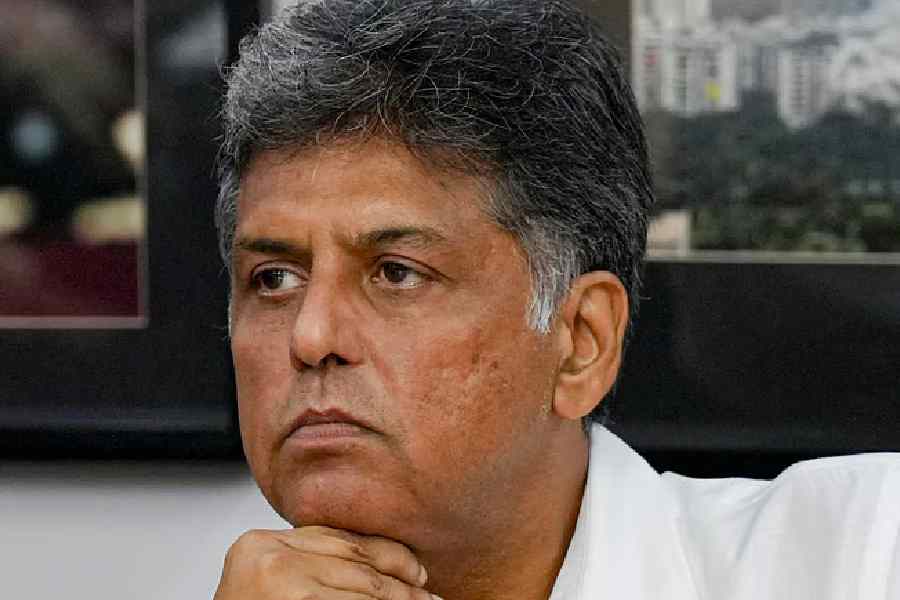
Reddy stressed that democratic responsibility does not end with polling day.
“We have to respect the voter. What is happening in voting (elections) today is, once the election ends then the drama begins,” he said, describing defection as “the name of the game”, particularly in smaller states where legislative numbers are low.
He added that the BRS has called for reforms to the anti-defection law.
To make anti-defection provisions “water tight”, Reddy proposed the formation of a parliamentary committee to keep constant watch on evolving patterns of defection and suggest corrective steps.
“Why not have a committee and continue to take this up?” he asked, recalling instances where “the Supreme Court was compelled to interfere” in anti-defection disputes.
He questioned why courts should be drawn into what he described as a parliamentary domain. “Why allow the court, which has already become overburdened, to come into a jurisdiction which is purely the parliamentary domain?” Reddy said.
He argued that legislators who cross over fail to honour the manifestos on which they were elected.
“Promising the sky in the election manifesto and delivering nothing is literally cheating the voter... and in my opinion is the real ‘vote chori’,” he said.
CPI(M) MP John Brittas said the electoral mandate must be respected even after voting ends.
“When horse trading happens, when mass defections happen, when resorts become sanctum sanctorum, the purity of elections are in question. So how to deal with that?” he asked.
Brittas observed that while the anti-defection law earlier curbed individual defections, the trend had shifted. “Earlier the anti-defection law prevented retail defection, now wholesale defection is happening,” he said.
Responding from the treasury benches, JD(U) MP Sanjay Kumar Jha referred to the February 2005 Bihar elections, which resulted in a hung assembly.
He claimed that Nitish Kumar had the numbers to form a government but that the UPA government at the Centre intervened.
According to Jha, a midnight Cabinet meeting led by then Prime Minister Manmohan Singh resulted in President’s rule being imposed.
“No MLA took oath... those MLAs, till date, are not even considered ex-MLAs but they are called ‘abhutpurv MLAs’ because they could not take oath,” he said.
“They won elections but Congress did such a job that they could not take oath as President’s rule was imposed in the state,” Jha added.
The debate in the Upper House comes as the issue of party control over legislators is also being raised in the Lok Sabha.
Congress MP Manish Tewari on 5 December introduced a private member’s bill seeking to amend the Tenth Schedule of the Constitution to limit the scope of the party whip.
Tewari has described the bill as an attempt to reopen a basic democratic question: whether primacy lies with the voter or with the party whip. The bill is his third attempt after earlier versions in 2010 and 2021.
“This bill seeks to return conscience, constituency and common sense to the echelons of the legislature… so that an elected representative functions as the representative of the people who elected him and not as an instrument of a whip… transforming lawmakers into mere lobotomised numbers and dogmatic ciphers responding to a division bell,” Tewari had told PTI.