The demolition site at Fakir Lane and Waseem Layout in Yelahanka, Bengaluru, now resembles a war zone, with massive chunks of concrete strewn across nearly 15 acres.
Under blue tarpaulin makeshift shelters, dozens of displaced families waited anxiously, fearing further forced eviction in the coming days. A smaller group, however, appeared hopeful, as they had the 15 documents prescribed by the authorities that could make them eligible for permanent housing.
In the small hours of December 20, the Bengaluru Development Authority (BDA) demolished 164 houses, alleging that the residents had encroached upon 15 acres of government land. Officials from the revenue and police departments told The Telegraph that the remaining displaced families are likely to be cleared from the site soon.
This comes despite assurances from the Karnataka government that eligible families would be rehabilitated by the New Year. Several deadlines have since passed. While the BDA reported demolishing 164 homes, the revenue department received 264 applications from evictees. Officials at Sri Siddhartha English School, where verification is underway, said only 37 families had been found eligible for housing so far.
“The authorities are peeved with the encroachers and believe enough is enough. It will not be surprising if revenue and police officers resort to force to remove them from the site,” a government official said.
Chief minister Siddaramaiah had earlier promised that evictees who could furnish 15 documents, including Aadhaar, voter ID, ration card and PAN card, would be allotted new houses. However, a pall of gloom hangs over the families still living under tarpaulin sheets. At night, some families with children seek shelter inside nearby classrooms at Sri Siddhartha English School to battle the cold.
Basha, 24, said he was born and brought up at Fakir Lane, where he studied till Class VIII at the nearby government school. “I was sleeping, along with members of my family (parents, uncle and a brother), when suddenly bulldozers razed our home to rubble. We lost everything in a few minutes. I’m hopeful of getting a new house because fortunately I have all the documents requested by the authorities,” said Basha, a qawali singer.
His friend, Mohammed Haneef, 31, an autorickshaw driver, earns ₹500-₹700 a day. Like Basha, he too has all the documents. On how he would repay his housing loan of ₹5 lakh, Haneef said: “I’m yet to get a home allocated. First, let me get it. Then I will chalk out something on how to repay the housing loan. If I earn ₹500, I will keep ₹200 towards meeting my daily family expenses and use the rest to repay the loan.”
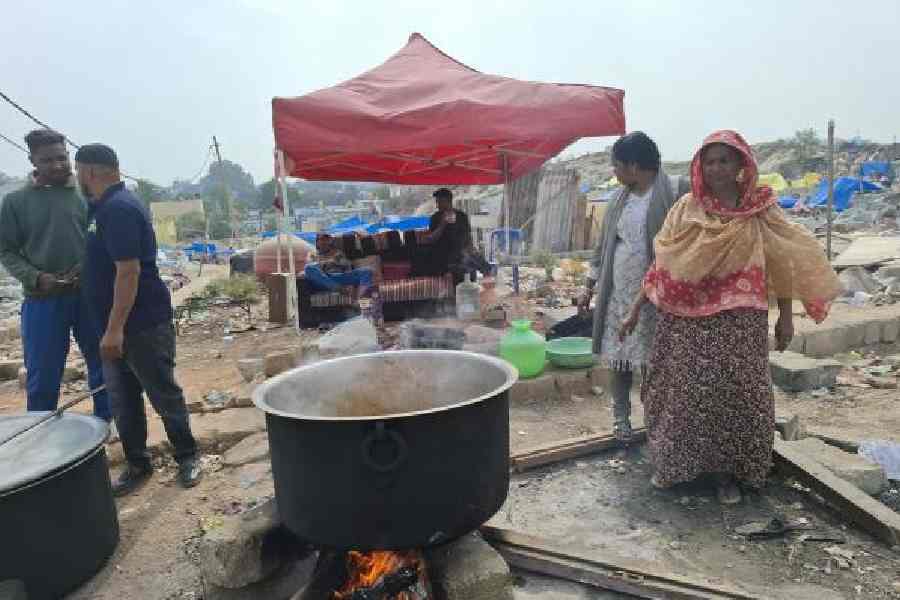
Nearby, Mubeena was overseeing a community kitchen, stirring a large pot of brinjal curry. NGOs have been supplying rice and vegetables. “I trust in god,” she said. “My husband left me years ago and my son supports me. Since the demolition, I’ve been supervising the community cooking.”
Elsewhere in the narrow lanes, groups of residents discussed their anxieties over not having the full set of documents. Lakshmi, who converted to Islam after marrying a Muslim, said she only had Aadhaar and PAN cards, having lost other documents during the demolition.
“I’ve voted in the last three elections. I don’t even know how to reapply for my voter ID,” she said. “How can the government call us Pakistanis or Bangladeshis? They should go to the border to see who they really are.”
With Bengaluru’s temperatures dipping to 15-17°C, human rights activists fear that prolonged exposure to cold could lead to casualties, especially among children and the elderly. The All India Congress Committee leadership has expressed displeasure with the Karnataka government for proceeding with the demolitions without ensuring proper rehabilitation, particularly as the land is earmarked for the Greater Bengaluru Solid Waste Management plant.