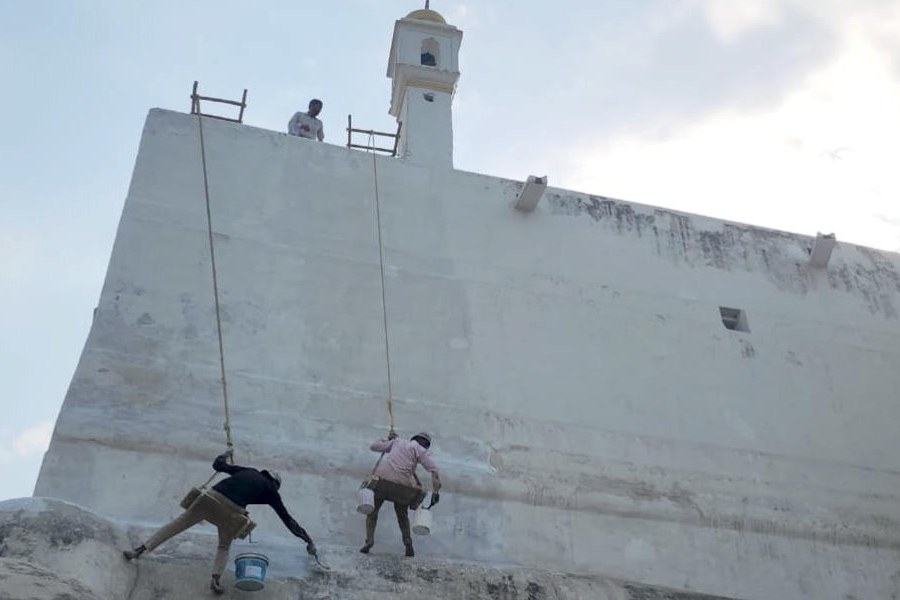
The Archaeological Survey of India has told the Central Information Commission that it does not have any records showing whether the Jama Masjid in Sambhal was built after demolishing an earlier structure or on vacant land.
The agency also said it has no documents to identify who owned the land at the time of the mosque’s construction.
The reply came in response to an RTI application filed by Satya Prakash Yadav, who sought details on the origins of the Mughal-era mosque, including whether it was constructed over ruins, the name of the landowner at the time, and documents granting ownership rights.

In its response, the Archaeological Survey of India said that “no such information is available in this office”.
The ASI further stated that it does not have records on the nature of constructions at the site when it was brought under protection, whether any new structures were added later, or whether there were disputes linked to the mosque in the past.
During first appeal proceedings, the ASI pointed to a 2018 incident to stress that no new construction is permitted within the protected area of a centrally protected monument.
It said an “illegal” steel railing was being erected at the Jama Masjid site that year and that orders were issued to stop the work.
On the period of construction, the ASI told the Commission that, according to its records, “Jama Masjid Sambhal was constructed in the year 1526,” and referred to supporting material.
Asked whether the structure was known by another name earlier, the agency said the mosque has been protected under the same name. On its present status, the ASI said, “At present, it exists as a mosque.”
It added that the Jama Masjid was taken under ASI protection in 1920, citing a gazette notification. At the hearing, the appellant argued that key information had been denied by citing non-availability.
The ASI maintained that it had shared all information on record and could not be asked to create or collect information that it does not maintain.
The Central Information Commission agreed with the ASI, observing that the RTI Act requires public authorities to disclose only records that already exist. It said information not held by a public authority cannot be directed to be furnished.
The Sambhal Jama Masjid has been at the centre of a legal dispute over its history after a petition claimed the mosque was built over an ancient Hindu temple.
The issue drew wider attention after riots broke out in Sambhal on November 24, 2024, during protests against a court-ordered ASI survey of the structure. Four people were killed and several others, including police personnel, were injured.
Finding no grounds for further action, the Commission dismissed the appeal, holding that the ASI’s replies, including its statement that it has no records on whether the mosque was built over ruins or on vacant land, were in line with the law.