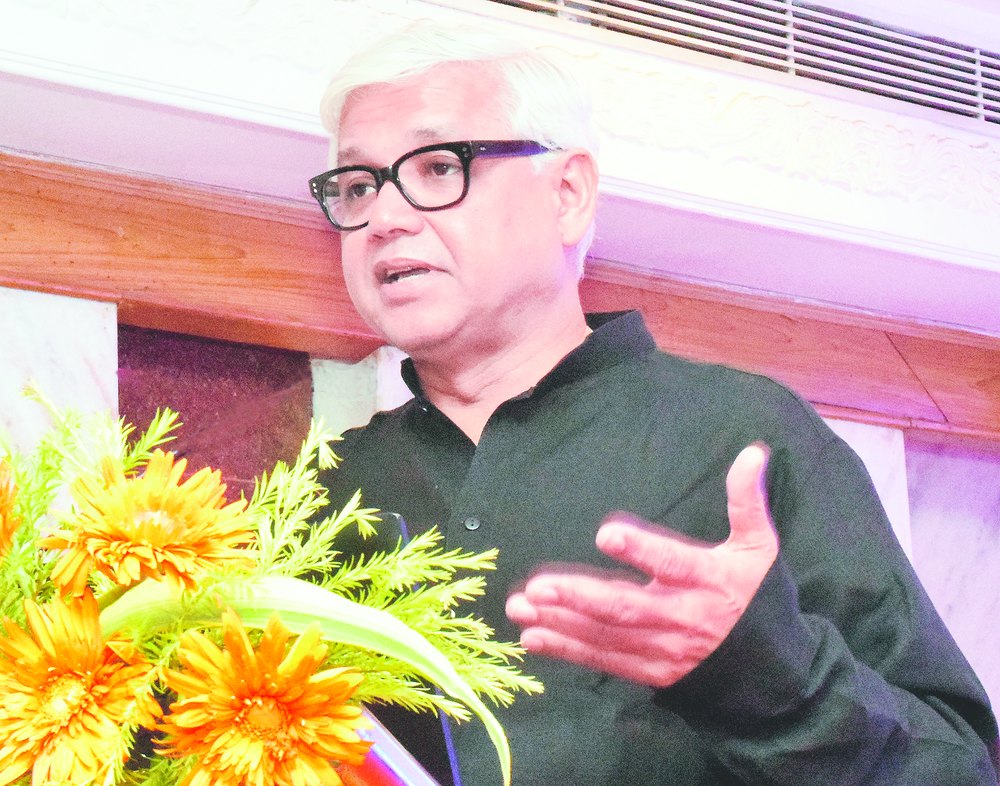

Author Amitav Ghosh is in Bhubaneswar to promote his latest Flood of Fire; the final book in the Ibis Trilogy. At an event hosted by Arya Vedant Foundation, he spoke to Namita Panda of The Telegraph about his new book, the migration of a generation of Indians as labourers and boatmen, including Odias, in the 19th century and much more.
• Flood of Fire has received a great response already...
The response to my new book is indeed heart warming. There is a lot of rush of readers who wish to interact with me regarding the Ibis Trilogy wherever I have been for the book release. It definitely feels amazing to see such great response.
• You are here in Odisha after six years for a literary event. How has your Odisha experience been?
I have a long connection with Odisha since my childhood as we used to come here very often. I receive overwhelming affection from the people here. The event by Arya Vedant Foundation has been a wonderful experience. I have always found that Odisha has an intense engagement with literature. There are many old publications and magazines offering people plenty to read. There are also authors who write wonderfully well in both Odia and English such as Ramakant Rath, Manoj Das and Sitakant Mahapatra.
• The first two books in the Ibis Trilogy vividly described the migration of Indians from rural areas to Mauritius. What is in store for the readers of the Flood of Fire?
The first two books set the background for the first opium war. In the latest book, the war takes place. The emotions of the migrants and the impact of the war between China and British India make the crux of Flood of Fire. While the reasons for the colonial British government to go to war have been discussed, I have also gone out of my way to give the perspective of the Chinese in the entire event.
• Have the lascari words (language which the characters use in the trilogy) and chrestomathy (selection of passages from authors designed to help in learning language) that is evident from this series used widely among those who sailed as boatmen, sailors or indentured labourers survived?
A: I used chrestomathy of Hindustani, English and other languages casually for some humour in the books. It flourished due to the interaction of so many tongues. If not much, many words are still used in navigational fields. Serang is still used frequently in Bengal.
• We come across the mention of Odias at the Singapore port in the second book of the trilogy. We also read about a family in Mauritius searching for its Odia roots. Tell us more about the migration of the Odia community in that tumultuous period.
A: I found an interesting thing during my research. When Singapore was established in 1819, many Odia boatmen used to live there. Many migrated between 1819 and 1855 as boatmen or indentured labourers. In Mauritius, their quest for identification and craving to connect to their original roots is very powerful even today. But those who lived there are doing very well and sometimes they get upset when they visit India due to the prevalent chaos. Also, many communities merged into the Bhojpuri lifestyle since Biharis who migrated were pretty preponderant in terms of number.
• When it comes to readership, the general perception is that Rs 100 literature is more popular among the youths. What is your take?
A: I find a lot of enthusiasm in students and the youths who come in large numbers at literary events. It means that students are also reading my books or intense literature in general.
• You were busy with the three books on the opium war for a long time. What would be your next project?
A: The Ibis Trilogy took 10 years to research and write, most of which I was doing simultaneously. Right now I am working on a collection of essays that will come out as a book shortly.